BuildWell

Roofing estimating software that wins more jobs

Estimating and invoicing software for roofers. Describe squares, pitch and layers, and send the estimate before you're off the ladder.

  • Store prices near the job
  • Wages for your metro
  • iPhone, Android and web
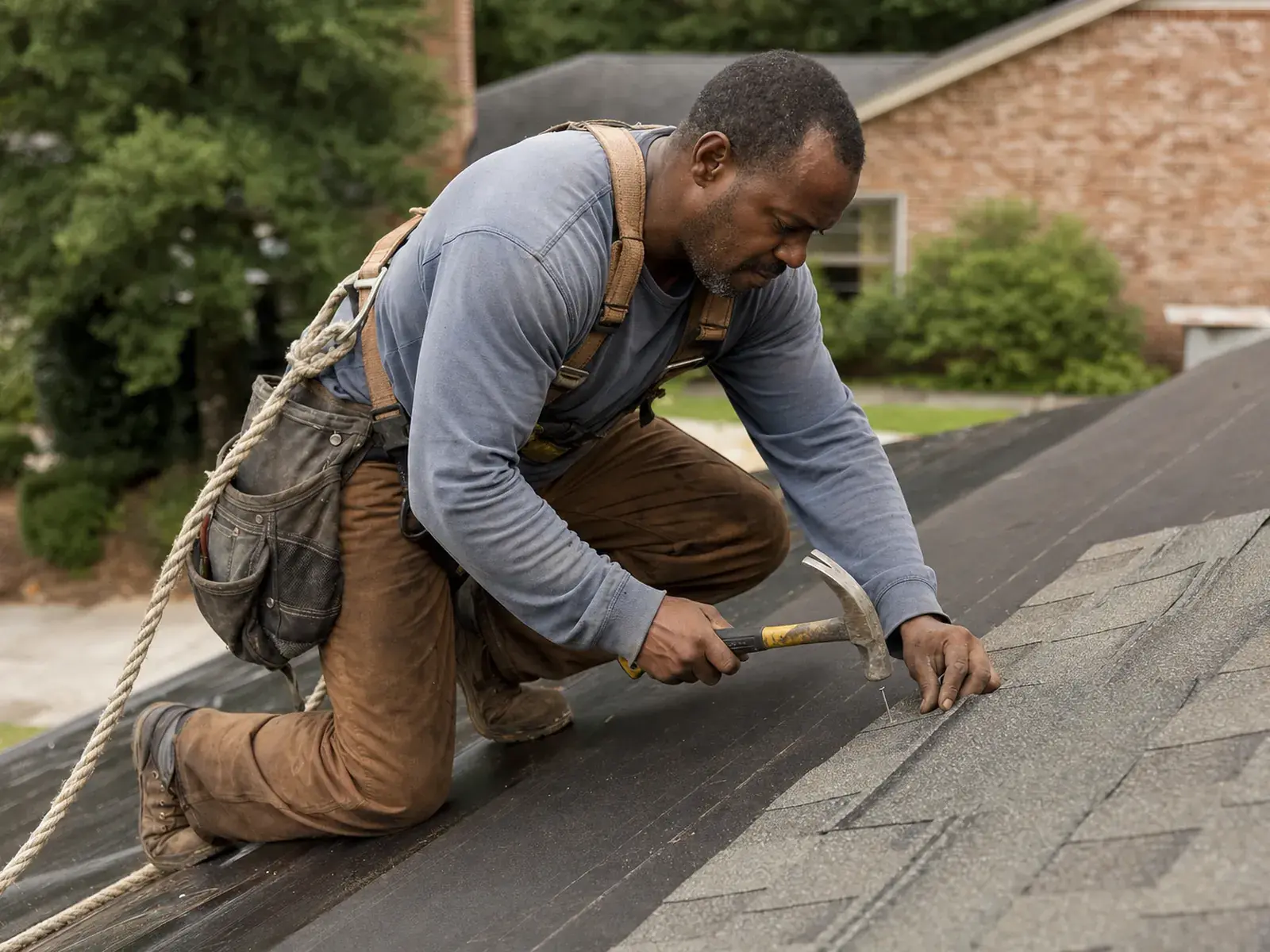
A roofer nailing architectural shingles on a sloped roof

Run every roofing job start to finish

Estimate on site, get it signed before you leave, invoice when the work’s done and see the payment land.

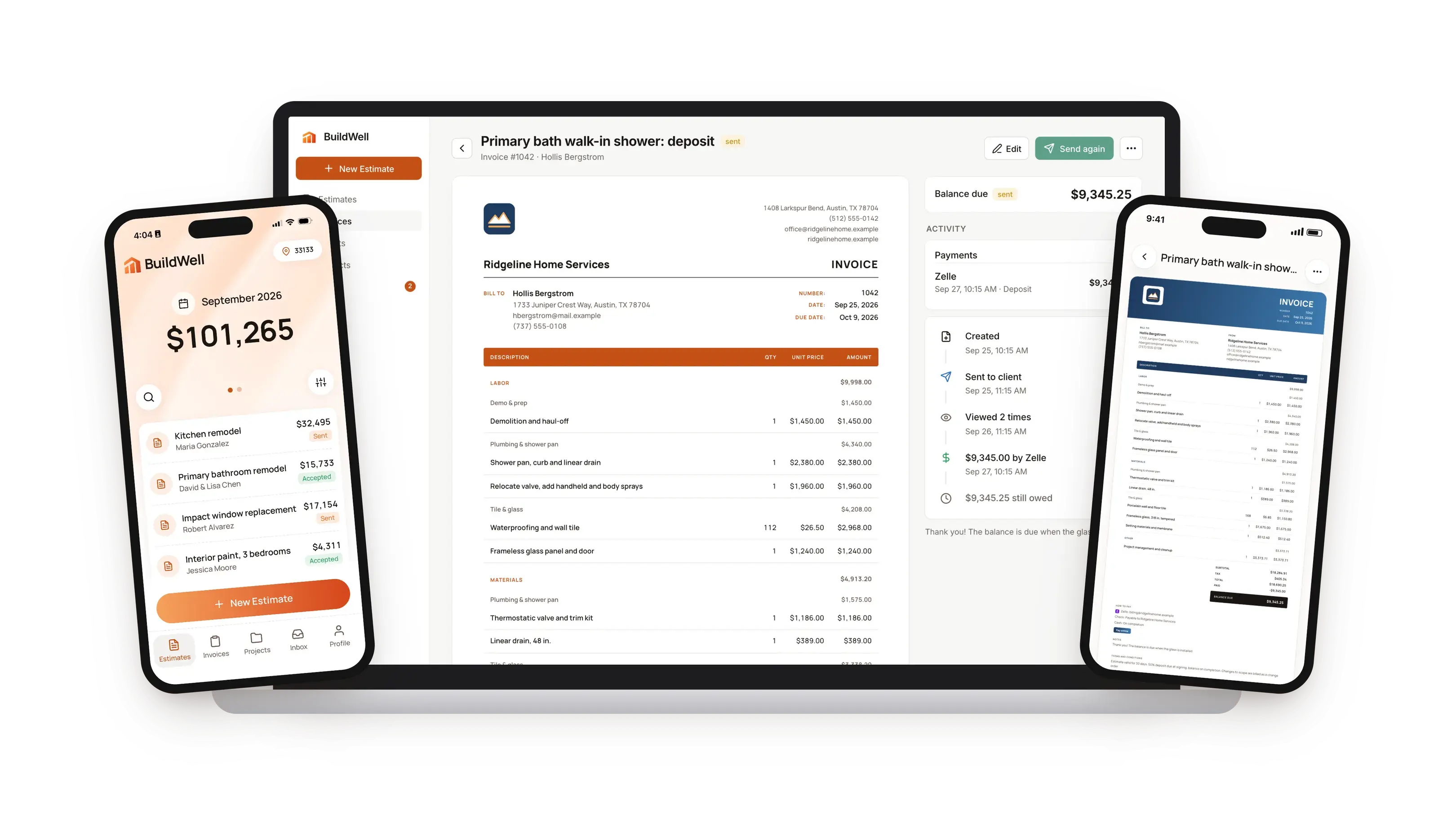
BuildWell on a laptop showing a branded invoice and its payments, the estimates home screen on one phone and an invoice in a different style on another

What is roofing estimating software?

Roofing estimating software turns a roof measurement and a description of the job into a priced, itemized estimate. It replaces the notepad, the calculator and the supplier price sheet.

It works out what the job needs, what each piece costs where you work, and what the homeowner will see on the page.

A roof estimate has four kinds of work

A roof estimate has more moving parts than it looks:

  • Area work, priced by the square: tear-off, underlayment and shingles.
  • Edge work, priced by the foot: drip edge, starter, ridge, valleys and step flashing.
  • Details, priced by the piece: pipe boots, vents, chimneys and skylights.
  • Allowances for what you can't see until the old roof is off.

Per-square pricing is fast but hides the roof

Most roofers either price by the square with a rule of thumb, or build each job from takeoffs and supplier quotes.

A per-square price is fast, but it hides the difference between a simple gable and a cut-up hip roof with three chimneys. A full takeoff is accurate, but it takes an evening.

BuildWell builds the takeoff from your description

BuildWell builds the takeoff for you from what you describe:

  • Each part of the job becomes its own line, with the labor hours it typically takes.
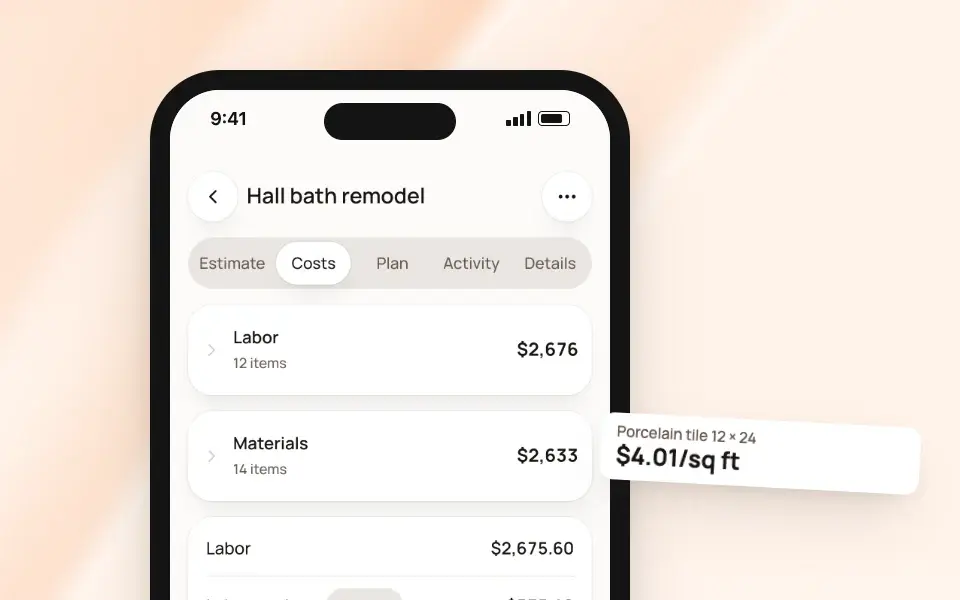
  • Materials are priced at stores near the job.
  • Labor is priced at your area's roofer wage, plus your overhead and markup.

You review the quantities, adjust anything you know better, and send it.

The signed estimate becomes the invoice

When the job's done, the signed estimate becomes the invoice, with the same lines and totals. If you took a materials deposit, it's already on the record.

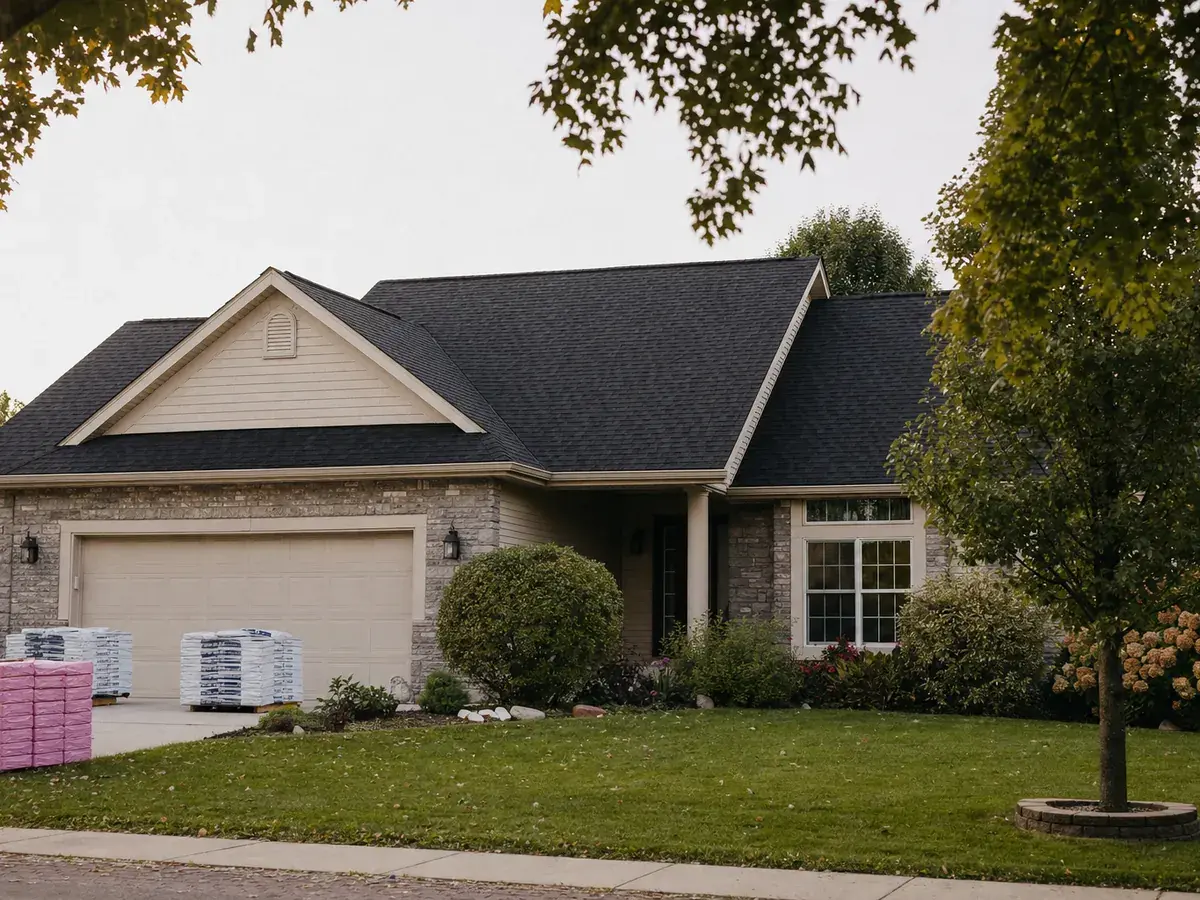
A newly reshingled house roof seen from the street

Why roofers choose BuildWell

You estimate while the ladder's still up

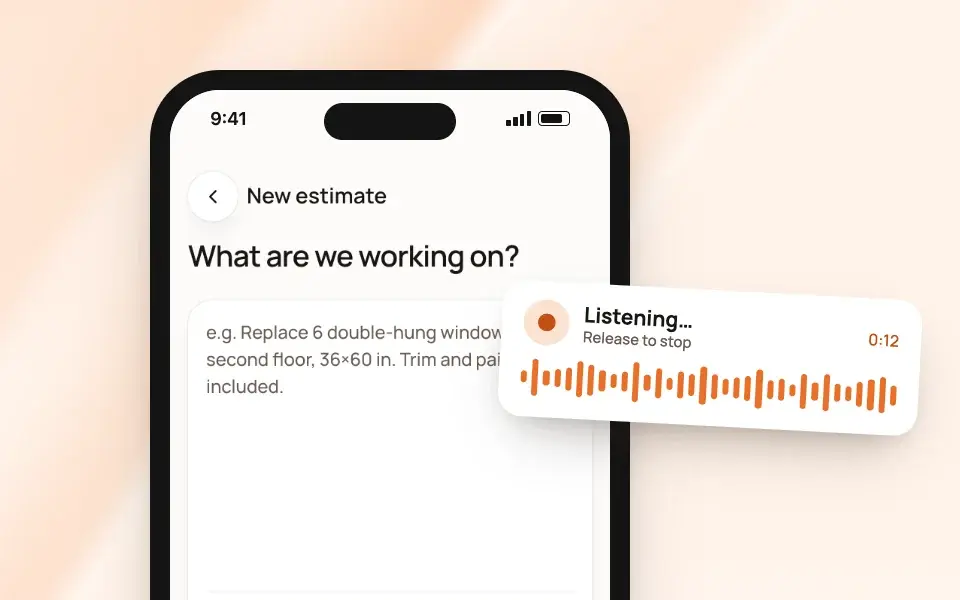
Describe the roof. The estimate is ready before you're in the truck.

It asks what changes a roofing price

How many layers? Ice and water shield? Chimney flashing? New drip edge?

The homeowner sees every part of the roof

Tear-off, underlayment, shingles, ridge vent and flashing each get their own line.

Materials are priced at stores near the job

Anything without a store price is marked for you to confirm.

Labor is priced for your market

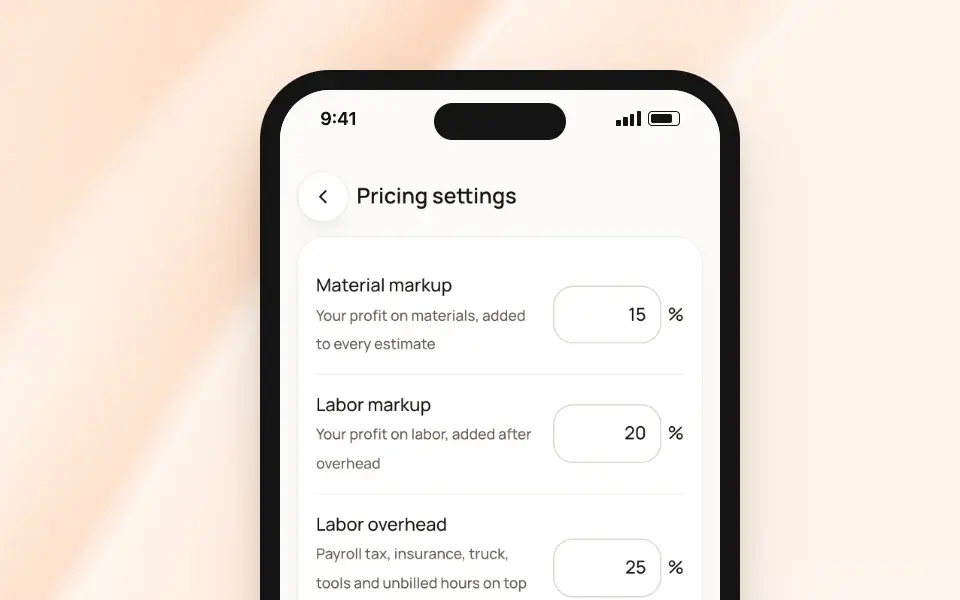
Local roofer wage, plus the overhead and markup you set once.

Deposits come in before you order materials

Invoice a deposit first, then the balance when the dumpster leaves.

Estimates in English or Spanish

Send each client their estimate and invoice in their language.

Same account on phone and computer

Start on site and finish at your desk. Nothing to sync.

Built for roofers

What changes when roofers price jobs from real data instead of memory.

  • A reroof estimate from a walkthroughDescribe tear-off, pitch, boots and flashing. Get line items with a total.
  • Shingles and underlayment at local pricesMaterials priced at a store near the job. Missing prices are flagged.
  • Labor at your area's roofer wageLocal roofer wage plus your overhead and markup. Edit any line's hours.
  • Deposits, signatures and paymentThe homeowner signs by phone. Invoice a materials deposit, then the balance.
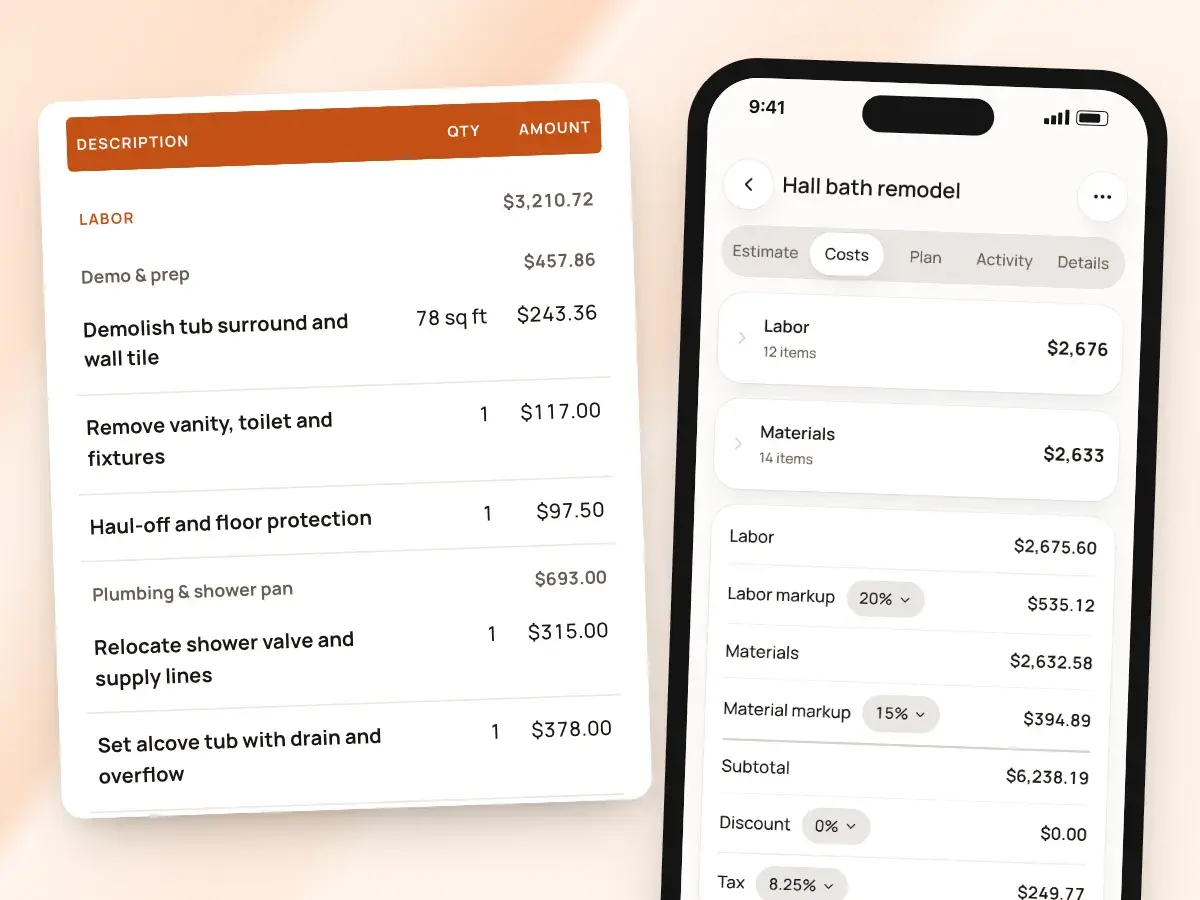
An estimate’s costs on a phone beside its priced lines, grouped by job step

How to price roofing jobs

A roofing price is built from four groups of work:

  1. The field of the roof: tear-off, decking repair, underlayment and shingles, priced by area.
  2. The edges and lines: drip edge, starter, ice and water shield, ridge, valleys and step flashing, priced by the foot.
  3. The penetrations and details: pipe boots, vents, chimneys and skylights, priced by the piece.
  4. Setup, disposal and cleanup: protecting the landscaping, the dumpster, and the magnetic sweep.

Measure the real roof area, plus waste

A square is 100 square feet of roof surface, not of footprint. A steeper pitch adds surface area, so measure the actual roof or apply your pitch factor.

Then add waste: a simple gable needs less than a cut-up roof with hips and valleys. Enter the quantities after waste, so the shingles you order match the shingles you price.

Price each line from your own hours

These are the common lines on a roofing estimate and what each is measured in:

  • Square foot (100 square feet is one square): tear-off, sheathing, underlayment and shingles.
  • Linear foot: edges, ridge, flashing and gutters.
  • Each: boots, chimneys, skylights and repairs.

The hours and prices are yours to set. Your crew sets its own pace, and every line's hours are editable.

Line itemMeasured in
Asphalt shingle roof tear-off and disposalSquare feet
Roof sheathing replacement over raftersSquare feet
Install synthetic roof underlaymentSquare feet
Install ice and water shield at eaves and valleysLinear feet
Install aluminum drip edgeLinear feet
Install starter shingle courseLinear feet
Install architectural asphalt shinglesSquare feet
Install hip and ridge cap shinglesLinear feet
Install shingle-over ridge ventLinear feet
Install metal valley flashingLinear feet
Install step flashing at sidewallLinear feet
Install pipe boot flashing at vent stackEach
Reflash chimney with step and counterflashingEach
Install fixed skylight with flashing kitEach
Shingle repair patch at localized leakEach
Install seamless aluminum gutterLinear feet
Each one its own line on the estimate. The hours and prices are yours to set.

Area lines alone add up to big hours

The area lines add up quickly.

Example: The rates below are example figures; say your own records show your crew needs:

  • Tear-off: 1.75 hours per square
  • Synthetic underlayment: 0.75 hours per square
  • Shingles: 2 hours per square

On a 24-square roof, that's 4.5 hours a square, or 108 labor hours for tear-off, underlayment and architectural shingles alone, before any edge, flashing or detail work.

That's why a per-square price that ignores the rest of the roof leaves money on it.

Your labor rate covers more than the wage

A roofer's wage isn't your labor rate. Your rate has to cover:

  • workers' comp, which costs more for roofing than for most trades
  • liability insurance
  • fall protection and the trailer
  • days lost to weather
  • the hours spent measuring and bidding jobs you don't win

Then it needs a profit.

BuildWell builds the rate in three steps

  1. Wage: the median roofer wage for your metro.
  2. Overhead: your labor overhead, which starts at 100%, doubling the wage.
  3. Markup: your labor markup, which starts at 20%.

Example: Say your crew costs you $30 an hour per roofer. Use your real number. The 108 hours of field work on that 24-square roof come to:

  • Wages: 108 × $30 = $3,240
  • With 100% overhead: $6,480
  • With 20% markup: $7,776 for that labor

The edges, flashing and details come on top.

Put materials, decking and disposal on their own lines

  • Materials: price shingles, underlayment, ice and water shield, flashing, vents and fasteners at what they cost near the job this week, plus a markup. BuildWell starts material markup at 20%.
  • Decking: add sheathing replacement as an allowance, a stated number of square feet, and put the price for anything beyond it in your terms. The homeowner knows before the tear-off what rotten decking will cost.
  • Disposal and permits: price the dumpster and dump fees as their own lines. Many jurisdictions require a permit for a reroof. Add your permit fee as a line; in BuildWell, a flat permit fee is added automatically when the estimate includes permits.

Set a repair minimum that covers the trip

Price repairs from the same pieces, with a minimum that covers getting the ladder off the truck. A localized shingle repair, a pipe boot or a few feet of step flashing is quick work.

Your minimum charge should cover the trip, the setup and the time to diagnose the leak, not just the patch.

How to start a roofing business

Check your state's licensing rules

Requirements for roofers vary widely:

  • Some states license roofing contractors specifically, with an exam and proof of insurance.
  • Others require a general contractor or home improvement contractor registration.
  • Others leave licensing to cities and counties.

Many places also require a license or registration above a dollar threshold. Check with your state's contractor licensing board, and with the city where you'll work, before your first job.

Form the business and separate the money

  • Start as a sole proprietor or a single-member LLC.
  • Get a free EIN from the IRS.
  • Open a business bank account.

Run every deposit and every supplier payment through it.

Insure before you climb

  • General liability: homeowners and general contractors will ask for a certificate before you start.
  • Workers' compensation: most states require it once you have employees, and for roofing it's one of your largest costs. Price it into your labor rate from day one.
  • Commercial auto insurance for the trucks and trailer.

Plan for fall protection from day one

OSHA requires fall protection for construction work at six feet and above. Budget for harnesses, anchors and training.

Make the plan part of how your crew works, not something you find when an inspector does.

Line up materials and disposal

Open accounts with a supplier and a dumpster company before the first job. Know what delivery and haul-off cost so they're in the estimate, not in your margin.

Look professional from the first bid

An itemized estimate with your logo, license number and terms beats a number on a business card. Homeowners comparing bids remember the one that explained the job.

In BuildWell, add your logo, license number and signature once; every estimate and invoice carries them.

Get your first jobs

Early roofing work tends to come from:

  • Referrals and neighbors of finished jobs. A yard sign during the work helps.
  • General contractors who need a roofer.
  • Realtors and home inspectors.
  • Storm seasons. Set up your free business profile on the map apps homeowners use, and ask every finished client for a review.

Track every job from bid to final payment

Know which bids are out and which were signed. Know which deposits came in and which balances are unpaid.

Roofing cash flow lives on deposits and fast final invoices.

The guide to starting a roofing business walks through each step in more detail, from planning and insurance to first clients and cash flow.

Roofer pay and taxes

What roofers earn depends on market and season

Wages vary between metro areas and with experience. Many roofing businesses have busy and slow seasons, so plan cash flow for the months when weather stops work.

Owners earn the margin between what they charge and what the work costs. That's why your labor rate and your materials markup matter more than any wage table.

Self-employment tax is 15.3% of net earnings

As a sole proprietor or single-member LLC, you pay self-employment tax on your net earnings: 15.3% in total.

  • Social Security, 12.4%: applies to net earnings up to the Social Security wage base, which is $184,500 for 2026.
  • Medicare, 2.9%: applies to all of it.
  • Deduction: you can deduct half of the self-employment tax on your income tax return.

This is on top of federal and state income tax. Set money aside from every deposit and final payment.

Pay estimated taxes every quarter

Nobody withholds tax from your jobs, so the IRS expects payments during the year on Form 1040-ES. They're usually due in:

  • mid-April
  • mid-June
  • mid-September
  • mid-January

Set aside part of every payment so the money is there when each one is due.

Track your deductions as you go

Roofing businesses commonly deduct:

  • tools, ladders and safety equipment
  • the business share of the trucks and trailer
  • fuel
  • insurance and license fees
  • dumpster costs
  • phone and software

Keep receipts and log mileage as you go.

Subs paid $2,000 or more get a 1099-NEC

If you pay an unincorporated subcontractor for services, you'll generally need to send them a Form 1099-NEC. For payments made in 2026 and later, that applies once you've paid them $2,000 or more in a year, up from $600 before 2026.

Collect a Form W-9 before you pay anyone.

How you direct the work sets worker status

Whether a crew member is a contractor or an employee depends on how you direct the work, not on what you call them. Getting it wrong is expensive, especially for workers' comp.

Check your state's sales tax on materials

States treat roofing contractors differently:

  • Some have you pay sales tax when you buy materials.
  • Others have you charge it to the homeowner.

Check your state's revenue department. In BuildWell, sales tax applies to materials only, not labor, at the rate you set.

This is general information, not tax or legal advice. A tax professional who works with contractors can tell you what applies to your state and business.

Estimates in minutes
talk through the job, get every line priced
Real local prices
materials and labor priced for your ZIP code
Get paid faster
professional invoices clients pay by card or bank
English or Spanish
on your phone and your computer

Pricing for roofing businesses

One plan with everything, billed weekly or yearly.

Weekly
$7.99 / week
Billed weekly. Cancel anytime.
  • AI estimates priced for your area
  • Estimates, invoices, clients and projects
  • Clients sign on any phone
  • Card and bank payments, no extra BuildWell fee
  • iPhone, Android and the web
Start free trial
Best value
Annual
$79.99 / year
About $6.67 a month, billed yearly
  • AI estimates priced for your area
  • Estimates, invoices, clients and projects
  • Clients sign on any phone
  • Card and bank payments, no extra BuildWell fee
  • iPhone, Android and the web
Start free trial

Both plans include every feature and start with a 3-day free trial. Add a card to start; you’re not charged until the trial ends. Cancel anytime.

Roofing software FAQ

01Can BuildWell estimate a full reroof?
Yes. Describe the roof (size in squares or square feet, pitch, layers to tear off, and the details like valleys, chimneys, skylights and vents) and BuildWell lists tear-off, decking, underlayment, shingles, ridge and flashing as separate lines with materials and labor. You can adjust every quantity before you send it.
02Does it work in squares?
Roofing line items in BuildWell are measured in square feet, linear feet or each, so a 24-square roof is 2,400 square feet of field. Enter area work in square feet and edge work in linear feet, and the estimate shows quantities your client can follow.
03How do I account for waste and pitch?
Measure the actual roof area, including the extra area a steep pitch adds, then add your waste for cuts, hips and valleys before you enter the quantity. You can change any quantity on the estimate, and BuildWell recalculates the materials and labor.
04Can I price decking replacement I can't see yet?
Yes. Most roofers include an allowance, for example a number of square feet of sheathing, and a per-sheet or per-square-foot price for anything beyond it. Add sheathing replacement as its own line with the allowance, and put the overage price in your terms so the homeowner knows before the tear-off.
05Can I use it for repairs and small leaks?
Yes. A shingle repair, a pipe boot or a few feet of step flashing makes a one- or two-line estimate you can send on the spot and invoice when you're done.
06Can I take a deposit?
Yes. Create an invoice for a percentage of the estimate before you order materials, and invoice the balance when the job's finished. Payments recorded against each invoice show what's still owed.
07Can homeowners sign on their phone?
Yes. They open your link, read the estimate with your logo and terms, and sign with their finger. You see when they open it and when they accept or decline. If you're at the kitchen table together, they can sign on your phone.
08Can I send estimates in Spanish?
Yes. Any estimate or invoice can be printed in English or Spanish, and the app works in both languages.
09Does BuildWell write insurance claim estimates?
BuildWell writes estimates and invoices for the homeowner, itemized line by line. It isn't an insurance adjusting platform, so if a carrier requires its own estimating format, you'll still need that.
10How much does it cost?
BuildWell costs $7.99 a week or $79.99 a year, with a 3-day free trial. One subscription works on iPhone, Android and the web.

Price your next roofing job today

Estimates, invoices, e-signatures and payments in one place, on your phone and on the web.

Start for free →3-day free trial. Cancel anytime.