BuildWell

Handyman estimating software that wins more jobs

Estimating and invoicing software for handymen. Talk through the repair list and get one estimate, priced item by item.

  • Store prices near the job
  • Wages for your metro
  • iPhone, Android and web
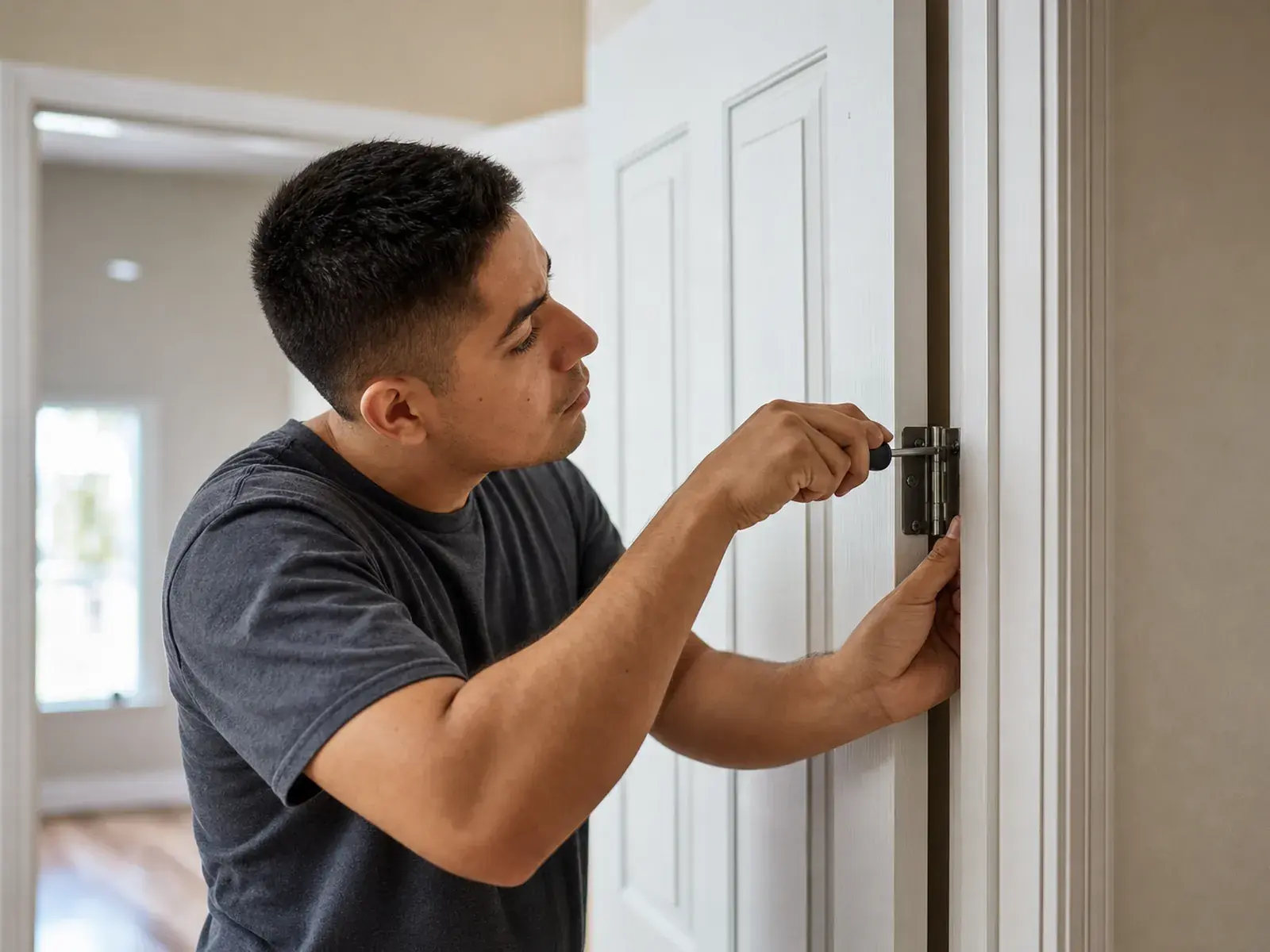
A handyman adjusting the hinge on a sticking interior door

Run every handyman job start to finish

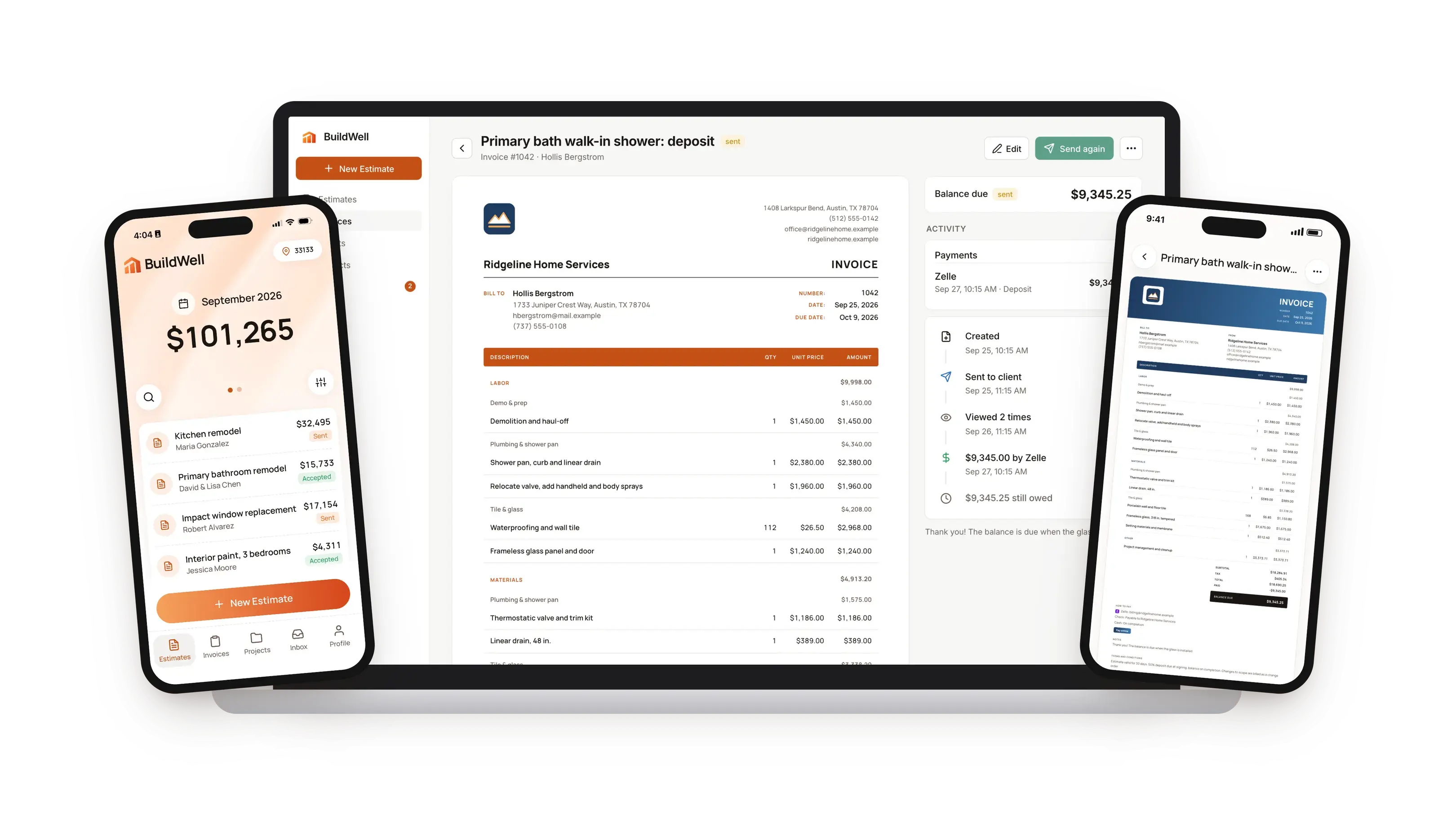
Estimate on site, get it signed before you leave, invoice when the work’s done and see the payment land.

BuildWell on a laptop showing a branded invoice and its payments, the estimates home screen on one phone and an invoice in a different style on another

What is handyman estimating software?

Handyman estimating software turns a list of small repairs into a priced estimate the homeowner can approve.

One visit means many small jobs

Handyman work is different from most trades. You rarely do one big thing. You do eight small things in one visit, and they cross half a dozen trades:

  • a drywall patch and a touch-up
  • a running toilet and a dripping faucet
  • an outlet that needs to be a GFCI
  • a door that won't latch
  • caulk that's gone black around the tub
  • a smoke alarm chirping in the hallway

Three common ways handymen price a visit

Each one is quick. Pricing them is not. Most handymen work one of three ways:

  • One hourly rate plus parts. Simple, but the homeowner can't tell what the visit will cost.
  • A flat price per task. Quick for the jobs you do every week, but the list goes stale and misses the odd request.
  • A guess for the whole visit. Fast, and right until the shutoff valve won't close.

BuildWell prices each task from real numbers

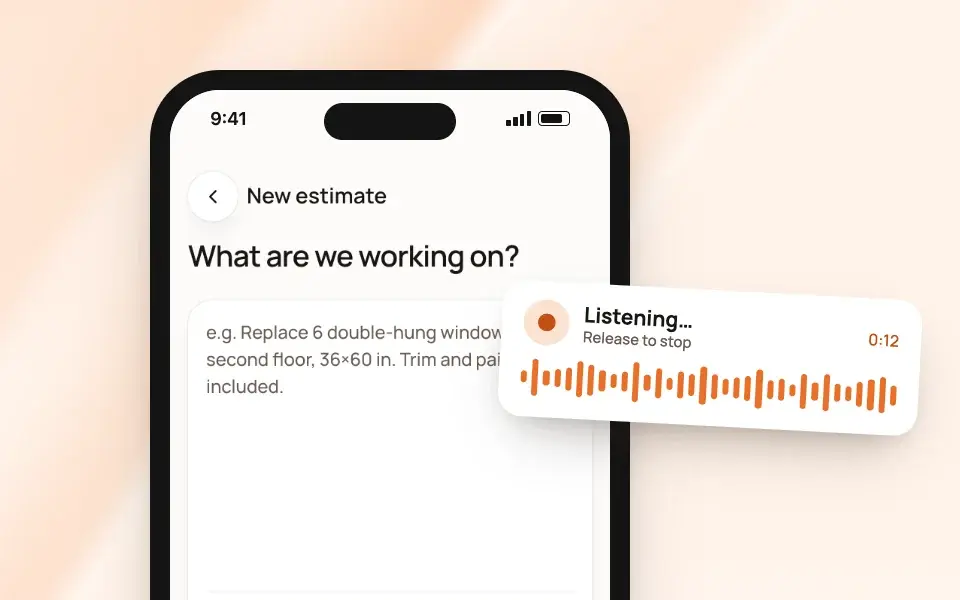
BuildWell gives you a price per task, built from real numbers. You walk the house and describe the list. Each repair becomes its own line, with the labor hours that kind of work takes and the parts it needs.

The parts are priced at stores near the job and the hours at your area's wage for that trade. The homeowner sees what every item costs and signs before you open the toolbox.

When you're done, the signed estimate becomes the invoice.

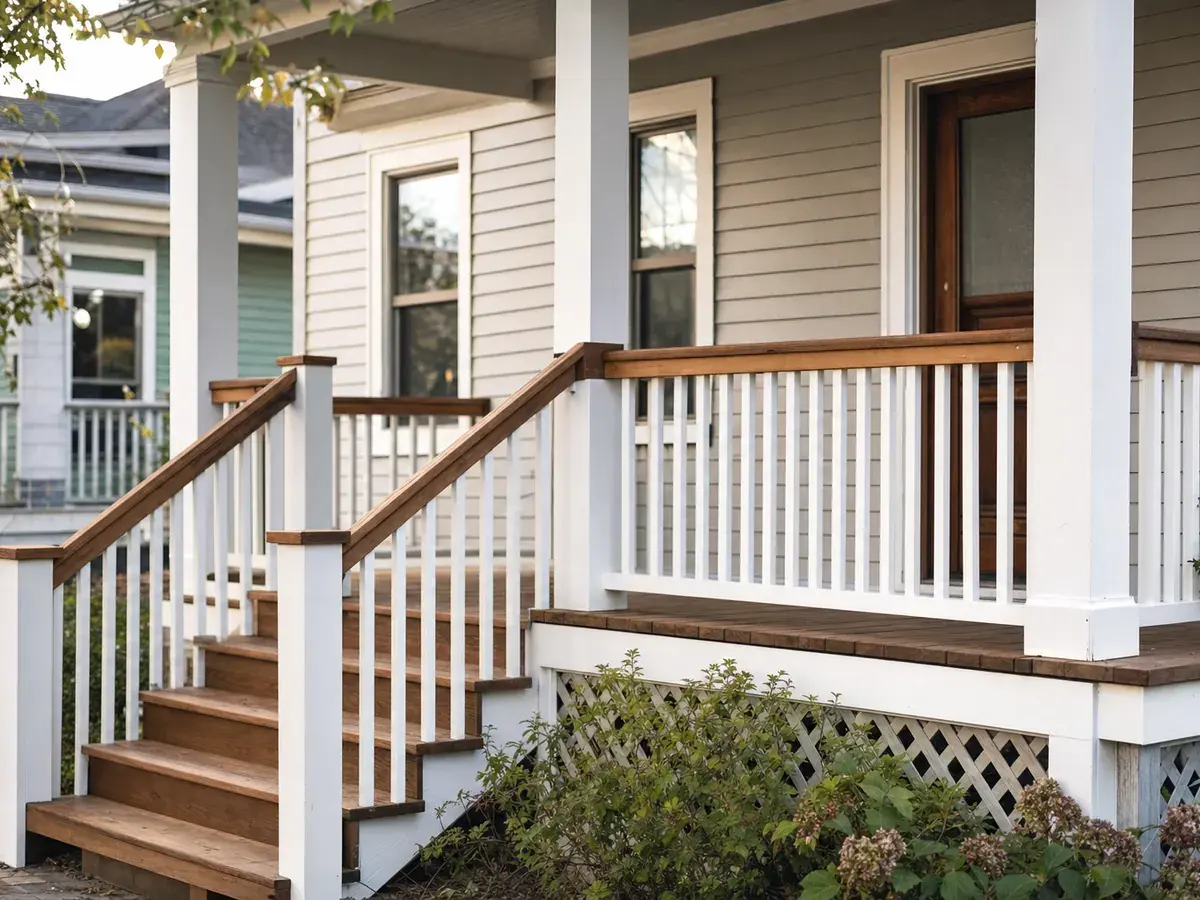
A repaired front porch with new railing and fresh paint

Why handymen choose BuildWell

A long list gets priced in one pass

Walk room to room and talk. Every item becomes a priced line.

Homeowners pick which repairs they want done

They can skip one repair instead of turning down the whole job.

Each repair is priced at its trade's wage

Plumbing, electrical and drywall start at local wages. Or set one rate.

Parts are priced where you'll buy them

Each part is priced at a nearby store. Missing prices are marked.

Add-on work is signed, not argued about

Asked to fix the closet door too? Revise it, and they sign.

You get paid before leaving the driveway

They pay by card, or you record the cash or check.

Estimates in English or Spanish

Send each client their estimate and invoice in their language.

Same account on phone and computer

Start on site and finish at your desk. Nothing to sync.

Built for handymen

What changes when handymen price jobs from real data instead of memory.

  • One estimate for the whole listDescribe the repairs, add photos, and each becomes its own priced line.
  • Repair parts at nearby store pricesFaucets, outlets, mud and caulk priced at a store near the job.
  • Each repair at its trade's wagePlumbing at plumber wage, electrical at electrician wage, or set one rate.
  • Signed first, paid before you leaveThe homeowner signs in the hallway, then pays the invoice by card.
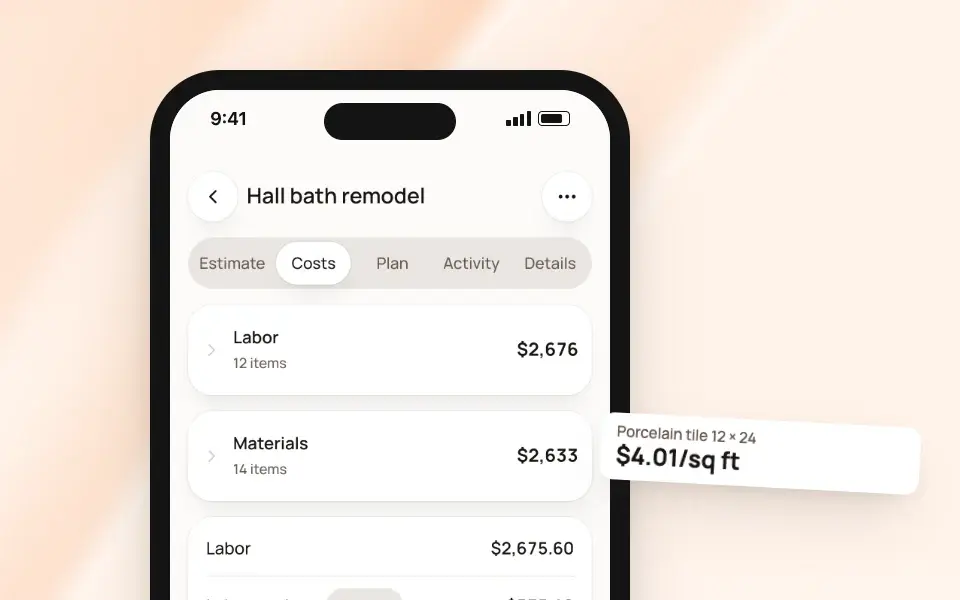
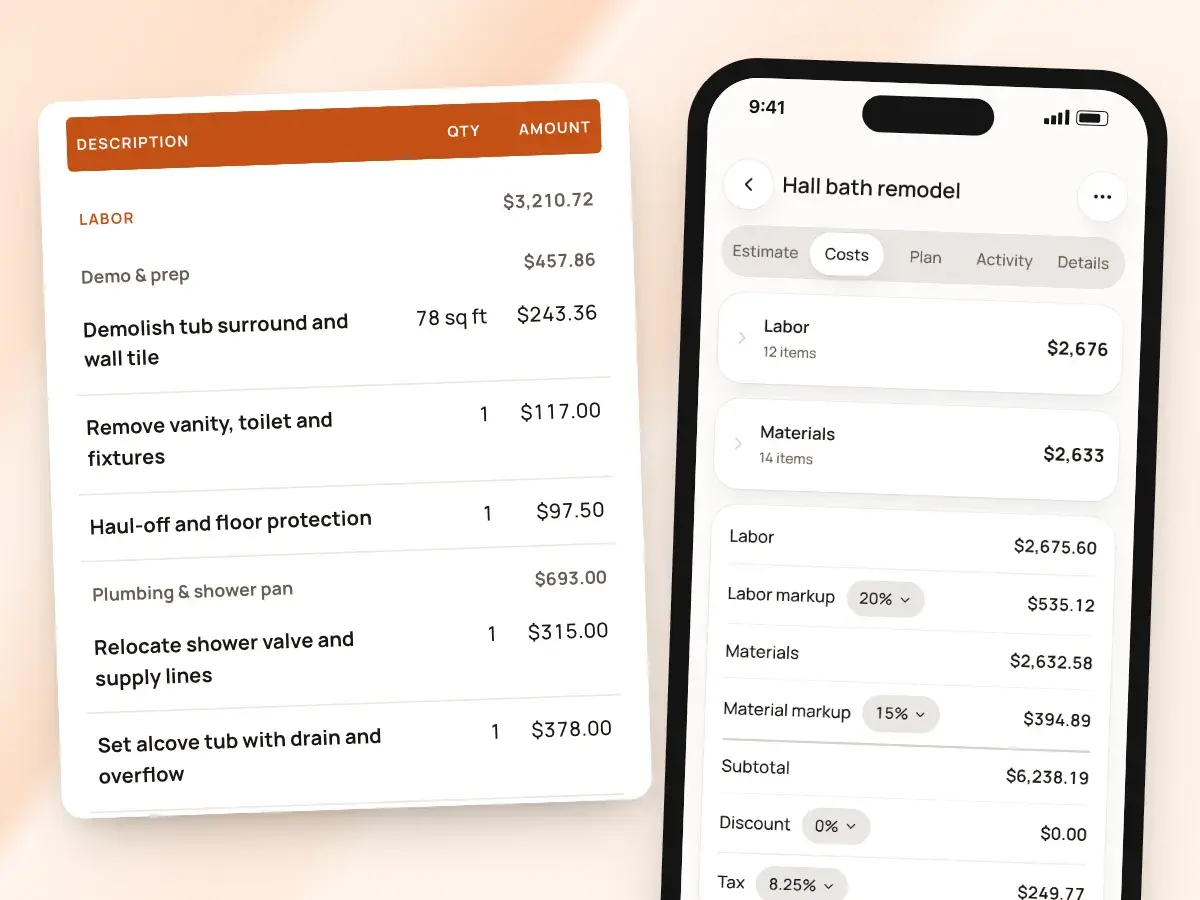
An estimate’s costs on a phone beside its priced lines, grouped by job step

How to price handyman jobs

Every handyman price is built from four pieces:

  1. Labor: the hours each repair takes, times a rate that covers your costs.
  2. Parts and supplies: what you'll pay near the job, plus a markup.
  3. The visit: your trip charge or minimum, so a small call still pays.
  4. The unknowns: what you'll find behind the wall or under the sink.

Line items: start from your own hours

Start from how long each repair actually takes you. These are common handyman lines and what each is measured in: most repairs by the each, and caulk, trim and repaint work by the foot or square foot.

The hours and prices are yours to set. You know your own speed, and every line's hours are editable.

Line itemMeasured in
Patch small drywall hole and sandEach
Cut in large drywall patch with backingEach
Prime and repaint patched wall areaSquare feet
Re-caulk tub and shower perimeter jointLinear feet
Pull and reset toilet with new wax ringEach
Replace leaking lavatory faucetEach
Replace angle stop shutoff valveEach
Install GFCI receptacle at existing outletEach
Swap out ceiling light fixtureEach
Install smoke and carbon monoxide alarmEach
Replace bathroom exhaust fan in existing openingEach
Adjust and rehang sagging interior doorEach
Replace prehung interior door unitEach
Replace damaged baseboard runLinear feet
Replace cracked floor tileEach
Install blocked-in bathroom grab barEach
Each one its own line on the estimate. The hours and prices are yours to set.

A "few little things" can fill a day

Example: Small jobs add up. Here's a typical visit's list. The hours are example figures; say your own records show:

Repair Your hours
Two shutoff valves 2.5
Two GFCI receptacles 1.5
Three small drywall patches 3
Rehang a sagging door 1.5
Re-caulk 14 feet of tub and shower joint 1.5
One smoke and carbon monoxide alarm 0.5
Total 10.5

That's more than a full day on site, for a list most homeowners would call "a few little things."

Your labor rate covers more than wages

What you'd pay a helper isn't your labor rate. Your rate has to cover:

  • the wage, or what you pay yourself
  • liability insurance, and workers' comp once you hire
  • the van, fuel and a stocked parts bin
  • the unpaid hours: driving between small jobs, picking up parts, quoting

Then it needs a profit.

How BuildWell prices each hour

BuildWell works out each hour's price in three steps:

  1. Wage: the median wage in your metro for the trade on each line.
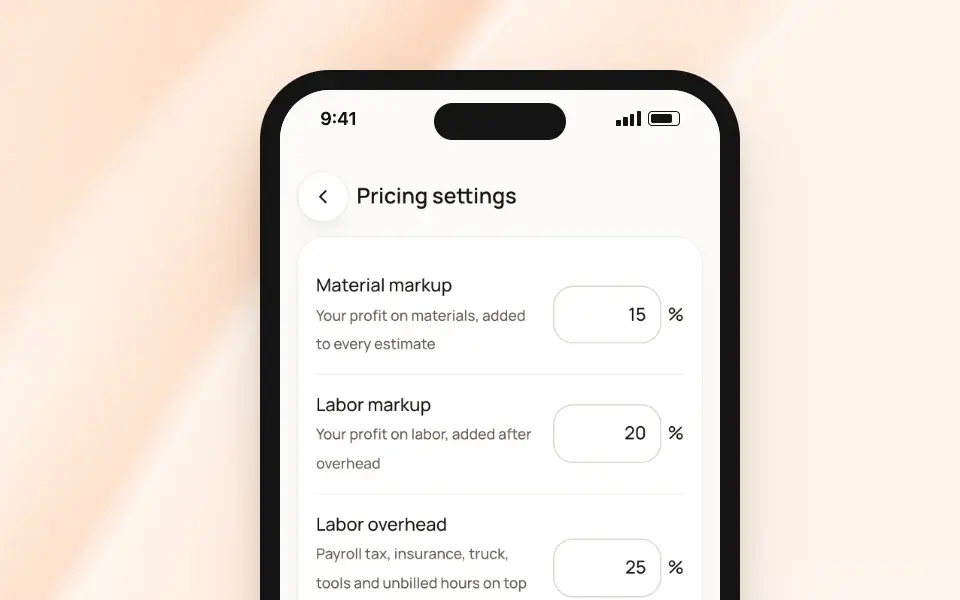
  2. Overhead: labor overhead, 100% to start, which doubles the wage.
  3. Markup: labor markup, 20% to start.

Set both percentages once in Pricing settings.

What that visit's labor comes to

Example: Say your time is worth $30 an hour in wages. Use your real number. At one rate, that visit's 10.5 hours work out like this:

  • Wages: 10.5 × $30 = $315
  • With 100% overhead: $630
  • With 20% markup: $756 for labor

In BuildWell, the plumbing and electrical lines start at those trades' local wages instead, so your real total will differ.

If that number looks high next to what you've charged, look at the hours you've been giving away.

Price parts near the job, then mark up

Price each part at what it costs near the job this week. Then add a markup that covers the store runs, the returns, and the screws, anchors and wire nuts that never make it onto a receipt.

Material markup starts at 20% in BuildWell; adjust it per estimate.

List parts the homeowner already bought

When the homeowner has already bought the fixture, the faucet or the fan, mark it client-supplied. It's listed so the scope is clear, but not charged.

Charge for the trip or set a minimum

A one-switch call costs you the same drive as an eight-item list. Most handymen handle that with either:

  • a trip or service charge on every visit, or
  • a minimum, like a two-hour minimum, that covers the visit whatever the list.

Pick one, write it in your terms, and put it on every estimate as its own line. In BuildWell, add it as a custom line item.

Say how you'll price the unknowns

Small repairs hide small surprises:

  • a shutoff that won't close
  • rot under the toilet flange
  • an outlet box with no ground

For anything behind a wall or under a fixture, say what's included and how you'll price what you find. "Includes reset with new wax ring; flange repair if needed is $X" reads as fair, and saves an awkward conversation.
How to start a handyman business

Check where your state draws the handyman line

Your state's rules decide what work you can take:

  • Many states let you do minor repairs without a contractor license below a dollar limit per job, and require a license above it.
  • Plumbing, electrical and HVAC work usually needs a licensed tradesperson no matter how small the job.
  • Some states and cities require a handyman or home improvement registration even for small jobs.

Check your state's contractor licensing board and your city before you advertise. Working outside your license can void your insurance and your right to be paid.

Form the business and separate the money

Most handymen start as a sole proprietor or a single-member LLC. Get an EIN from the IRS (it's free), open a business bank account, and run every job through it.

When you buy parts for three jobs in one trip, a separate account makes the receipts easier to sort.

Get insured before your first call

  • General liability: a cracked tile or a flooded vanity is your problem if you caused it. Property managers will ask for a certificate of insurance.
  • Workers' compensation: most states require it once you hire.
  • Commercial auto: your personal policy may not cover the van when it's working.

Set your prices and your rules

Decide your rate, your trip charge or minimum, and what you won't do. Sending some jobs to licensed trades protects you and earns referrals back.

Look like a business from the first visit

A clear, itemized estimate with your logo and terms earns the next list. In BuildWell, set your logo, signature and terms once, and every estimate and invoice carries them.

Get your first clients from four places

Early handyman work tends to come from:

  • Neighbors and referrals. One good visit often leads to next door.
  • Property managers and landlords who need turnovers and repairs done fast.
  • Realtors with inspection repair lists before a closing.
  • Local search. Set up your free business profile on the map apps people use, and ask every happy client for a review.

Keep the list moving

Handyman businesses run on many small invoices. Know which estimates are waiting for a signature and which invoices are unpaid. A few forgotten ones a month is real money.

Handyman pay and taxes

Pay depends on how you price the visit

What handymen earn depends on how they price the visit. Pay ranges widely between metro areas, and between handymen who stick to minor repairs and those licensed for bigger work.

Billing every hour on site, plus a fair trip charge, matters more than any wage table.

Self-employment tax is 15.3% of net earnings

As a sole proprietor or single-member LLC, you pay self-employment tax on your net earnings: 15.3% in total.

  • Social Security, 12.4%: applies to net earnings up to the Social Security wage base, which is $184,500 for 2026.
  • Medicare, 2.9%: applies to all of it.
  • Deduction: you can deduct half of the self-employment tax on your income tax return.

That's on top of federal and state income tax, so move a share of every payment into a separate account.

Pay quarterly estimated taxes

No one withholds tax from what homeowners pay you, so the IRS expects payments during the year on Form 1040-ES. They're usually due in mid-April, mid-June, mid-September and mid-January.

Late or missed payments add penalties.

Track these deductions

Handyman businesses commonly deduct:

  • tools, ladders and the parts bin
  • the business share of your van or truck
  • fuel
  • insurance and license or registration fees
  • phone and software

Save receipts the day you buy, and log mileage as you drive. A handyman's mileage between small jobs adds up faster than most.

Send a 1099-NEC to helpers and subcontractors

If you pay an unincorporated subcontractor for services, you'll generally need to send them a Form 1099-NEC. For payments made in 2026 and later, that applies once you've paid them $2,000 or more in a year, up from $600 before 2026.

Collect a Form W-9 from anyone you pay, including the licensed electrician you bring in for a panel question.

Sales tax on parts depends on your state

States treat repair work differently. Some have you pay sales tax when you buy parts; others have you charge it to the client, on parts or on the whole job.

Check your state's revenue department. In BuildWell, sales tax applies to materials only, not labor, at the rate you set.

This is general information, not tax or legal advice. A tax professional who works with small contractors can tell you what applies in your state.

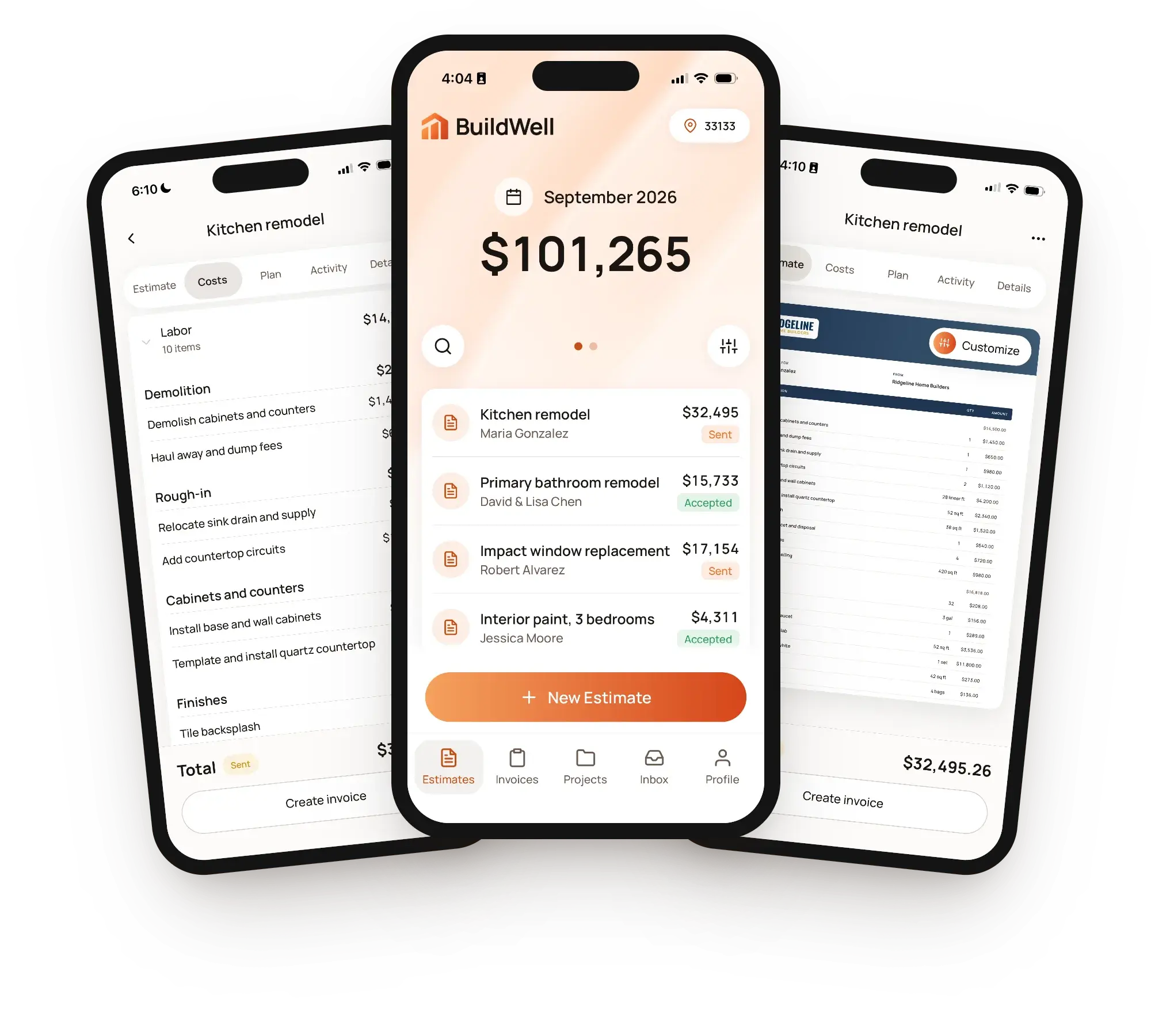
Estimates in minutes
talk through the job, get every line priced
Real local prices
materials and labor priced for your ZIP code
Get paid faster
professional invoices clients pay by card or bank
English or Spanish
on your phone and your computer

Pricing for handyman businesses

One plan with everything, billed weekly or yearly.

Weekly
$7.99 / week
Billed weekly. Cancel anytime.
  • AI estimates priced for your area
  • Estimates, invoices, clients and projects
  • Clients sign on any phone
  • Card and bank payments, no extra BuildWell fee
  • iPhone, Android and the web
Start free trial
Best value
Annual
$79.99 / year
About $6.67 a month, billed yearly
  • AI estimates priced for your area
  • Estimates, invoices, clients and projects
  • Clients sign on any phone
  • Card and bank payments, no extra BuildWell fee
  • iPhone, Android and the web
Start free trial

Both plans include every feature and start with a 3-day free trial. Add a card to start; you’re not charged until the trial ends. Cancel anytime.

Handyman software FAQ

01Can BuildWell price a whole list of small repairs at once?
Yes. Describe every item on the list in one go, by voice, text or photos. BuildWell makes each repair its own line with its parts and labor hours, so the homeowner sees what each fix costs and can approve the whole list or ask you to drop an item. You can edit, delete or add lines before sending.
02How do I charge a trip fee or a minimum?
Add it as a custom line item, for example a service call charge, and keep it on every estimate where it applies. Write your minimum into your terms too, so a homeowner who calls you out for one switch plate knows what the visit costs before you drive over.
03Why are plumbing and electrical lines priced at different rates?
BuildWell prices each line at the median wage for that kind of work in your metro, from the Bureau of Labor Statistics, then adds your overhead and markup. If you charge one hourly rate for everything, change the rate on those lines; your change stays on that estimate.
04Does BuildWell know which repairs I'm licensed to do?
No. Licensing rules for handyman work differ by state and city, and BuildWell doesn't check them. It prices the work you describe. If a job needs a licensed plumber or electrician where you work, bring one in and put their price on that line.
05What if the homeowner already bought the faucet or the light fixture?
Mark that material as client-supplied. The homeowner still sees it listed, but you don't charge for it. BuildWell also asks who supplies the main item when a job centers on one, like a fixture or a door.
06How current are the parts prices?
No older than 30 days. BuildWell matches each part to a real product and uses the price at a store near the job's ZIP code. A part with no store price is flagged, and you set it before the estimate goes out. Any price you type in is remembered for next time.
07Can I add something the homeowner asks for while I'm already there?
Yes. Revise the estimate and add the line. BuildWell keeps the original, and the homeowner signs the new version from their phone, so the extra repair is agreed before you do it.
08Do homeowners need an app to sign or pay?
No. Your link opens in any phone browser. They read the estimate with your logo and terms, sign with a finger, and later pay the invoice from the same kind of link.
09Can I write estimates in Spanish?
Yes. BuildWell runs in English or Spanish, and you can print each estimate or invoice in whichever language the client reads.
10What does BuildWell cost?
$7.99 a week or $79.99 a year, and both plans start with a 3-day free trial. The same subscription covers iPhone, Android and the web.

Price your next handyman job today

Estimates, invoices, e-signatures and payments in one place, on your phone and on the web.

Start for free →3-day free trial. Cancel anytime.