BuildWell

Tile estimating software that wins more jobs

Estimating and invoicing software for tile installers. Describe the shower or floor, and get prep, setting and grout priced.

  • Store prices near the job
  • Wages for your metro
  • iPhone, Android and web
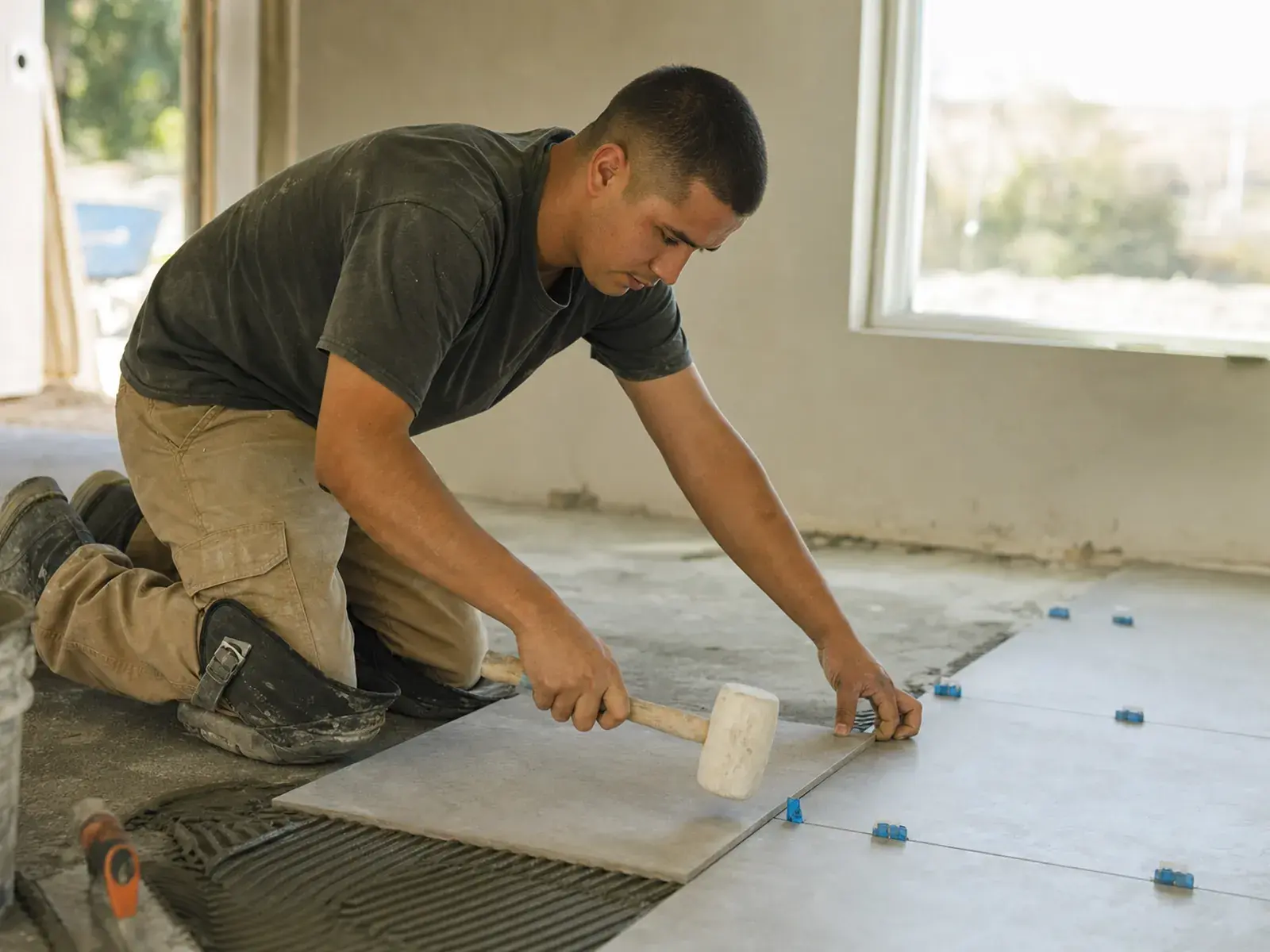
A tile installer setting large-format porcelain floor tiles with spacers

Run every tile job start to finish

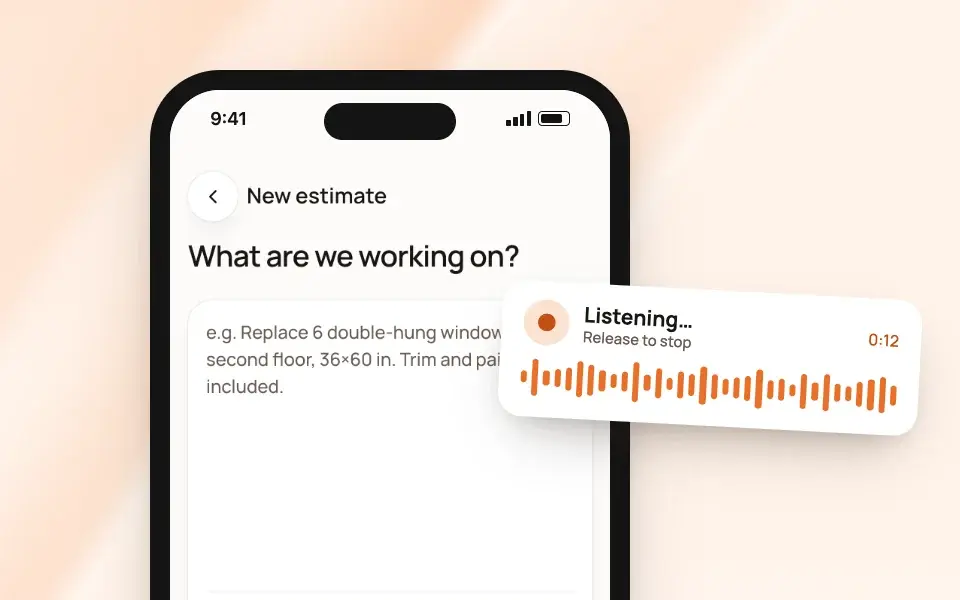
Estimate on site, get it signed before you leave, invoice when the work’s done and see the payment land.

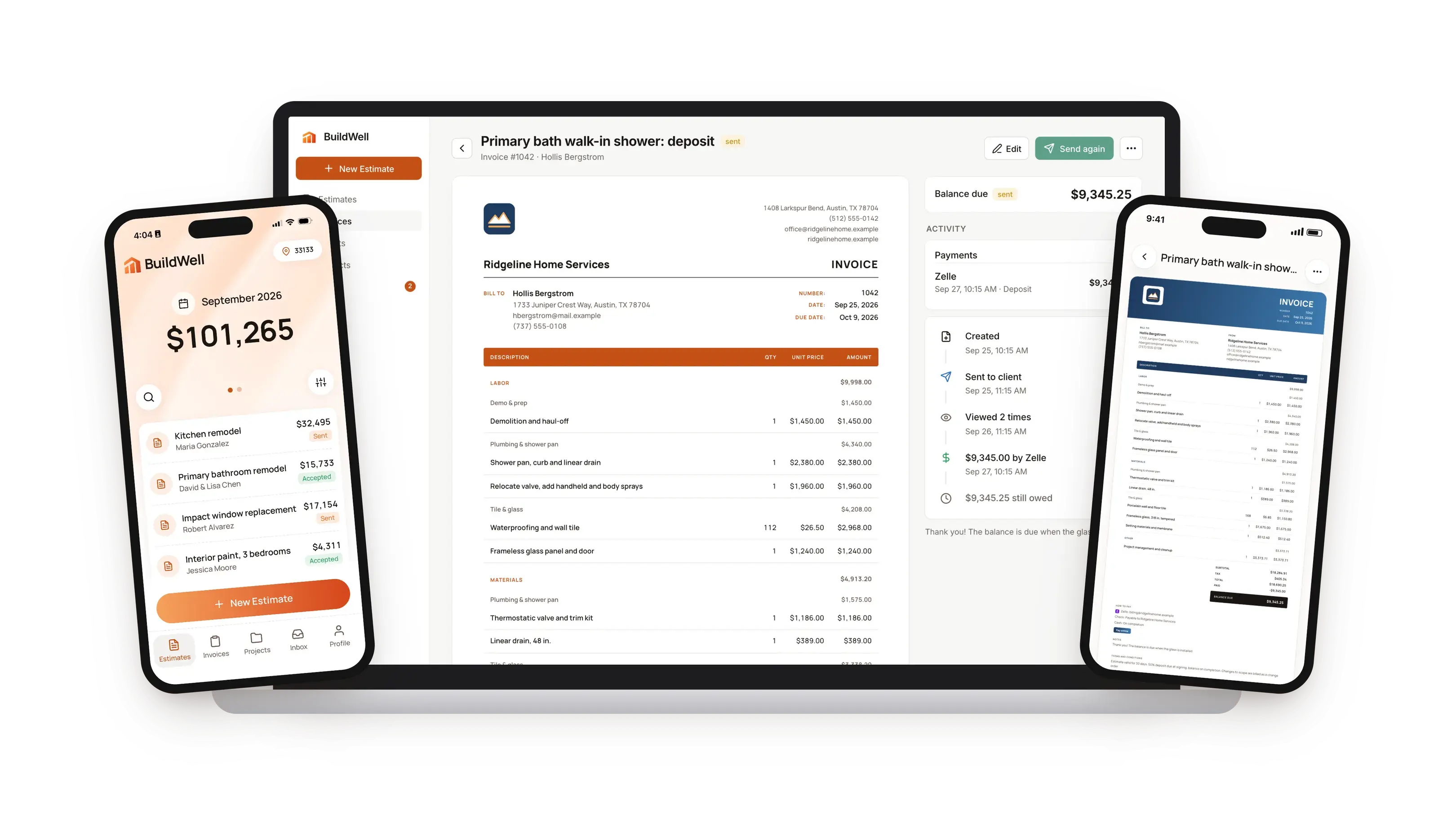
BuildWell on a laptop showing a branded invoice and its payments, the estimates home screen on one phone and an invoice in a different style on another

What is tile estimating software?

Tile estimating software turns measurements and a description of a tile job into an itemized estimate a client can sign.

It works out the square footage of each surface, the prep each one needs, the setting materials and the labor. Then it prices it all for where you work.

A tile price is three jobs stacked

Tile is priced by the square foot, but a tile price is really three jobs stacked on top of each other:

  • Tear-out and prep: removing old tile, backer and underlayment; then cement board, leveling, and a waterproofing membrane or a mortar-bed pan.
  • Setting: laying out and setting the wall and floor tile, which depends on the tile size, the pattern and the number of cuts.
  • Finishing: edge trim, grout, caulked movement joints at corners and changes of plane, and sealing.

One square-foot price breaks on showers

Most tile installers price per square foot with a number that's supposed to include all three. That works for a straight-lay floor in an open room.

It breaks on a shower, where the prep can take as long as the setting. It also breaks on a small bathroom floor that's mostly cuts around a toilet, tub and vanity.

Others write out every step, which is accurate but slow, especially for jobs you're bidding against two other installers.

BuildWell writes out every step for you

BuildWell writes out every step from your description. It asks what changes the price:

  • what's coming out
  • the pan
  • how high the tile goes
  • the floor

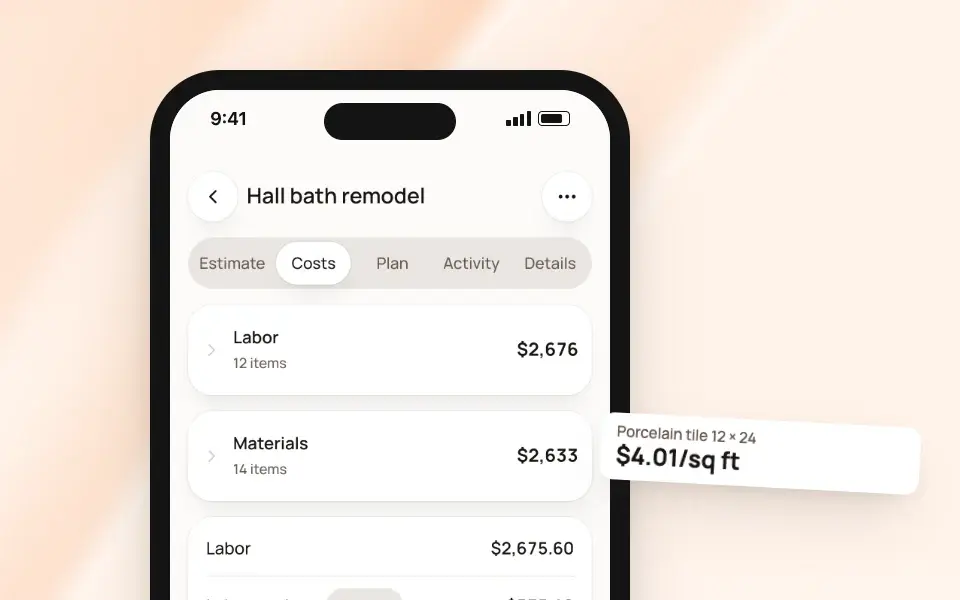
It lists each line of work with the hours it typically takes. It prices materials at stores near the job and labor at your metro's tile setter wage, plus your overhead and markup.

The signed estimate becomes the invoice

Once the grout is dry, the signed estimate becomes the invoice: same lines, same totals, with any deposit already applied.

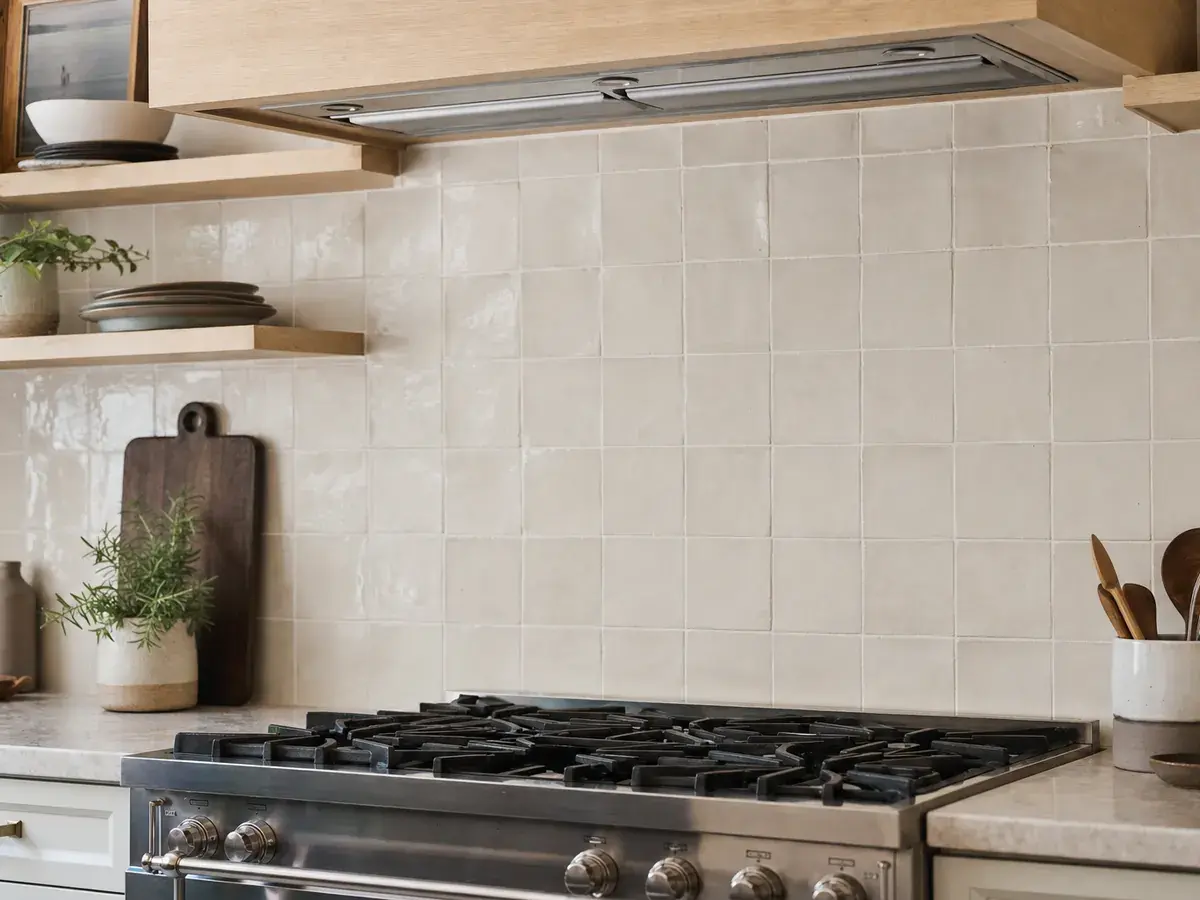
A finished tiled kitchen backsplash behind a range

Why tile installers choose BuildWell

Your estimate shows the work under the tile

Backer, membrane and a sloped pan show why your shower costs more.

It asks about the substrate first

Down to studs? Mortar-bed pan or tub? Tile to the ceiling? Leveling?

Client-supplied tile is listed at no charge

You price the setting materials and labor, or use an allowance.

Setting materials are priced near the job

Thinset, grout, membrane and cement board. Missing prices are marked.

Labor is priced at the tile setter wage

Local tile setter wage, helper wage for mixing, plus your markup.

Clients see the finished tile before signing

Attach a before-and-after render made from a photo of the bathroom.

Estimates in English or Spanish

Send each client their estimate and invoice in their language.

Same account on phone and computer

Start on site and finish at your desk. Nothing to sync.

Built for tile installers

What changes when tile installers price jobs from real data instead of memory.

  • Prep priced as carefully as tileDemo, backer, waterproofing, pan and leveling each get their own line.
  • Setting materials at nearby storesThinset, membrane, grout and trim priced at a store near the job.
  • The client's tile, your laborClient-bought tile is listed at no charge, or priced as an allowance.
  • Paid when the grout's drySigned on their phone. Invoice a deposit, then the balance when done.
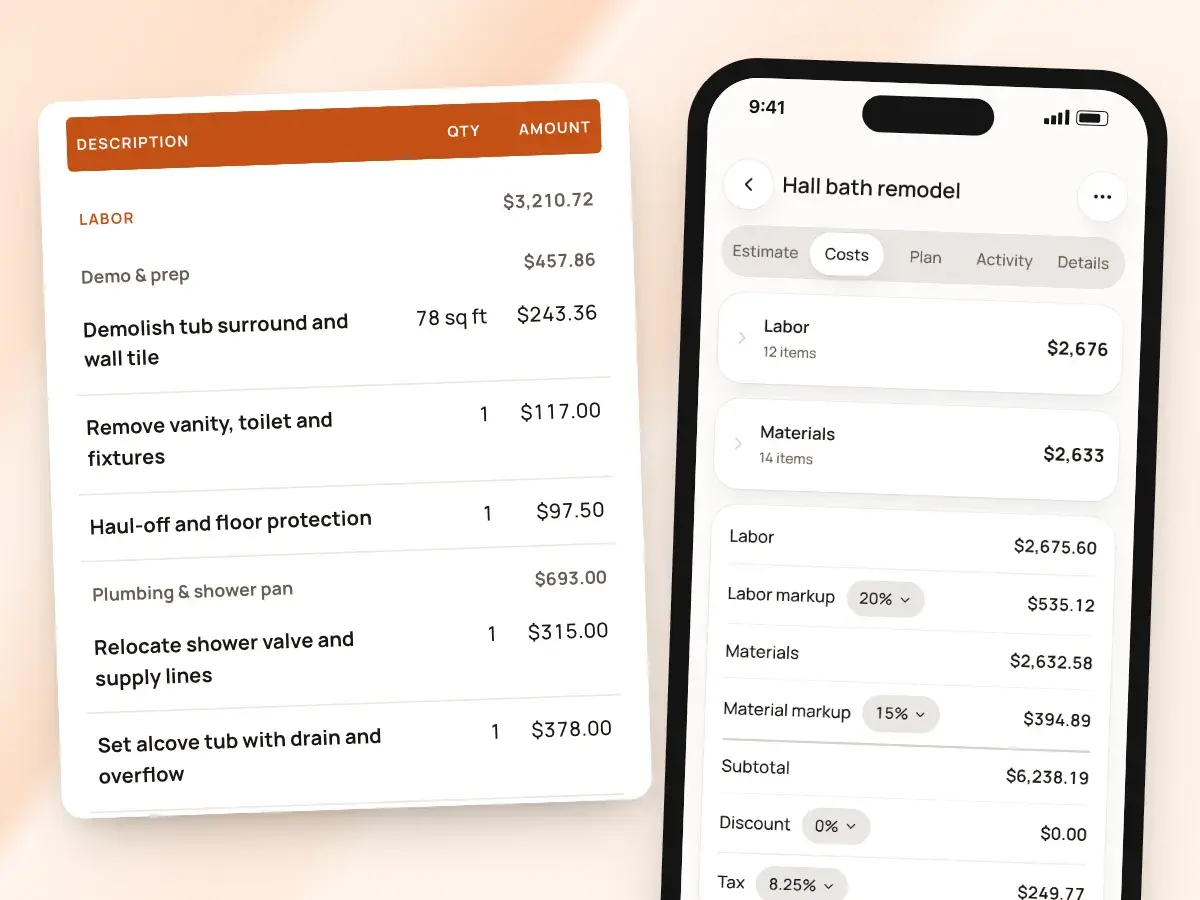
An estimate’s costs on a phone beside its priced lines, grouped by job step

How to price tile jobs

Build a tile price surface by surface, in the order the work happens:

  1. Demolition: old tile, backer and underlayment, plus protection and haul-off.
  2. Substrate: cement board on walls and floors, leveling, and the pan.
  3. Waterproofing: a liquid or sheet membrane on every wet wall.
  4. Setting: walls and floors, sized and patterned as the client chose.
  5. Finishing: edge trim, grout, caulked movement joints and sealing.

Measure each surface, edge and corner

Measure each wall's width times the height the tile goes, and each floor's length times its width.

Count the edges that need trim, and the inside corners and perimeters that need caulk instead of grout.

Add more waste for patterns and stone

Then add waste to the tile quantity. Add more for:

  • diagonal and herringbone layouts
  • large tiles with lots of cuts
  • natural stone with variation you'll want to sort

Price each line from your own hours

These are the common lines on a bathroom tile estimate and what each is measured in:

  • Square foot: wall and floor work.
  • Linear foot: trim and caulk.
  • Each: a pan.

The hours and prices are yours to set, and every line's hours are editable for pattern, tile size or your crew's speed.

Line itemMeasured in
Demo wall tile down to studsSquare feet
Demo floor tile and underlaymentSquare feet
Install cement board on shower wallsSquare feet
Install cement board floor underlaymentSquare feet
Self-leveling floor prepSquare feet
Apply liquid waterproofing membraneSquare feet
Build mortar bed shower pan with linerEach
Set ceramic wall tileSquare feet
Set porcelain floor tileSquare feet
Install tile edge trimLinear feet
Grout tile wallsSquare feet
Grout tile floorSquare feet
Caulk tile perimeter jointsLinear feet
Stage and mix tile setting materialsEach
Each one its own line on the estimate. The hours and prices are yours to set.

A shower and floor add up to 34.5 hours

Example: Here's how the math works on a 3-by-5-foot alcove shower tiled 8 feet high (88 square feet of wall) with a mortar-bed pan, plus 60 square feet of floor across the bathroom and shower. The hours below are example figures. Say your own records show your crew needs:

Work Your hours
Cement board on the walls 3
Waterproofing membrane 2
Mortar-bed shower pan 6
Wall tile 12
Floor tile 6
Grouting the walls 3.5
Grouting the floor 2
Total 34.5

Edge trim along the top and sides of the shower, plus staging and mixing at the helper wage, go on top.

Small floors take longer per square foot

A small bathroom floor is mostly cuts around the toilet, tub and vanity. So it usually takes longer per square foot than an open kitchen floor.

Track your own times on both and price them differently.

Your labor rate covers more than the wage

The tile setter's wage is the start of your rate, not the whole of it. The rate also has to pay for:

  • workers' comp and liability insurance
  • saws, mixers, levels and dust control
  • the extra trips while a pan or a mortar bed cures
  • callbacks, and the hours spent bidding

BuildWell builds the rate in three steps

BuildWell builds the rate per line:

  1. Wage: the median for that line's trade where you work.
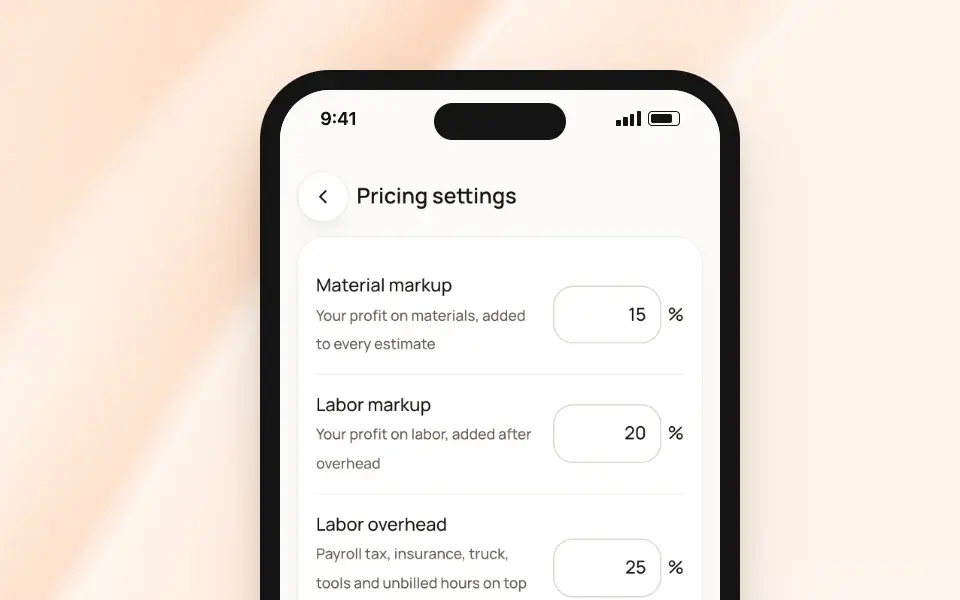
  2. Overhead: your labor overhead, starting at 100%, which doubles the wage.
  3. Markup: your labor markup, starting at 20%.

Example: Say your setter costs you $30 an hour; use your real figure. The 34.5 setter hours on that shower and floor come to:

  • Wages: 34.5 × $30 = $1,035
  • With 100% overhead: $2,070
  • With 20% markup: $2,484 for the labor

Demolition, trim, staging and materials come on top.

Price materials, allowances and every extra trip

  • Setting materials: price backer, thinset, membrane, liner, grout, trim and sealer at what they cost near the job, plus your markup. BuildWell's material markup begins at 20%.
  • The tile itself: price it at your cost plus markup, set an allowance per square foot, or mark it client-supplied. With an allowance, say in your terms how selections above or below it are billed.
  • Extra trips: a mortar bed, a flood test and grout all need time between steps. Many installers flood test a pan before tiling, and some jurisdictions inspect it. Price the trips, or the job eats them.
  • Niches, benches and linear drains: add them as custom line items with your own hours and rate.
  • Plumbing and permits: moving a valve or drain usually needs a licensed plumber and a permit. BuildWell adds your flat permit fee to the estimate when it includes permits.
How to start a tile business

Check what your state requires for tile

Licensing for tile installers varies:

  • Some states license specialty contractors.
  • Others fold tile into a home improvement or general contractor registration, often above a dollar threshold.
  • Some leave it to cities.

Plumbing changes in a shower generally need a licensed plumber whatever your own license covers. Your state's licensing board will tell you what applies.

Get lead-safe certified for older homes

Demolishing tile and drywall in a house built before 1978 can disturb lead paint. The EPA requires your firm to be certified and the work done or directed by a certified renovator.

BuildWell adds a lead-safe setup and cleanup line when you tell it the home is that old.

Control silica dust from the start

OSHA's silica rule for construction covers cutting and grinding tile, stone and cement board. Compliance includes:

  • wet cutting
  • vacuums with the right filters
  • respiratory protection where it's needed

Price the equipment in.

Set up the business

Many tile installers start as a sole proprietor or a single-member LLC. Then:

  • Get an EIN from the IRS (there's no fee).
  • Open a business bank account.
  • Keep every deposit and supply purchase in it.

Insure before the first job

  • General liability: remodelers, builders and homeowners will ask for your certificate.
  • Workers' compensation: most states require it once you have employees.
  • Commercial auto: for the truck or van that carries the saw and the materials.

Learn the installation standards

Industry standards and manufacturers' instructions cover substrate flatness, mortar coverage, movement joints and waterproofing.

Following them is how a shower stays dry. It's also what an inspector or a warranty claim will measure you against.

Put your terms on every estimate

Your terms should cover:

  • what's included in prep
  • how allowances work
  • how hidden damage like rotted subfloor is priced
  • the curing time between steps
  • your warranty

In BuildWell, set them once and every estimate carries them with your logo and license number.

Win the first jobs

Early tile work tends to come from:

  • Remodelers and general contractors who sub out tile.
  • Referrals from finished showers and floors.
  • Before-and-after photos of every job.
  • Local search. A free business profile on the map apps homeowners use, with reviews.

Invoice before you pack the saw

Track which estimates are signed, which deposits are in, and which balances are open. Send the final invoice before you pack the saw.

Tile installer pay and taxes

Earnings depend on the work and the market

Tile setter wages vary by metro area and by experience. Custom shower work often pays differently from production floors.

As an owner, you earn the margin between your price and your costs. So how you price prep and setting matters more than any wage table.

Self-employment tax is 15.3% of net earnings

As a sole proprietor or single-member LLC, you pay self-employment tax on your net earnings: 15.3% in total.

  • Social Security, 12.4%: applies to net earnings up to the Social Security wage base, which is $184,500 for 2026.
  • Medicare, 2.9%: applies to all of it.
  • Deduction: you can deduct half of the self-employment tax on your income tax return.

Federal and state income tax are owed on top, so keep a share of each payment in reserve.

Pay estimated taxes every quarter

Pay estimated tax during the year with Form 1040-ES. Payments are usually due in:

  • mid-April
  • mid-June
  • mid-September
  • mid-January

Missing them can mean penalties even if you pay the full amount in April.

Track your deductions as you go

Tile businesses commonly deduct:

  • wet saws, grinders, mixers, levels and hand tools
  • dust control and safety equipment
  • the business share of the truck or van
  • fuel
  • insurance and license fees
  • training and certification
  • phone and software

Keep receipts and a mileage log through the year.

Subs paid $2,000 or more get a 1099-NEC

If you pay an unincorporated subcontractor for services, you'll generally need to send them a Form 1099-NEC. For payments made in 2026 and later, that applies once you've paid them $2,000 or more in a year, up from $600 before 2026.

Collect a Form W-9 first.

A helper you direct is likely an employee

A helper you direct day to day is likely an employee, not a contractor. Ask a tax professional if you're unsure.

Check your state's sales tax on materials

States treat tile contractors differently:

  • Some have you pay sales tax when you buy tile and setting materials.
  • Others have you charge it to the client.

Check your state's revenue department. In BuildWell, sales tax applies to materials only, not labor, at the rate you set.

This is general information, not tax or legal advice. A tax professional who works with contractors can tell you what applies to your state and business.

Estimates in minutes
talk through the job, get every line priced
Real local prices
materials and labor priced for your ZIP code
Get paid faster
professional invoices clients pay by card or bank
English or Spanish
on your phone and your computer

Pricing for tile businesses

One plan with everything, billed weekly or yearly.

Weekly
$7.99 / week
Billed weekly. Cancel anytime.
  • AI estimates priced for your area
  • Estimates, invoices, clients and projects
  • Clients sign on any phone
  • Card and bank payments, no extra BuildWell fee
  • iPhone, Android and the web
Start free trial
Best value
Annual
$79.99 / year
About $6.67 a month, billed yearly
  • AI estimates priced for your area
  • Estimates, invoices, clients and projects
  • Clients sign on any phone
  • Card and bank payments, no extra BuildWell fee
  • iPhone, Android and the web
Start free trial

Both plans include every feature and start with a 3-day free trial. Add a card to start; you’re not charged until the trial ends. Cancel anytime.

Tile software FAQ

01Can BuildWell price a tiled shower from demo to grout?
Yes. Describe the shower's size, how high the tile goes, the pan, and what's coming out. BuildWell lists demolition, cement board, waterproofing, the pan, wall tile, trim, grout and caulk as separate lines, each with materials and labor, and you can edit any of them before you send it.
02The client is buying the tile. How do I price that?
Mark the tile as client-supplied. It stays listed on the estimate at no charge, so the scope is clear, and you price thinset, grout, trim and your labor. If they haven't chosen yet, price an allowance per square foot instead and say how overages are billed.
03How do I account for large format tile or a herringbone pattern?
Change the hours. Every line's labor is editable, so raise the setting hours for a pattern, a mosaic or large tile that needs extra flattening, and add your extra waste to the tile quantity. Your edits stay on that estimate.
04Can I add a niche or a bench?
Yes. Add a custom line item with your own description, hours and rate, and any materials it needs at your own prices. Prices you type in for a material are saved for your next estimate.
05Does it handle floors outside the bathroom?
Yes. A kitchen, entry or laundry floor is priced as flooring work in BuildWell, with tile demolition, leveling, an uncoupling membrane, porcelain tile and grout and sealing in the same catalog.
06How does BuildWell price tile labor?
Tile lines are priced at the median tile setter wage for your metro from the Bureau of Labor Statistics. Demolition is priced at the construction laborer wage and mixing and staging at the helper wage. Then your labor overhead and markup apply.
07Can I show the client the finished shower?
Yes. Take a photo of the existing bathroom and describe the new tile, and BuildWell makes a before-and-after render you can attach to the estimate. It's an illustration of the idea, not an exact drawing.
08Can clients sign tile estimates from their phone?
Yes. The link opens in any browser; they read each line with your logo and terms and sign with a finger. You'll know when they've opened it and when they accept or decline.
09Does BuildWell work in Spanish?
Yes. Use the app in English or Spanish, and print each estimate or invoice in whichever language your client prefers.
10What does BuildWell cost?
BuildWell is $7.99 a week or $79.99 a year, and you can try it free for 3 days. The subscription covers iPhone, Android and the web.

Price your next tile job today

Estimates, invoices, e-signatures and payments in one place, on your phone and on the web.

Start for free →3-day free trial. Cancel anytime.