BuildWell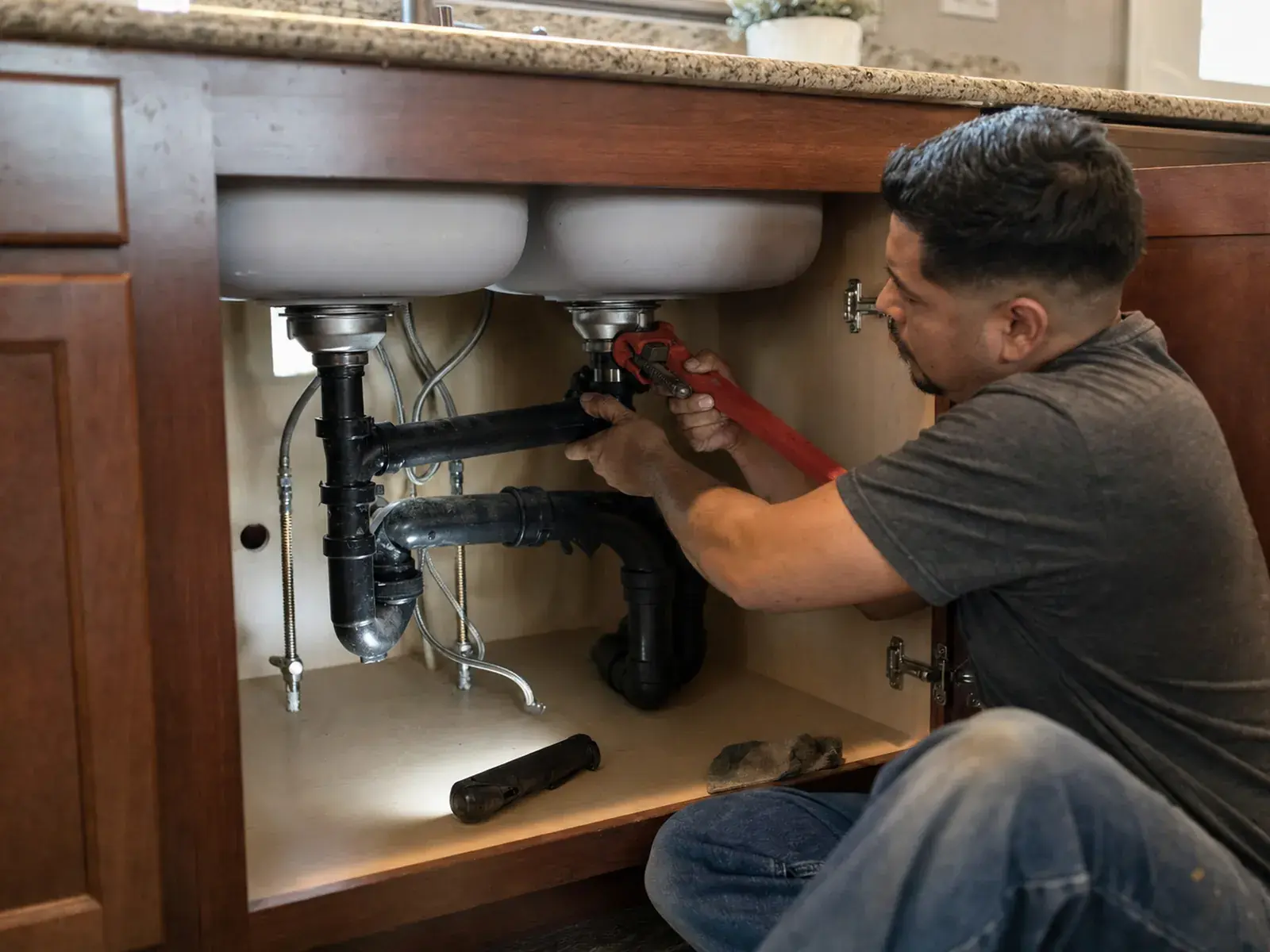
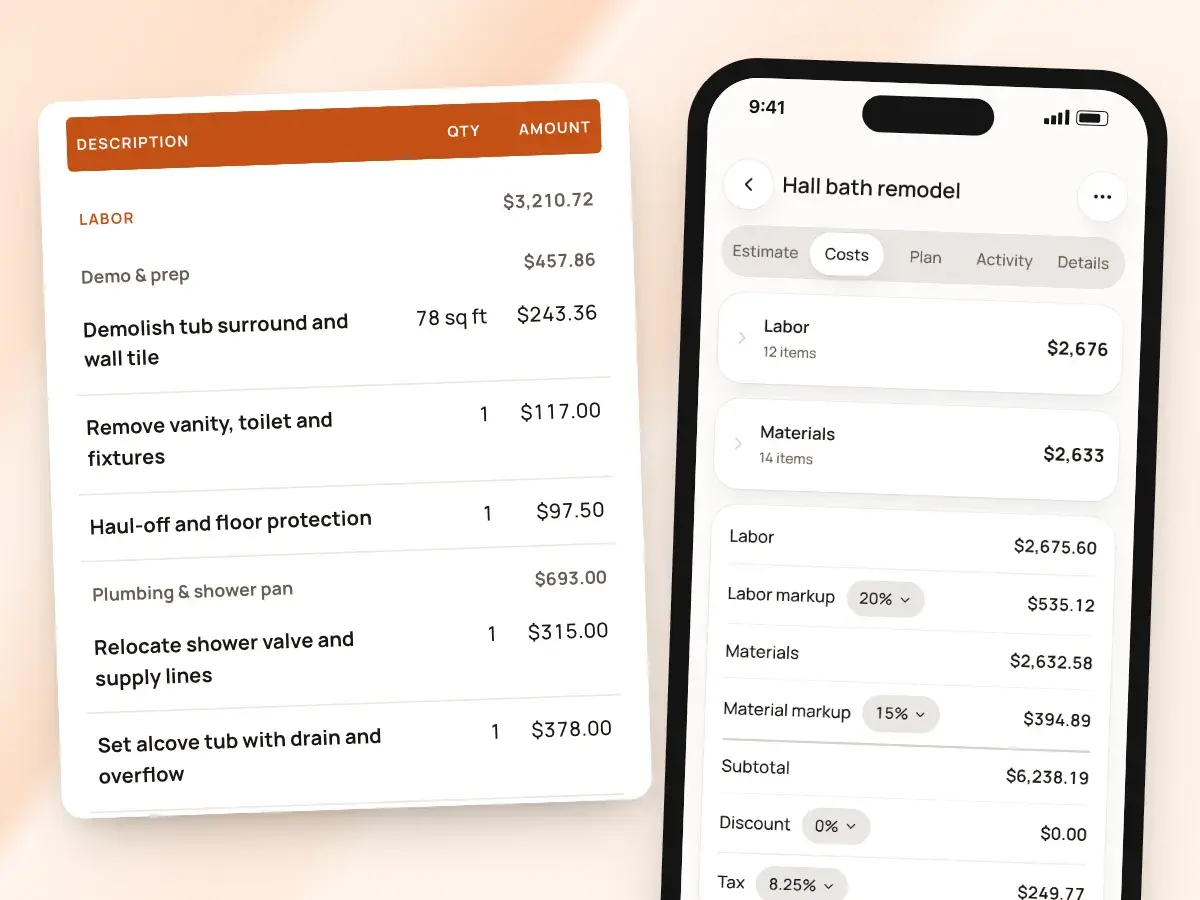
Every plumbing price comes down to the same three pieces:
- Labor: hours times a rate that covers your real costs.
- Materials: what the parts cost you, plus a markup.
- Extras: permits, disposal, trip charges, and the cost of getting it wrong.
Start from your own hours on each line
Start with how long each part of the job actually takes you. These are common plumbing lines and what each is measured in:
- Each: fixtures, valves, heaters and repairs.
- Linear foot: supply and drain runs.
The hours and prices are yours to set. Your crew may be faster or slower than the next one, and every line's hours are editable.
| Line item | Measured in |
|---|---|
| Toilet removal and disposal | Each |
| Toilet set and connect | Each |
| Fixture shutoff valve replacement | Each |
| Lavatory faucet replacement | Each |
| Kitchen sink and faucet installation | Each |
| Garbage disposal installation | Each |
| Dishwasher water and drain hookup | Each |
| Water heater drain down removal and haul off | Each |
| Tank water heater installation and connections | Each |
| Burst water pipe section repair | Each |
| Pex water supply line run | Linear feet |
| 2 in pvc dwv drain line run | Linear feet |
| Shower valve rough-in with backing | Each |
| Rough plumbing pressure test and leak check | Each |
| Sump pump install with discharge piping | Each |
| Frost-free hose bib replacement | Each |
Price removal and install as separate lines
Notice that removal and installation are separate lines. A water heater replacement isn't one task.
Draining down, disconnecting and hauling the old unit takes its own time before the new one goes in. Pricing them separately keeps you from absorbing the removal on every job.
Your labor rate covers more than the wage
A plumber's wage isn't your labor rate. Your rate has to cover:
- the wage
- payroll taxes, workers' comp and liability insurance
- the truck, fuel and tools
- the hours nobody pays for: driving, quoting, picking up parts, callbacks
Then it needs a profit.
BuildWell builds the rate in three steps
- Wage: the median plumber wage for your metro.
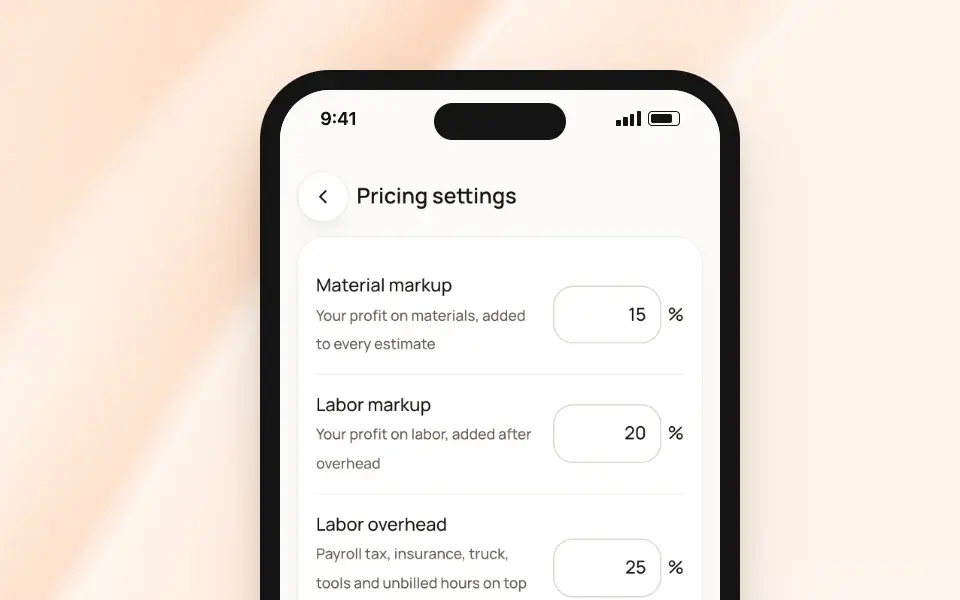
- Overhead: your labor overhead, which starts at 100%, doubling the wage.
- Markup: your labor markup, which starts at 20%.
Both percentages live in Pricing settings, and you set them once.
Example: Say your plumber costs you $30 an hour in wages. Use your real number. Say your records show a water heater swap takes your crew 7.5 hours (2.5 to drain and remove, 5 to install); those hours are example figures. It works out like this:
- Wages: 7.5 hours × $30 = $225
- With 100% overhead: $450
- With 20% markup: $540 for labor
If labor looks high, check your overhead
If that number looks high next to what you've been charging, check your overhead. Most small shops undercharge because they price the wage and forget the rest.
Mark up parts to cover trips and returns
Price parts at what you'll actually pay for them this week, near this job. Then add a markup that covers:
- the trip to pick them up
- the returns
- the fitting you didn't need but bought anyway
- your warranty on what you install
BuildWell starts material markup at 20%, and you can change it per estimate.
List client-supplied fixtures at no charge
If the client supplies a fixture, mark it as client-supplied. It stays listed on the estimate, so the scope is clear, but it isn't charged.
Put permits, disposal and surprises on paper
- Permits: many jurisdictions require one for water heater replacements, new fixtures and anything that changes the drain or supply lines. Add your permit fee as its own line. In BuildWell, a flat permit fee is added automatically when the estimate includes permits.
- Disposal: hauling an old water heater, a toilet or a section of cast iron costs time and a dump fee. Put it on the estimate.
- The unexpected: for work behind walls or under slabs, say in writing what's included and how you'll price what you find. "Includes replacing up to 10 feet of supply line; additional pipe at $X per foot" protects you and reads as fair to the client.
Flat rate for routine work, hourly for unknowns
Use flat rates for the jobs you do every week, like faucets, toilets, disposals and shutoff valves, where the work rarely changes. Use time and materials for remodels, repipes and anything you can't see.
Either way, build the number from the same three pieces, so you know what's inside your price.