BuildWell

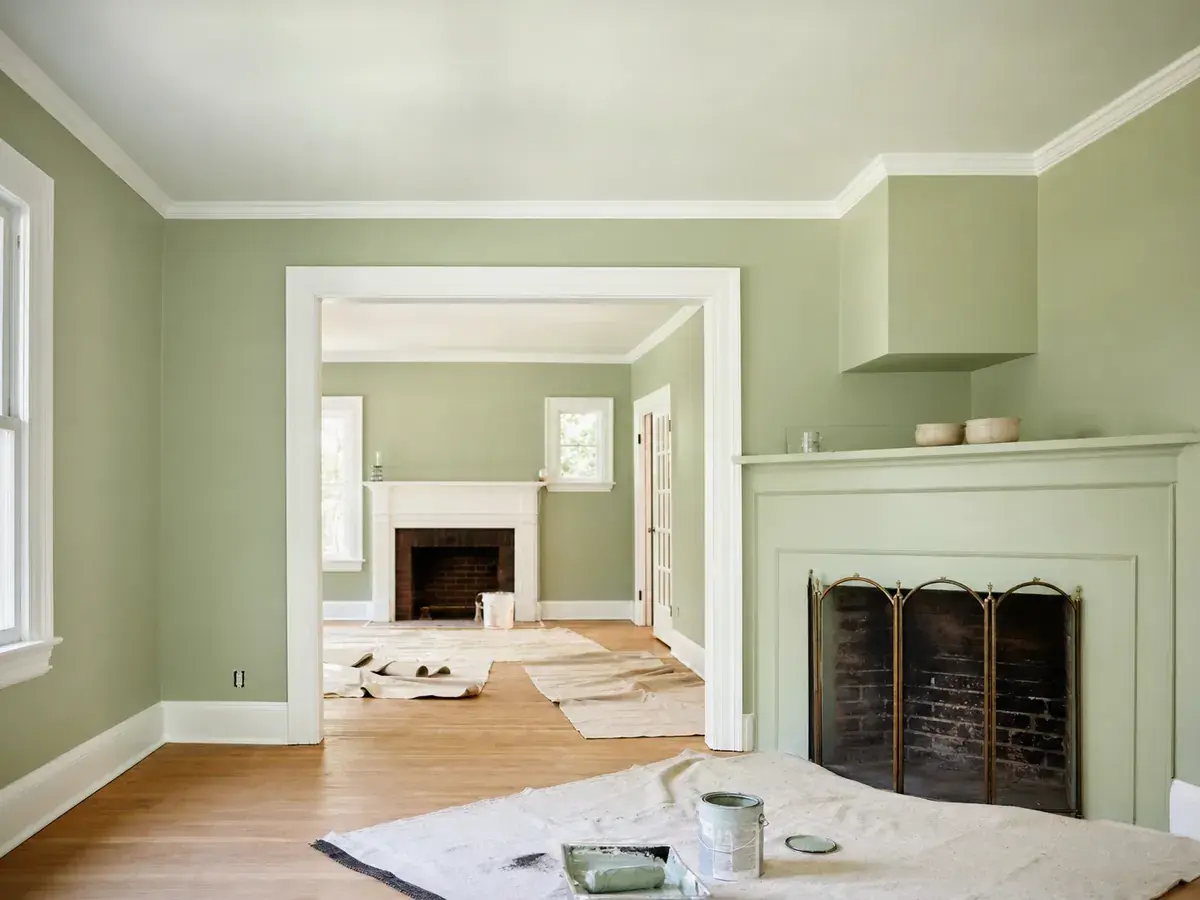
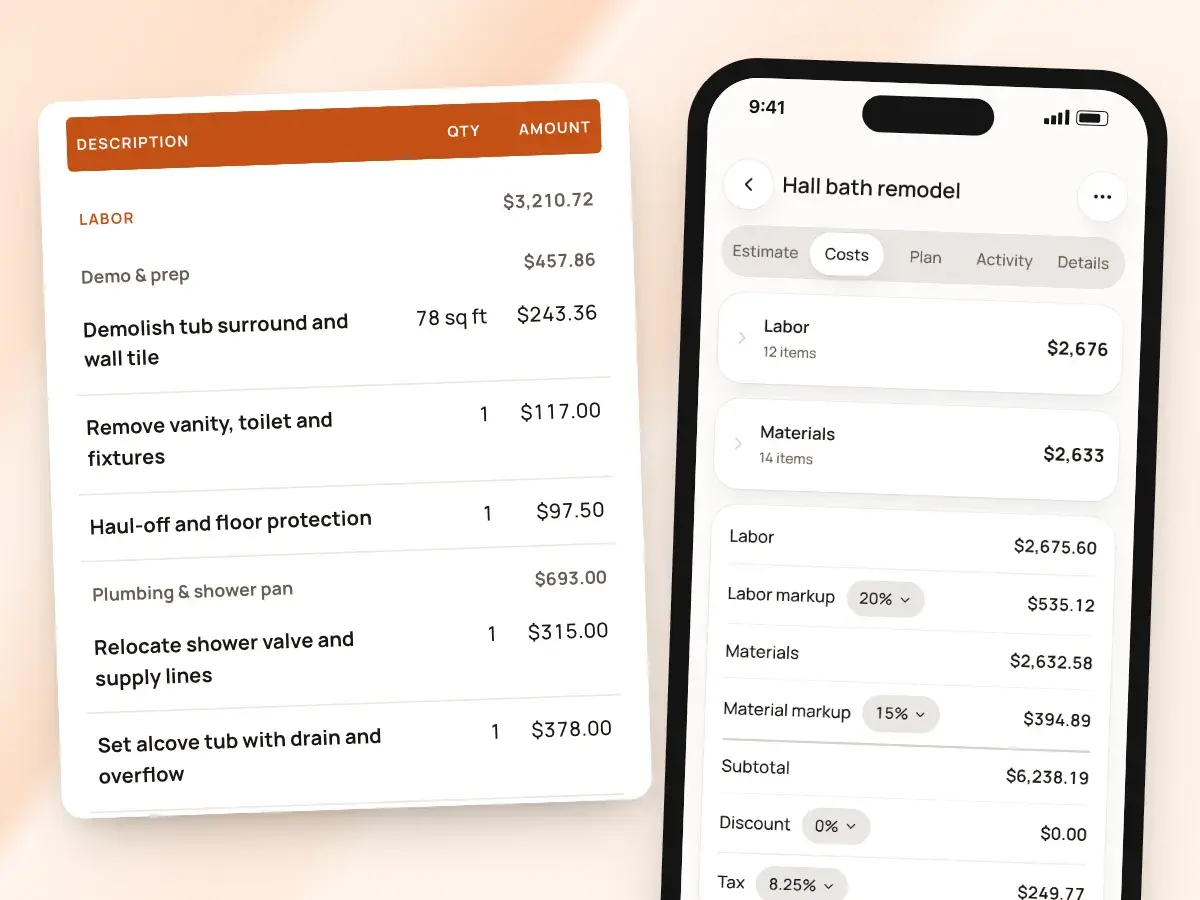
An interior painting price has four parts:
- Protection and setup: moving and covering furniture, protecting floors, masking trim, windows and fixtures.
- Prep: patching, caulking, sanding, removing wallpaper or popcorn, and priming or sealing stains.
- Finish coats: walls, ceilings, trim, doors and anything else in the scope.
- Cleanup and touch-up: pulling masking, touching up, putting the room back and hauling out trash.
Measure walls, not floors
Wall area is the perimeter of the room times the ceiling height, less large openings.
Example: A 12-by-15 room with 8-foot ceilings has 54 feet of perimeter and 432 square feet of gross wall. Take out a door and two windows and you're near 380.
Raise the ceiling to 10 feet and the same room has 540 square feet of gross wall. That's why per-floor-foot pricing goes wrong on tall rooms.
Ceilings, baseboard and pieces
- Ceilings are the floor area.
- Baseboard is roughly the perimeter, less door openings.
- Doors, windows and closets count as pieces.
Line items: price each one from your hours
These are the common lines on an interior painting estimate and what each is measured in:
- By the square foot: walls, ceilings, primer and floor protection.
- By the linear foot: trim, caulk and masking.
- By the each: doors, patches and furniture moving.
The hours and prices are yours to set, and every line's hours are editable to match your crew's pace.
| Line item | Measured in |
|---|---|
| Floor protection with rosin paper | Square feet |
| Move and cover furniture per room | Each |
| Mask baseboard and trim with tape | Linear feet |
| Patch nail holes and small dents | Each |
| Patch drywall hole up to 6 in with mesh | Each |
| Caulk trim and casing joints | Linear feet |
| Remove wallpaper and clean adhesive residue | Square feet |
| Scrape popcorn ceiling texture | Square feet |
| Prime walls one coat with roller | Square feet |
| Brush and roll walls two coats | Square feet |
| Brush and roll ceiling two coats | Square feet |
| Spray apply walls and back-roll | Square feet |
| Paint baseboard two coats in place | Linear feet |
| Paint door slab both sides two coats | Each |
| Paint door casing and jamb two coats | Each |
| Prime and paint cabinet door with enamel | Each |
A bedroom's painting runs about 13 hours
Example: Here's a bedroom with 400 square feet of wall after openings, a 200-square-foot ceiling, 50 feet of baseboard and one door. The hours below are example figures; say your own records show your crew needs:
Work Your hours Walls, two coats 5 Ceiling, two coats 3 Baseboard, two coats 2.5 Door slab, both sides 1.5 Door casing and jamb 1 Painting total 13
Moving and covering the furniture and protecting the floor add more time. BuildWell prices those at the construction laborer wage, not the painter wage.
Prep comes on top, and it depends entirely on the walls you find.
Your labor rate covers more than wages
A painter's wage isn't your labor rate. Your rate has to cover:
- the wage
- payroll taxes, workers' comp and liability insurance
- ladders, sprayers, drop cloths and the van
- the hours spent bidding, buying paint and driving between jobs
Then it needs a profit.
How BuildWell prices each hour
BuildWell builds your rate in three steps:
- Wage: the median painter wage for your metro.
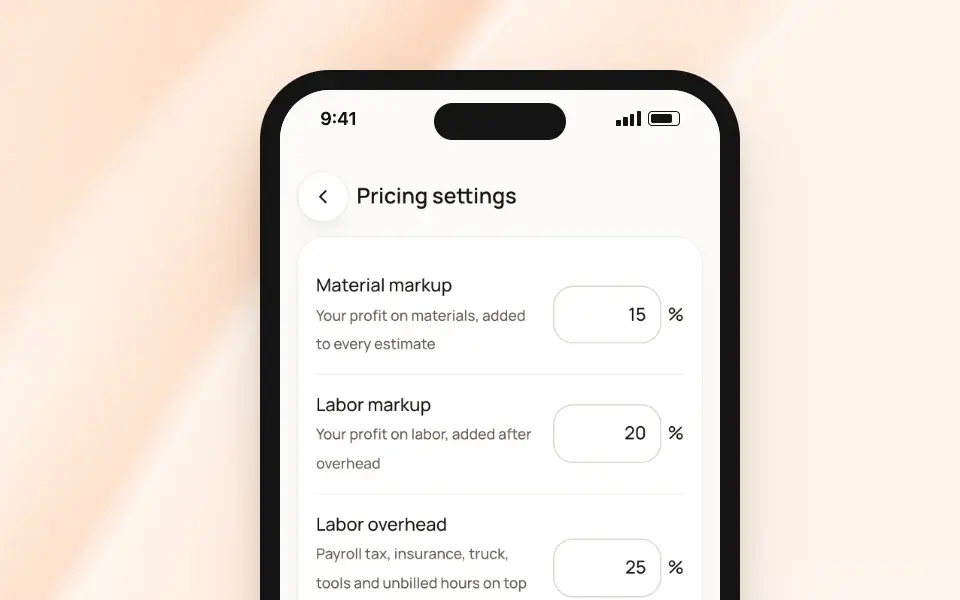
- Overhead: your labor overhead, which starts at 100%, doubling the wage.
- Markup: your labor markup, which starts at 20%.
What the bedroom's labor comes to
Example: Say your painter costs you $24 an hour. Use your real number. The 13 hours of painting in that bedroom come to:
- Wages: 13 × $24 = $312
- With 100% overhead: $624
- With 20% markup: $748.80 for that labor
Read the coverage on the can
Many wall paints list 350 to 400 square feet per gallon per coat on smooth, primed walls. So two coats on the 400 square feet of wall in that bedroom take a little over 2 gallons.
Rough or porous walls and big color changes take more.
Primer, enamel and sundries get their own lines
Primer, ceiling paint and enamel for the trim and door are planned on their own lines.
Sundries like tape, caulk, roller covers and brushes are planned per foot or per piece. They add up with the size of the job instead of being forgotten.
Mark up paint for the trips and leftovers
Add a markup that covers the trips to the paint counter, the color that had to be remixed and the gallon left over. Your material markup starts at 20% and can be set differently on each estimate.
If the homeowner already bought the paint, mark it as theirs. It stays listed so the scope is clear, but it isn't charged.
Prep, primer and the walls you can't see yet
- Color changes: going from a deep color to a light one, or the reverse, can take a primer coat or a third coat. Price it as its own line, not as a surprise.
- Stains and odors: water stains and smoke need a stain-blocking or shellac primer before any finish coat will hide them.
- Wallpaper and popcorn: both take far longer than painting the same area, and what's under them is unknown. Price the removal, then say in your terms how you'll price wall repair you find underneath.
- Homes built before 1978: the EPA's Renovation, Repair and Painting rule requires lead-safe work practices, by a certified renovator, when you disturb painted surfaces beyond its small-repair exemption. Mark the home as pre-1978 in BuildWell's site questions, and the lead-safe setup and cleanup line is added.
Spraying or rolling: price the one you'll use
Spraying covers wall area faster than rolling, and BuildWell gives each method its own line. But the sprayer needs setup and cleaning, and everything that isn't being painted needs masking.
On an empty house or new drywall, spraying usually wins. In a furnished bedroom, rolling often does. Price the method you'll actually use.