BuildWell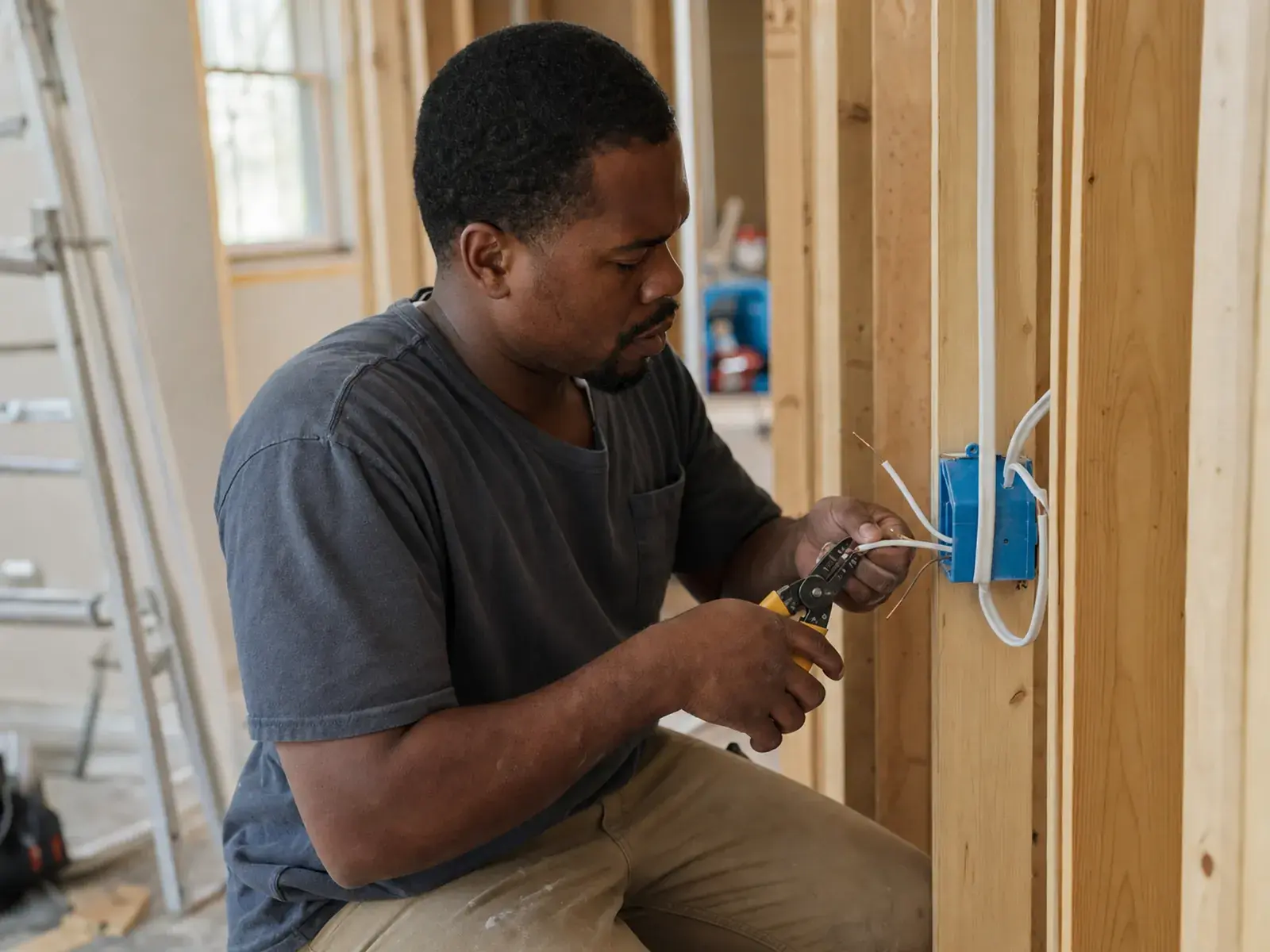
Every electrical price is built from four pieces:
- Devices and fixtures: each receptacle, switch, light, fan and alarm, with its box and trim.
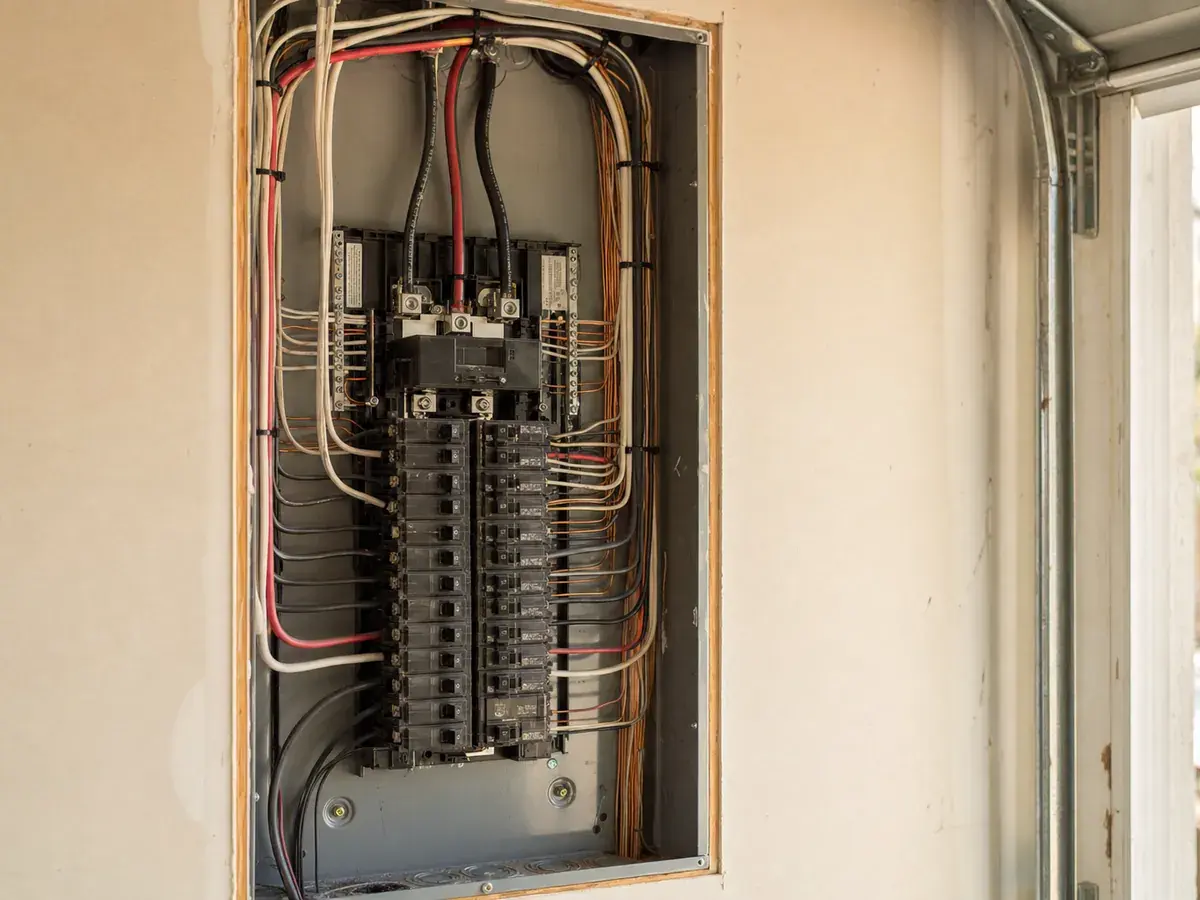
- Runs: the cable from the panel or the nearest circuit to each device, priced by the foot, and more for finished walls than for open framing.
- Panel and circuit work: breakers, new circuits, subpanels and service changes.
- Access and repair: cutting in boxes, fishing, and patching the holes you leave.
Each line item carries your own hours
These are the common lines on a residential electrical estimate and what each is measured in. Cable runs go by the linear foot. Devices, fixtures, circuits and panels go by the each.
The hours and prices are yours to set. Your speed is yours, and every line's hours are editable.
| Line item | Measured in |
|---|---|
| Demo and safe-off of existing devices and fixtures | Each |
| Branch circuit rough-in run 12/2 cable | Linear feet |
| Fish cable through finished wall or ceiling | Linear feet |
| Old work device box cut-in | Each |
| Standard duplex receptacle install | Each |
| GFCI receptacle install | Each |
| Single-pole switch install | Each |
| Three-way switch pair install | Each |
| Remodel recessed LED light install | Each |
| Ceiling fan install with rated brace box | Each |
| Smoke and carbon monoxide alarm install | Each |
| 200 amp main service panel replacement | Each |
| Subpanel installation with feeder | Each |
| 240 volt dryer circuit and receptacle | Each |
| EV charger circuit and unit install | Each |
| Drywall patch at electrical access openings | Each |
Old work takes more hours than new work
The gap between new work and old work is where electrical estimates go wrong.
Example: Take six recessed lights in a finished living room ceiling, on a new switch, with 60 feet of cable fished from the nearest circuit. The hours below are example figures; say your own records show you need:
Work Your hours Six remodel recessed lights 7.5 Fish 60 feet of cable 6 Cut in an old-work box for the switch 0.5 Install the switch 0.5 Total 14.5 Say the same 60 feet run through open framing takes you 2.5 hours instead of 6. That's the difference between pricing a basement before the drywall goes up and a living room after.
Your labor rate covers more than the wage
An electrician's wage isn't your labor rate. Your rate has to cover:
- the wage
- payroll taxes, workers' comp and liability insurance
- the van, fuel, testers and tools
- license renewals and continuing education
- the hours nobody pays for: estimates, supply runs, waiting on inspectors
Wage, overhead, then markup
Then the rate needs a profit. BuildWell builds your rate in three steps:
- Wage: the median electrician wage for your metro.
- Overhead: your labor overhead, which starts at 100%, doubling the wage.
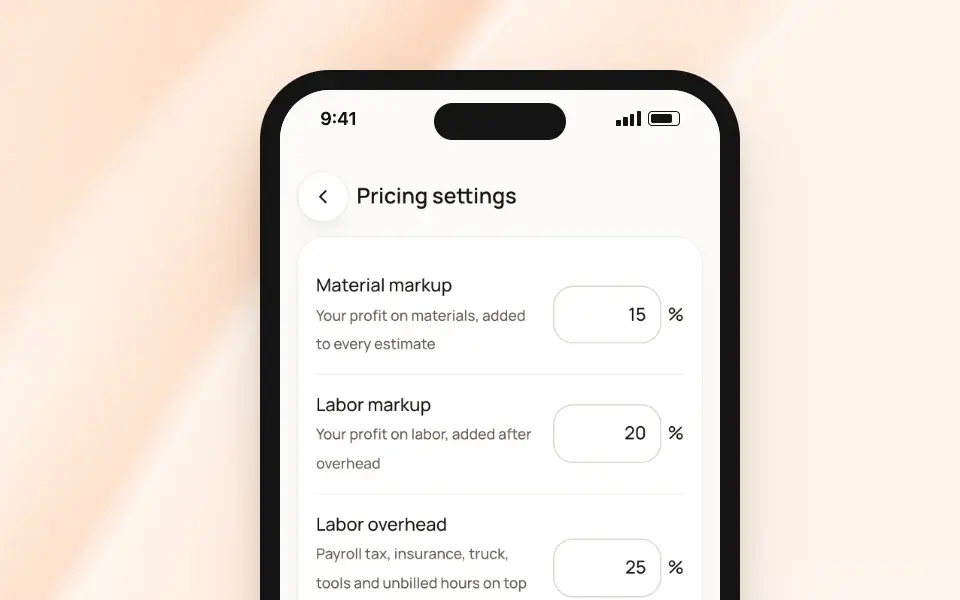
- Markup: your labor markup, which starts at 20%.
Example: Say your electrician costs you $35 an hour. Use your real number. The 14.5 hours of recessed lighting work above come to:
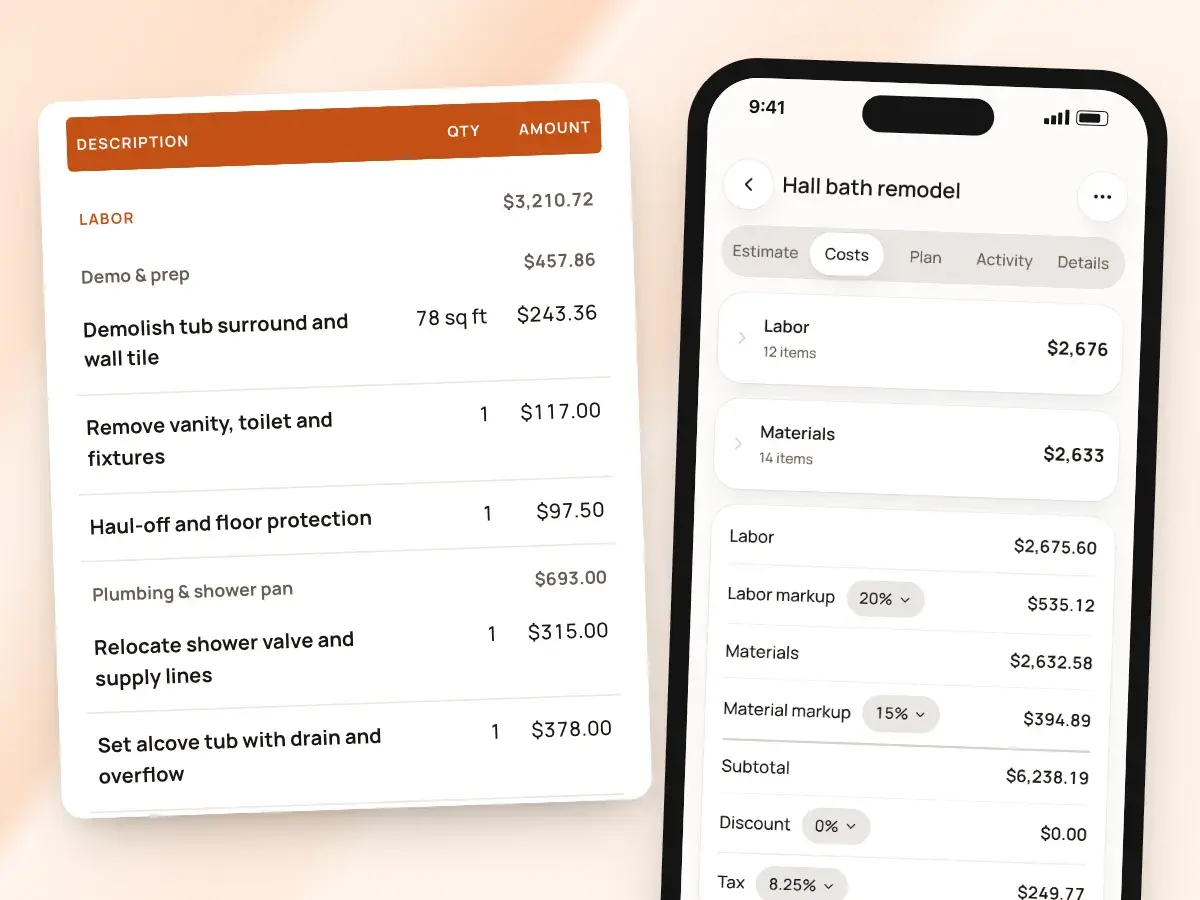
- Wages: 14.5 × $35 = $507.50
- With 100% overhead: $1,015
- With 20% markup: $1,218 for that labor
The patches at the access holes are priced separately, at the drywall wage.
Price materials near the job, then mark up
Price wire, boxes, breakers and devices at what they cost near the job this week. Then add a markup that covers:
- the supply runs
- the wrong breaker you had to return
- your warranty on what you install
BuildWell's material markup starts at 20%, and you can adjust it on each estimate.
Client-bought fixtures are listed, not charged
Fixtures are where homeowners like to choose. If they're buying their own chandelier, fan or charger, mark it as theirs.
It stays on the estimate so the scope is clear, but it isn't charged. Your installation labor still is.
Panels and EV chargers: list each extra
- Service upgrades: a panel replacement usually needs the utility to disconnect and reconnect, a permit, and an inspection before the power comes back on. The panel swap, utility fees, a meter base or a mast each get their own line. Tell the homeowner in writing how long they'll be without power.
- Load calculations: before you add a charger, a range or a heat pump to an older service, do the load calculation the code requires. If the service can't carry it, the estimate should say so and price the upgrade or a load management option.
- EV chargers: the cost turns on the distance from the panel to the parking spot and whether the panel has room. BuildWell's EV charger line covers the circuit and the unit on a short run. Longer runs, trenching or a subpanel go on as their own lines.
Spell out permits, inspections and surprises
- Permits: many jurisdictions require a permit for new circuits, panel work and service changes, with a rough-in inspection and a final. When BuildWell asks whether you're pulling one, answer yes, and your permit fee is added.
- What you find in older houses: ungrounded receptacles, undersized wiring, overloaded circuits and old splices without boxes turn up when you open a wall. Say in your terms what's included and how you'll price code corrections you're required to make once you've found them.
- Trip charge and diagnosis: for service calls, add a line of your own for your trip or diagnostic fee. That way the first half hour is paid for even when the fix is a breaker.