BuildWell

Flooring estimating software that wins more jobs

Estimating and invoicing software for flooring installers. Measure the rooms and get tear-out, prep, install and transitions priced.

  • Store prices near the job
  • Wages for your metro
  • iPhone, Android and web
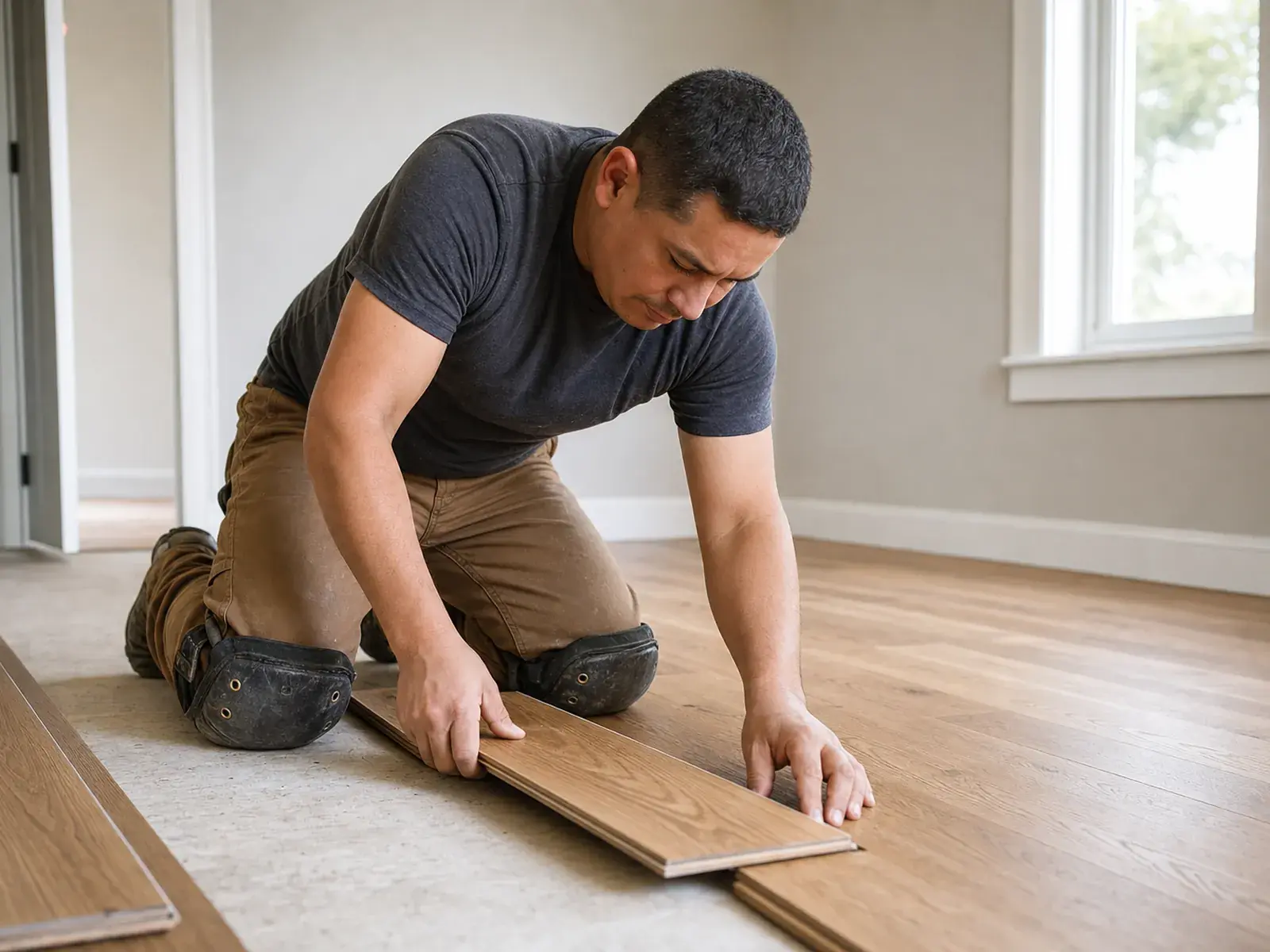
A flooring installer clicking together oak hardwood planks in an empty bedroom

Run every flooring job start to finish

Estimate on site, get it signed before you leave, invoice when the work’s done and see the payment land.

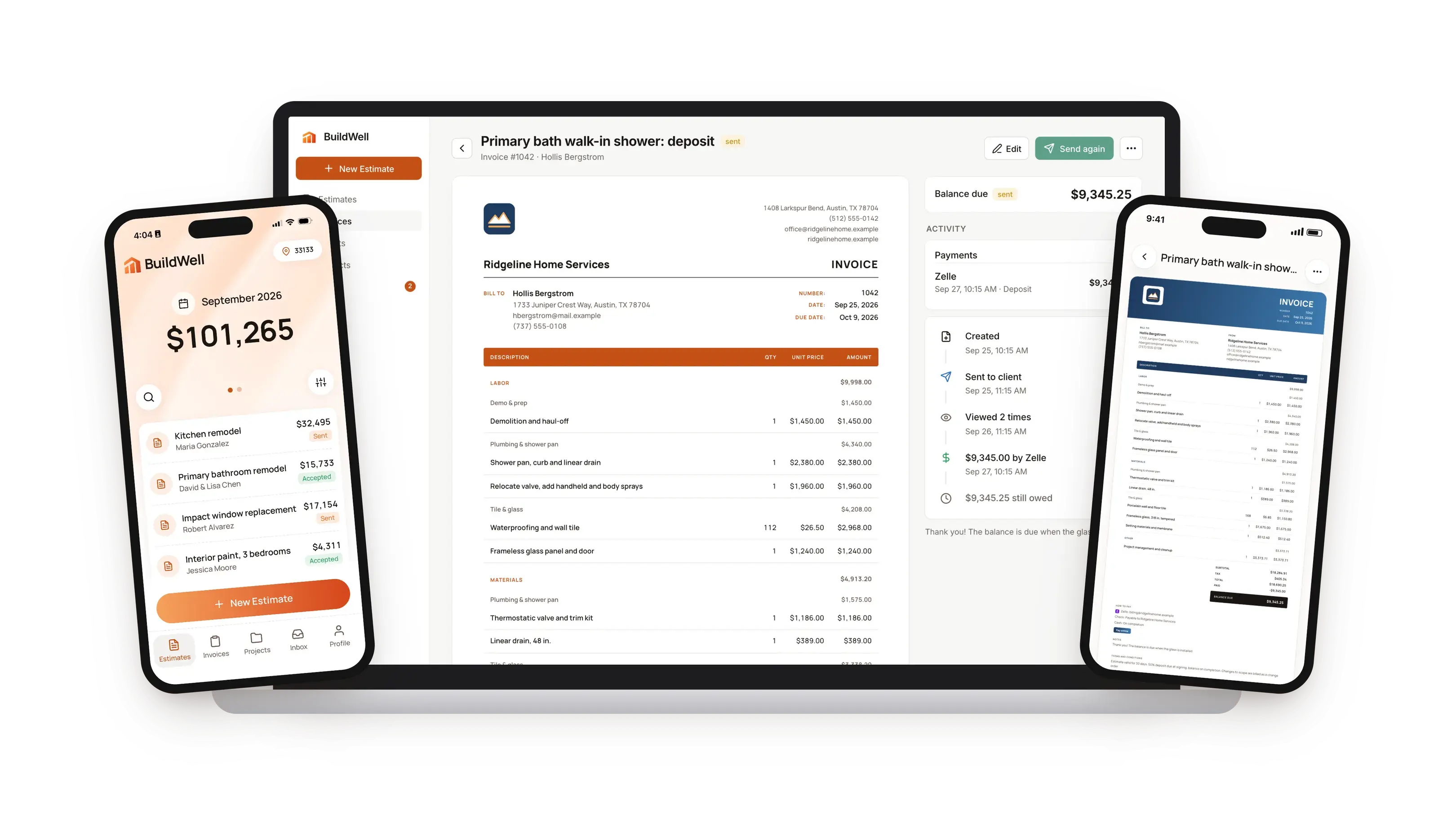
BuildWell on a laptop showing a branded invoice and its payments, the estimates home screen on one phone and an invoice in a different style on another

What is flooring estimating software?

Flooring estimating software turns room measurements and a description of the job into a priced, itemized estimate. The flooring itself is the easy part to count.

The estimate prices everything around the floor

A flooring estimate also has to price everything around it:

  • Tear-out: carpet and pad, tack strip, sheet vinyl, tile or nailed-down hardwood, each at a different pace.
  • Subfloor prep: grinding, leveling, underlayment and repairs to what's under the old floor.
  • Installation: by the square foot, at very different speeds for plank, hardwood, tile and carpet.
  • Trim and transitions: baseboard off and back on, shoe molding, thresholds at every doorway.
  • Waste: extra material for cuts, which changes with the floor and the layout.

Two ways installers usually quote

Most flooring installers quote one of two ways:

  • A price per square foot installed: what homeowners expect, and easy to compare. But a single number per foot leaves the tear-out, the leveling and the baseboard either buried, where they lower your margin, or added later, where they look like surprises.
  • A per-foot price plus a list of extras: more honest, but slow to build by hand, and easy to forget a line.

BuildWell builds the itemized version for you

BuildWell builds the second version from your walkthrough:

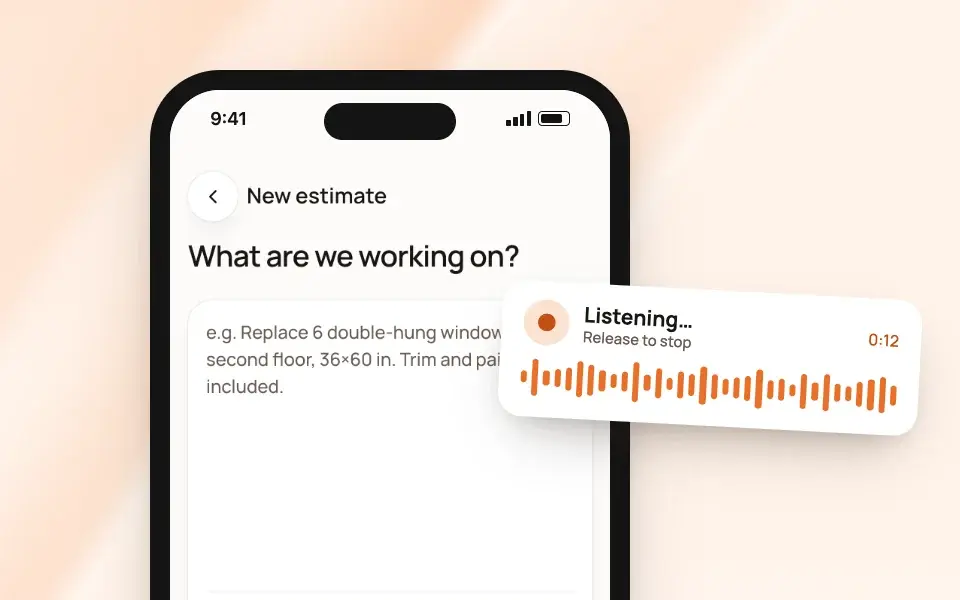
  • You describe the rooms, what's coming up and what's going down.
  • It asks what changes the price: what's under the old floor, the condition of the subfloor, the baseboard and the age of the house.
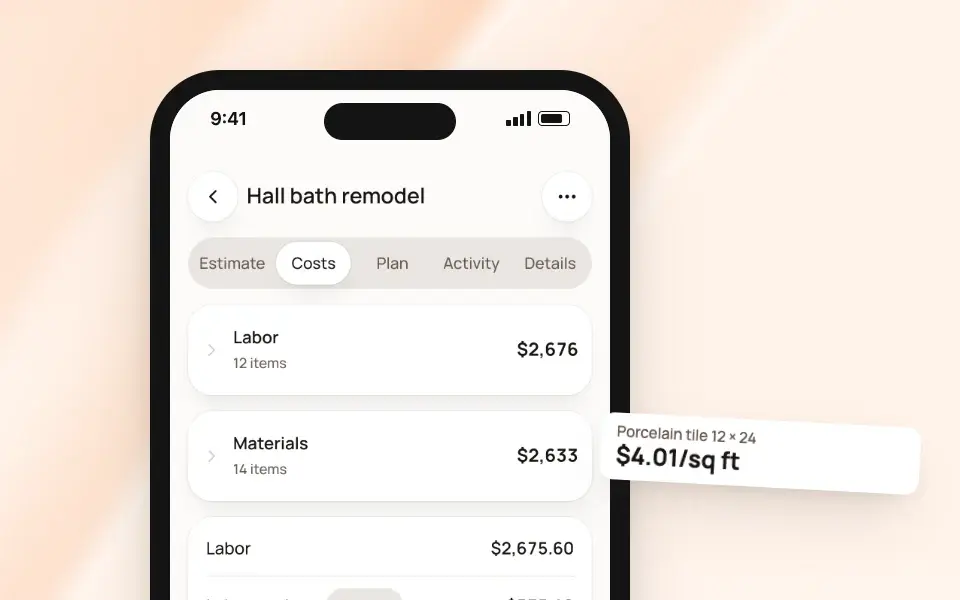
  • It plans each step as its own line with labor hours and materials, priced at stores near the job and wages for your metro.

You review the quantities, adjust what you know better, and send it. When the floor's down, the signed estimate becomes the invoice.

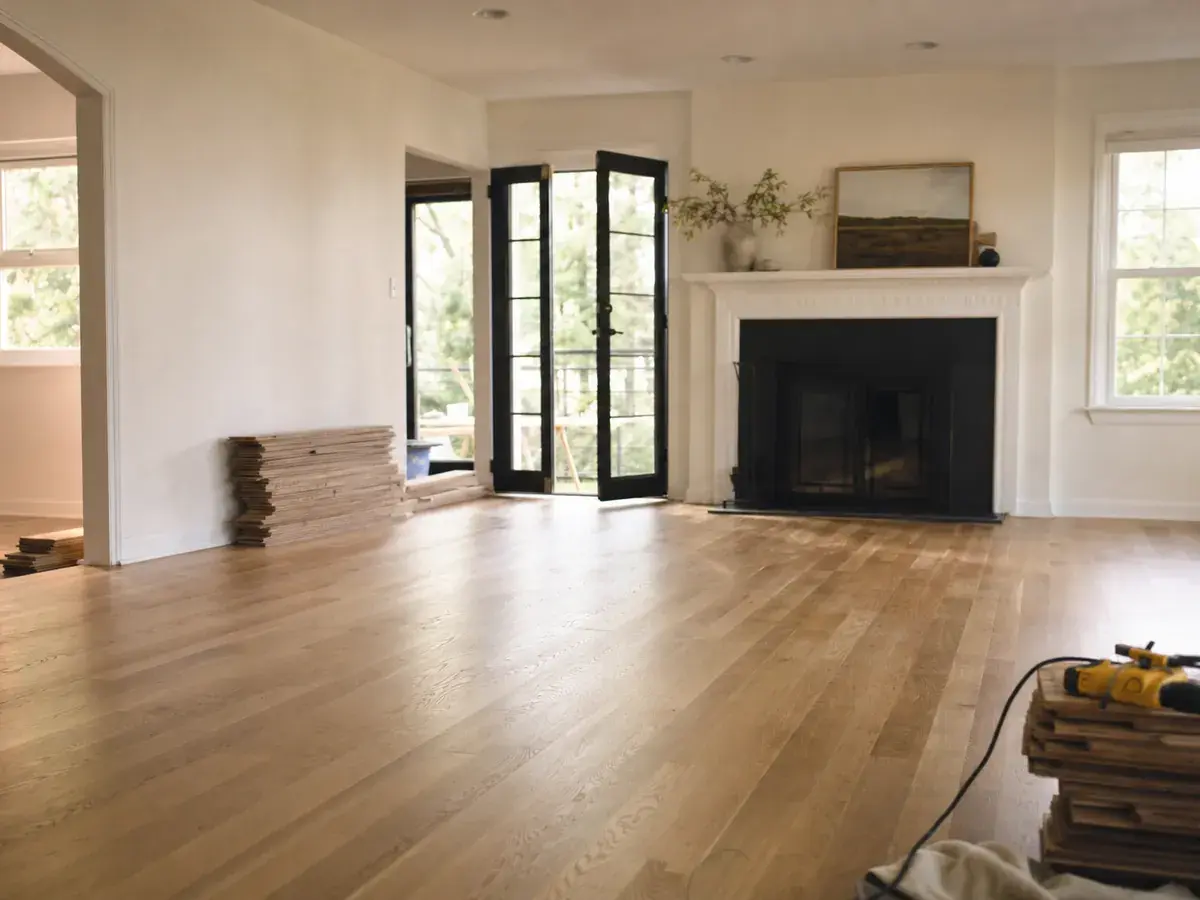
A newly installed oak hardwood floor in a bright living room

Why flooring installers choose BuildWell

You quote at the first visit

Describe rooms as you measure. The estimate is ready before you leave.

It asks what's under the floor first

Carpet or glued tile? Plywood or slab? Needs leveling? Baseboards staying?

Prep and trim are their own lines

Tear-out, grinding, self-leveler and baseboard removal get paid, not absorbed.

Extra material for cuts is built in

Material on the estimate is closer to what you'll actually order.

Each line is priced at the right wage

Carpenter wage for plank, tile setter for tile, laborer for tear-out.

Material deposits are simple

Invoice a deposit to order material, then the balance when done.

Estimates in English or Spanish

Send each client their estimate and invoice in their language.

Same account on phone and computer

Start on site and finish at your desk. Nothing to sync.

Built for flooring installers

What changes when flooring installers price jobs from real data instead of memory.

  • Square feet from a walkthroughEnter room sizes, add a floor plan, or scan with iPhone LiDAR.
  • Flooring at local store pricesPlank, tile, hardwood and carpet priced at a store near the job.
  • The prep that makes floors lastTear-out, leveling, underlayment and subfloor repair each get their own line.
  • Signed, installed, invoicedThe client signs by phone. Invoice a deposit, then the balance.
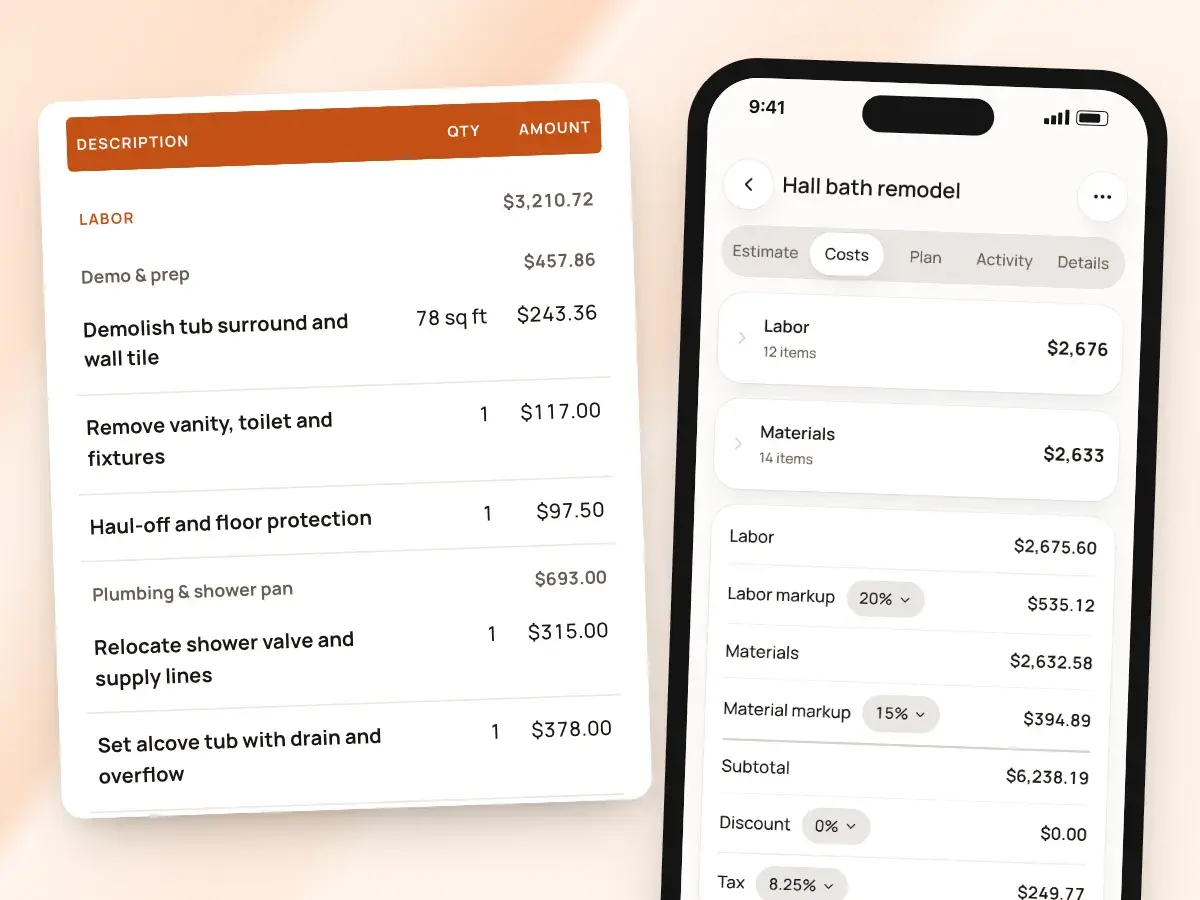
An estimate’s costs on a phone beside its priced lines, grouped by job step

How to price flooring jobs

A flooring price is built from five pieces:

  1. Moving and protection: clearing furniture, protecting the rooms you're not working in.
  2. Tear-out and disposal: the old floor, the pad or adhesive under it, and the haul-off.
  3. Subfloor prep: grinding, patching, leveling, underlayment and repairs.
  4. Installation: the new floor, by the square foot.
  5. Trim and finish: baseboard, shoe molding, transitions, and cleanup.

Each line item carries your own hours

These are the common lines on a flooring estimate and what each is measured in:

  • By the square foot: tear-out, prep and install.
  • By the linear foot: baseboard and transitions.
  • By the section: subfloor repairs.

The hours and prices are yours to set. Your crew's pace is yours, and every line's hours are editable.

Line itemMeasured in
Carpet and pad tear-out and haul-offSquare feet
Ceramic tile floor demolition to subfloorSquare feet
Nail-down hardwood floor removalSquare feet
Thinset and adhesive residue grindingSquare feet
Plywood underlayment installationSquare feet
Damaged subfloor section replacementEach
Self-leveling underlayment pourSquare feet
Luxury vinyl plank floating floor installationSquare feet
Laminate plank flooring installationSquare feet
Engineered hardwood glue-down installationSquare feet
Solid hardwood nail-down installationSquare feet
Hardwood floor sanding and polyurethane finishingSquare feet
Porcelain floor tile installation in thinsetSquare feet
Carpet and pad installation with seamsSquare feet
Baseboard removal and reinstallationLinear feet
Floor transition strip installation at doorwayLinear feet
Each one its own line on the estimate. The hours and prices are yours to set.

Tear-out and trim take real hours

Example: Here's 600 square feet of floating luxury vinyl plank replacing carpet, with 120 feet of baseboard taken off and put back, and 10 feet of transitions. The hours below are example figures; say your own records show your crew needs:

Work Your hours
Carpet and pad tear-out 8
Luxury vinyl plank installation 20
Baseboard removal and reinstallation 10
Transitions 1
Total 39

The tear-out and the baseboard together take almost as long as laying the floor.

Put the same 600 square feet in porcelain tile, with an uncoupling membrane and grout, and the install takes far longer than floating plank. That's why a single per-foot number can't cover every floor.

Your labor rate covers more than the wage

An installer's wage isn't your labor rate. Your rate has to cover:

  • the wage
  • payroll taxes, workers' comp and liability insurance
  • saws, nailers, grinders, moisture meters and the van
  • the hours spent measuring, picking up material and moving furniture

Wage, overhead, then markup

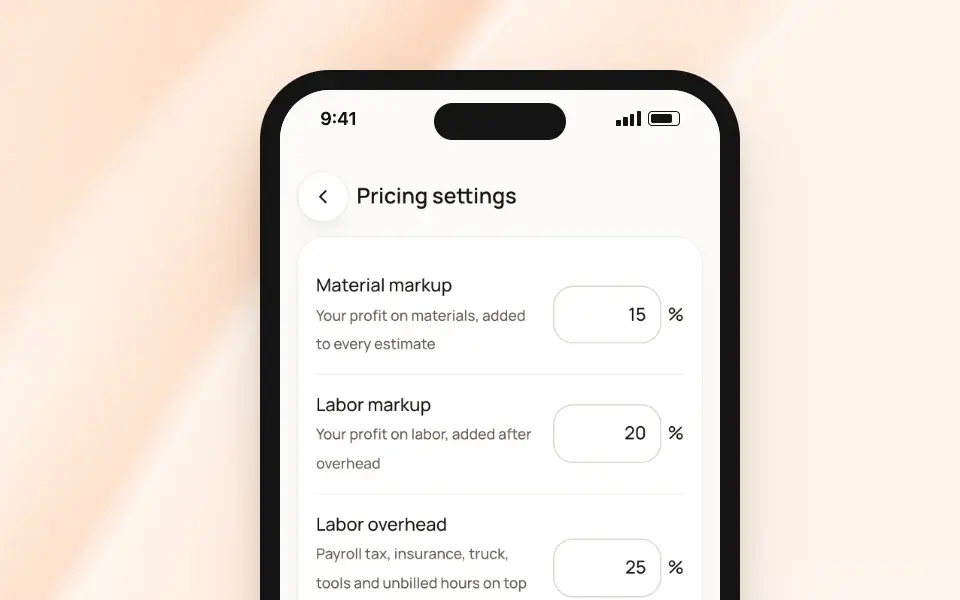
Then the rate needs a profit. BuildWell builds your rate in three steps:

  1. Wage: the median wage for each line's trade in your metro.
  2. Overhead: your labor overhead, which starts at 100%, doubling the wage.
  3. Markup: your labor markup, which starts at 20%.

Example: Say your installer costs you $25 an hour. Use your real number. The plank, baseboard and transition work in that job comes to 31 hours:

  • Wages: 31 × $25 = $775
  • With 100% overhead: $1,550
  • With 20% markup: $1,860 for that labor

The tear-out is priced separately, at the construction laborer wage.

Price material with waste included

Price flooring at what it costs near the job this week, with waste included. In the job above, 600 square feet of floor means ordering more than 600 square feet of plank.

Underlayment, adhesive, thinset, grout, fasteners and transitions are planned per foot, so they scale with the job.

Mark up material to cover handling and warranty

Add a markup that covers:

  • picking up and storing the material
  • the boxes you return
  • your warranty on the install

Material markup starts at 20% in BuildWell's Pricing settings and can be changed per estimate. If the client bought the flooring themselves, mark it as theirs; it's listed on the estimate but not charged.

Check what's under the old floor

  • Flatness: every flooring manufacturer sets a flatness requirement for the subfloor, and floating floors are especially sensitive to dips and humps. Price leveling as its own line, and say in your terms how much you've included.
  • Moisture: concrete slabs and crawl spaces can hold moisture that ruins wood and some vinyl. Test before you install, following the flooring manufacturer's instructions, and price any moisture barrier the test calls for.
  • Subfloor damage: water damage near tubs, toilets and doors is common. Include a number of repair sections as an allowance, and put the price for each additional one in your terms.
  • Old flooring that may contain asbestos: some older sheet vinyl, floor tiles and the adhesives under them contain asbestos. If you suspect it, have it tested before you disturb it, and follow your state's rules for removal.
  • Homes built before 1978: taking off painted baseboard disturbs paint. Say the house is pre-1978 when BuildWell asks about the site, and the lead-safe setup and cleanup line goes on the estimate.

Put stairs, furniture and extras on the estimate

These all take time, so put each on the estimate:

  • stairs
  • moving heavy furniture and appliances
  • undercutting doors and casings
  • hauling away the old floor

Anything BuildWell doesn't list, like stair treads, goes on as a line of your own with your price.

How to start a flooring business

Check your state's licensing rules

Some states require a contractor license or registration for flooring work, often above a dollar amount per job. Some cities and counties have their own requirements. Others don't license flooring specifically.

Check with your state's contractor licensing board and the cities you'll work in before you sign a contract.

Get lead-safe certified for older homes

Removing painted baseboard and trim in homes built before 1978 generally falls under the EPA's Renovation, Repair and Painting rule. Your firm needs to be certified and the work done by a certified renovator.

Keep the business money in the business

Whether you start as a sole proprietor or a single-member LLC:

  • Get a free EIN from the IRS.
  • Open a business bank account.
  • Run every deposit and material purchase through it.

Insure before your first install

  • General liability: homeowners, builders and property managers will ask for a certificate of insurance before you start.
  • Workers' compensation: expected by law in most states once anyone works for you. Flooring is hard on knees and backs, and the claims show it.
  • Commercial auto insurance for the van and trailer.

Decide whether you'll sell material

Some installers sell and install; others install what the client or a flooring store supplies. Selling material adds margin and risk: you carry the order, the returns and the defect claims.

Decide which you'll do, and price your labor-only work so it pays on its own.

Install to the manufacturer's rules

Most flooring warranties depend on following the manufacturer's instructions for:

  • acclimation
  • moisture testing
  • subfloor flatness
  • expansion gaps

Install to them, note them on the job, and you'll keep both your warranty claims and your reputation clean.

Look professional from the first quote

An itemized estimate with your logo, license number and terms beats a per-foot number on the back of a business card. BuildWell puts your logo, license number and signature on every estimate and invoice once you've added them.

Find your first jobs

Early flooring work often comes from:

  • Referrals and neighbors who see the old carpet on the curb.
  • General contractors, remodelers and builders who sub out floors.
  • Property managers and landlords turning over units.
  • Realtors with listings that need new floors before they sell.

Set up your free business profile on the map apps homeowners search, and ask every client for a review.

Flooring installer pay and taxes

Pay depends on the market and the floor

Wages vary between metro areas and between materials, and many installers are paid by the square foot rather than the hour.

A flooring business owner earns the margin between what the job is billed at and what labor and material cost. So how you price prep, trim and waste matters more than any wage table.

Self-employment tax is 15.3% of net earnings

As a sole proprietor or single-member LLC, you pay self-employment tax on your net earnings: 15.3% in total.

  • Social Security, 12.4%: applies to net earnings up to the Social Security wage base, which is $184,500 for 2026.
  • Medicare, 2.9%: applies to all of it.
  • Deduction: you can deduct half of the self-employment tax on your income tax return.

Federal and state income tax come on top of it, so set part of every payment aside.

Pay quarterly estimated taxes

Tax isn't withheld from your jobs, so pay estimated tax during the year on Form 1040-ES. The payments are usually due in mid-April, mid-June, mid-September and mid-January. Underpaying through the year can mean penalties.

Track these deductions

Flooring businesses commonly deduct:

  • saws, nailers, grinders and tools
  • moisture meters and knee pads
  • the business share of your van and trailer
  • fuel
  • insurance and license fees
  • disposal fees
  • phone and software

Keep receipts and log mileage as you go.

Send subs a 1099-NEC at $2,000

If you pay an unincorporated subcontractor for services, you'll generally need to send them a Form 1099-NEC. For payments made in 2026 and later, that applies once you've paid them $2,000 or more in a year, up from $600 before 2026.

Collect a Form W-9 before the first payment. Paying an installer by the square foot doesn't settle whether they're a subcontractor or an employee; how you control the work does.

Sales tax on materials depends on your state

States treat flooring contractors differently, especially those who sell the flooring they install. Some have you pay sales tax when you buy materials. Others have you charge it to the client on materials, or on the whole job.

Check your state's revenue department. In BuildWell, sales tax applies to materials only, not labor, at the rate you set.

This is general information, not tax or legal advice. A tax professional who works with contractors can tell you what applies in your state and to your business.

Estimates in minutes
talk through the job, get every line priced
Real local prices
materials and labor priced for your ZIP code
Get paid faster
professional invoices clients pay by card or bank
English or Spanish
on your phone and your computer

Pricing for flooring businesses

One plan with everything, billed weekly or yearly.

Weekly
$7.99 / week
Billed weekly. Cancel anytime.
  • AI estimates priced for your area
  • Estimates, invoices, clients and projects
  • Clients sign on any phone
  • Card and bank payments, no extra BuildWell fee
  • iPhone, Android and the web
Start free trial
Best value
Annual
$79.99 / year
About $6.67 a month, billed yearly
  • AI estimates priced for your area
  • Estimates, invoices, clients and projects
  • Clients sign on any phone
  • Card and bank payments, no extra BuildWell fee
  • iPhone, Android and the web
Start free trial

Both plans include every feature and start with a 3-day free trial. Add a card to start; you’re not charged until the trial ends. Cancel anytime.

Flooring software FAQ

01Can BuildWell estimate a whole-house flooring job?
Yes. Describe the rooms, what's coming up, what's going down and what you expect underneath, and BuildWell lists tear-out, subfloor prep, installation, baseboard and transitions as separate lines with materials and labor hours. Mixed jobs, like plank in the living areas and tile in the bathrooms, go on one estimate.
02How does it handle waste?
Each install line includes extra flooring for cuts. Flooring waste is commonly 5% to 15%, depending on the material and the layout. For layouts that waste more, like diagonal or herringbone, add the extra material as a line of your own.
03Can I quote labor only?
Yes. When BuildWell asks who's supplying the flooring, answer that the customer is. The flooring stays on the estimate so the scope is clear, but it isn't charged, and your installation, prep and trim work are.
04How do I price subfloor repairs I can't see yet?
Add damaged subfloor section replacement as a line, with your hours per section and the plywood and framing priced near the job, and set the number of sections you're allowing for. Put the price for each additional section in your terms, so the client knows before the old floor comes up.
05Does it price tile floors?
Yes. Porcelain tile set in thinset, uncoupling membrane, grouting and sealing, and tile demolition are all in the catalog, priced at the tile setter wage for your metro. Tile takes far more hours per square foot than floating plank, and the estimate shows it.
06Can I price hardwood refinishing?
Yes. Sanding and finishing with polyurethane is its own line, priced by the square foot. Add a new nail-down or glue-down floor and its finishing as separate lines when you're installing and finishing on site.
07What about stairs?
Stair treads and risers aren't among BuildWell's flooring lines. Add them as a line of your own with your price per step, and they print with the rest of the estimate.
08Can I show the client the new floor before they decide?
Yes. Take a photo of the room and describe the new floor, and BuildWell makes a before-and-after render you can attach to the estimate. It shows the idea, not the exact product, so pair it with a real sample.
09Do estimates come in Spanish?
Yes. Any estimate or invoice can be printed in Spanish or English, and the app works in both languages.
10What does it cost?
BuildWell is $7.99 a week or $79.99 a year, with a 3-day free trial either way. One subscription works on iPhone, Android and the web.

Price your next flooring job today

Estimates, invoices, e-signatures and payments in one place, on your phone and on the web.

Start for free →3-day free trial. Cancel anytime.