BuildWell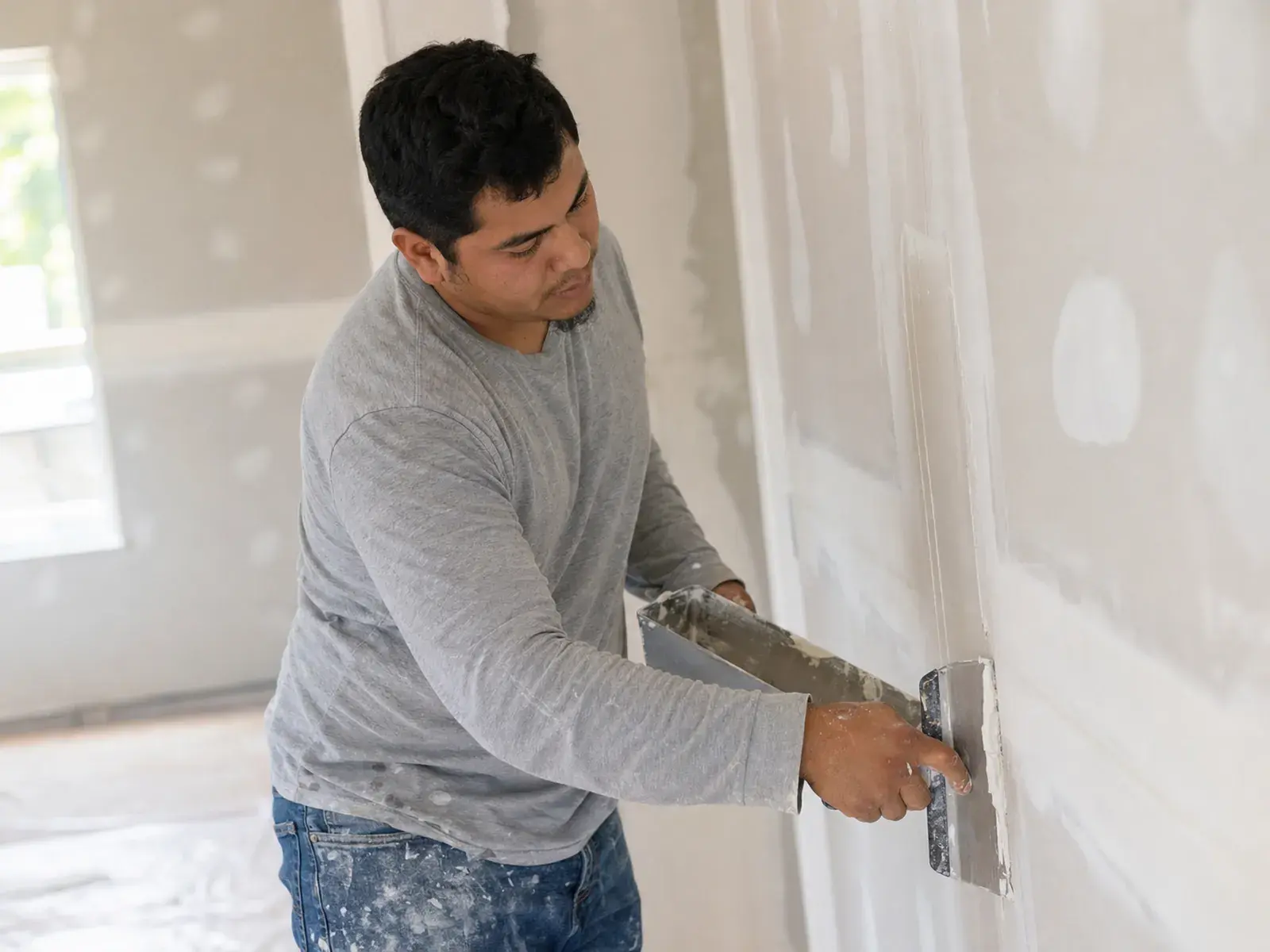

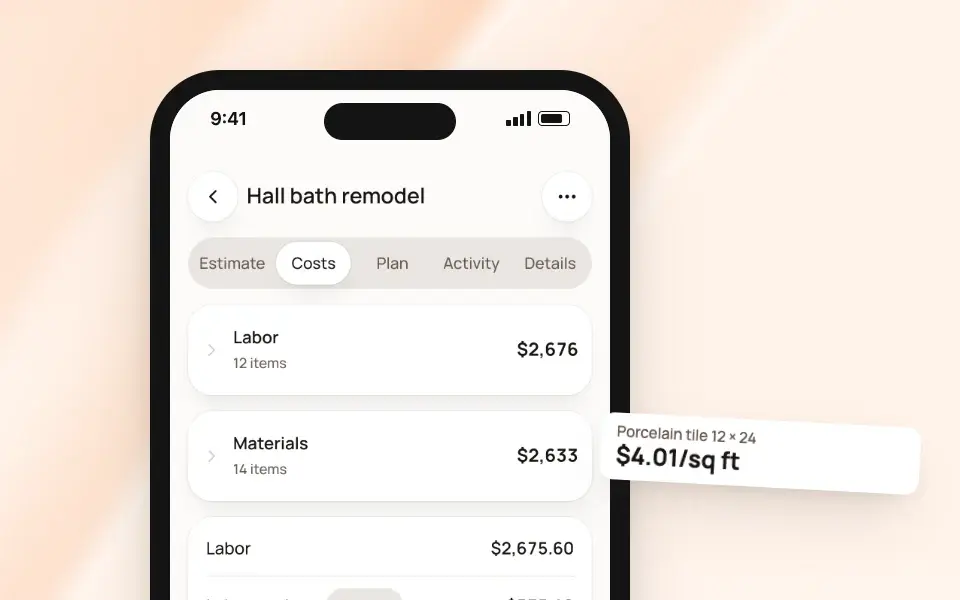
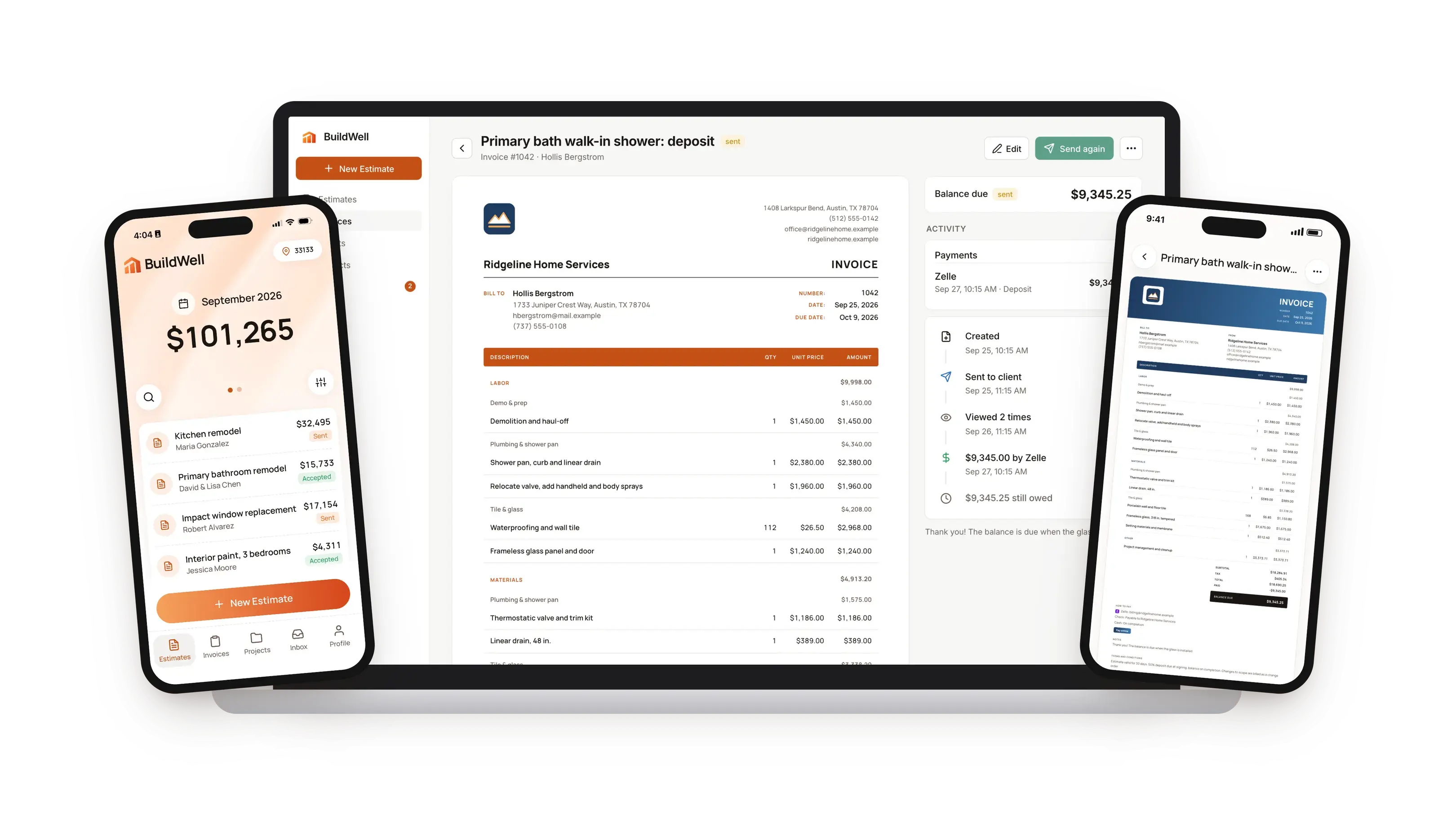
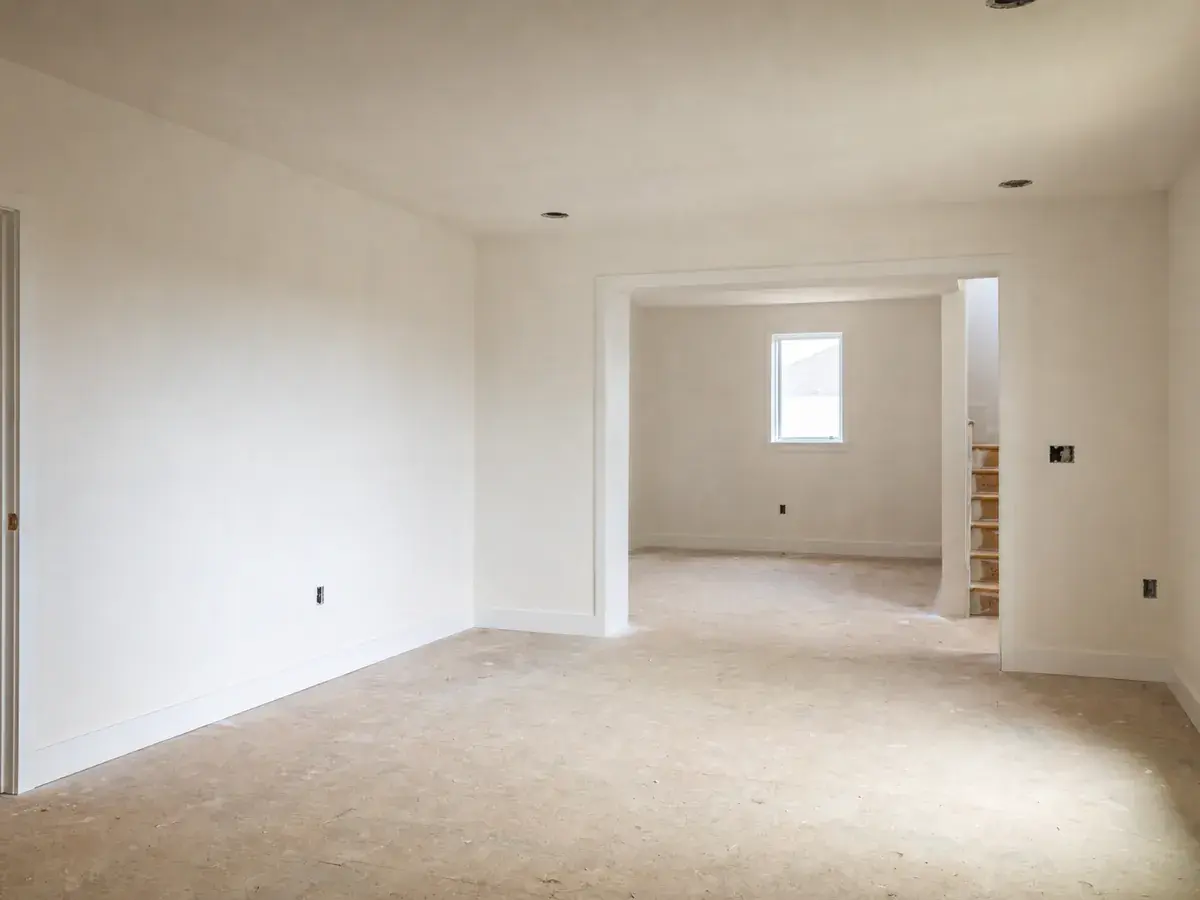
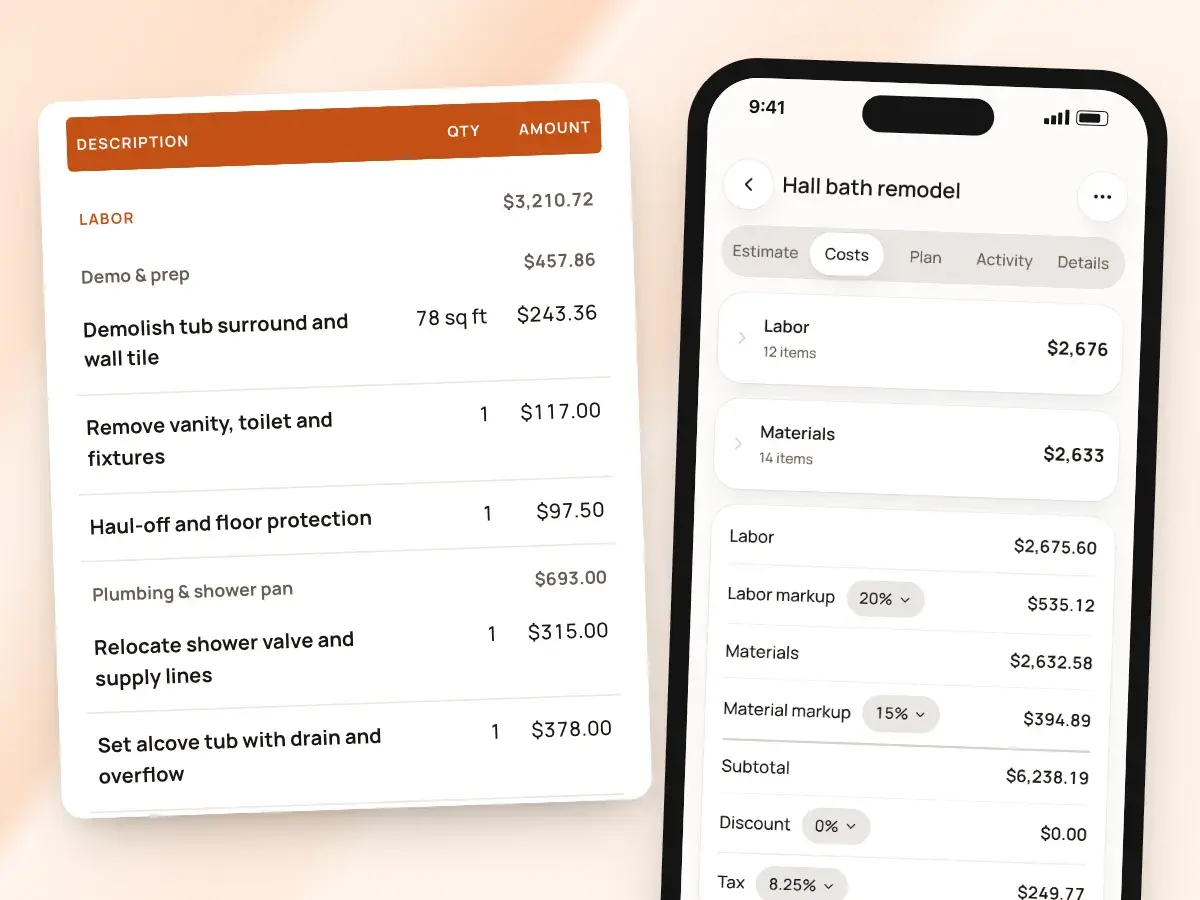
A drywall price is built from five groups of work:
- Prep and demolition: containment, floor protection, tearing out old board and hauling it away.
- Insulation: batts, blown-in, sound batts or foam, if they're in your scope.
- Hanging: walls, ceilings and any special board, like Type X or moisture-resistant.
- Finishing: corner bead, taping, coats of compound, sanding and texture.
- Primer and cleanup: a coat of primer on new board, the final sweep and the haul-out.
Measure walls and ceilings separately, then add waste
Measure the two separately, because ceilings hang slower:
- Walls: the room's perimeter times the ceiling height, less openings.
- Ceilings: the floor area.
Then plan extra board for cuts and waste. BuildWell's hanging lines include that extra board, so the materials you price are closer to what you'll have delivered.
Common line items and how each is measured
These are the common lines on a drywall and insulation estimate. Each is measured one of three ways:
- By the square foot: board, insulation, finishing, texture and primer.
- By the linear foot: bead.
- By the each: patches.
The hours and prices are yours to set, and every line's hours are editable.
| Line item | Measured in |
|---|---|
| Existing drywall demolition | Square feet |
| R-13 fiberglass batt insulation in wall cavities | Square feet |
| R-30 fiberglass batt insulation in ceiling joists | Square feet |
| Blown-in cellulose attic insulation | Square feet |
| Hang 1/2 in drywall on walls | Square feet |
| Hang 1/2 in drywall on ceilings | Square feet |
| Hang 5/8 in type x drywall on garage ceiling | Square feet |
| Hang moisture-resistant drywall in wet areas | Square feet |
| Install metal corner bead | Linear feet |
| Tape and bed drywall seams | Linear feet |
| Level 4 three-coat joint finishing | Square feet |
| Level 5 skim coat finish | Square feet |
| Spray knockdown texture on walls and ceilings | Square feet |
| Final drywall sanding and dust cleanup | Square feet |
| Drywall hole patch with wood backing | Each |
| Prime new drywall surfaces | Square feet |
Finishing takes more hours than hanging
Example: Here's a 12-by-20 room with 8-foot ceilings: about 480 square feet of wall after a door and a window, and a 240-square-foot ceiling, 720 square feet of board in all. The hours below are example figures; say your own records show your crew needs:
Work Your hours Hang 480 sq ft on walls 9 Hang 240 sq ft on the ceiling 6 Level 4 finishing, 720 sq ft 16 Final sanding, 720 sq ft 6 Total 37 Hanging is 15 of those hours. Finishing and sanding are 22. That's before corner bead, texture or primer.
It's why a per-square-foot price built around how fast your crew hangs will lose money on every job.
Your labor rate is more than the wage
A drywall installer's wage isn't your labor rate. Your rate has to cover:
- the wage
- payroll taxes, workers' comp and liability insurance
- stilts, scaffolding, lifts, mixers and the truck
- the hours spent bidding, waiting on inspections and coming back between coats
Then it needs a profit.
How BuildWell builds your rate
BuildWell builds your rate in three steps:
- Wage: the median drywall installer wage for your metro.
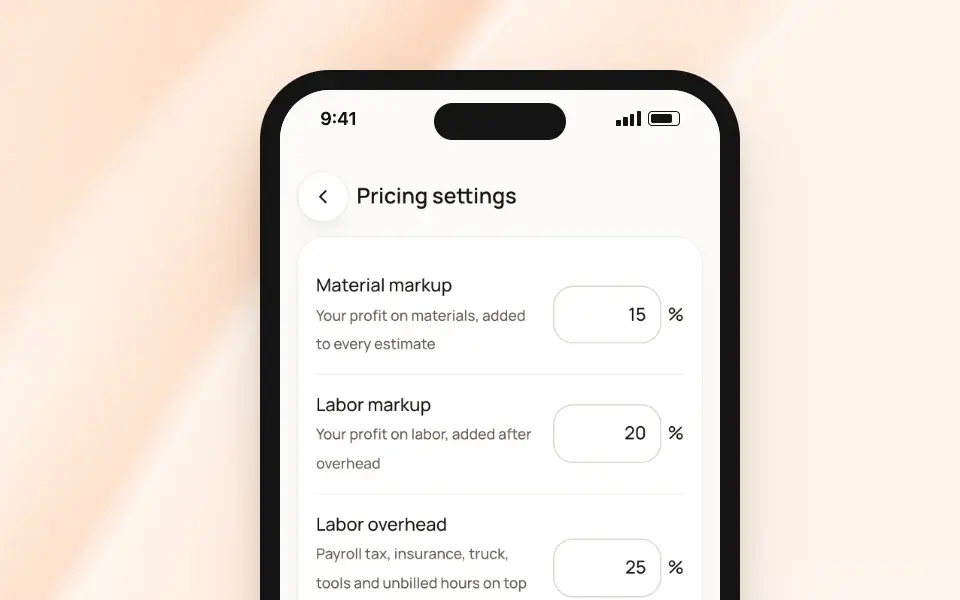
- Overhead: your labor overhead, which starts at 100%, doubling the wage.
- Markup: your labor markup, which starts at 20%.
Example: Say your drywall installer costs you $25 an hour. Use your real number. The 37 hours on that room come to:
- Wages: 37 × $25 = $925
- With 100% overhead: $1,850
- With 20% markup: $2,220 for that labor
Match the board type to the room
- Standard board for most walls and ceilings.
- Type X where fire separation is required. Residential codes commonly call for it on a garage ceiling with living space above. Check what your jurisdiction requires.
- Moisture-resistant board in bathrooms and other damp areas. Behind tile in a shower, use cement board instead.
- Compound, tape, bead and screws: BuildWell plans them per foot and per square foot, so they scale with the job.
Mark up materials for delivery and breakage
Add a markup that covers delivery, the sheets that crack on the way in and the extra bucket of mud. BuildWell starts material markup at 20%.
If the general contractor is supplying the board, mark it as theirs. It stays on the estimate but isn't charged.
Name the finish level; price Level 5 separately
Finish levels describe how much finishing a surface gets:
- Level 0: board hung, nothing else.
- Level 4: what most painted walls and ceilings get.
- Level 5: a skim coat over the whole surface.
Level 5 is for surfaces under strong side light, glossy paint or a client who wants it perfectly flat. Say in your estimate which level you're pricing, and price Level 5 as its own line.
In BuildWell, the skim coat is its own line, on top of Level 4 finishing.
Price texture matching for the time it takes
Texture is its own line, too. Matching an existing knockdown or orange peel on a patch takes skill, so price repairs with the time it really takes.
Insulation, inspections, patches and lead
- Insulation: many jurisdictions inspect insulation before it's covered, so schedule the drywall after that inspection. Price batts, blown-in and foam by the square foot or foot, and note the R-value in the line.
- Patches and repairs: a patch with wood backing takes about the same trip whether the hole is fist-sized or a foot across, and comes back two or three times for coats. Set a minimum charge, and add it as a line of your own.
- Homes built before 1978: tearing out old drywall or plaster disturbs paint. The EPA's Renovation, Repair and Painting rule requires lead-safe work practices by a certified renovator. When you mark the house as pre-1978, BuildWell puts lead-safe setup and cleanup on the estimate.