BuildWell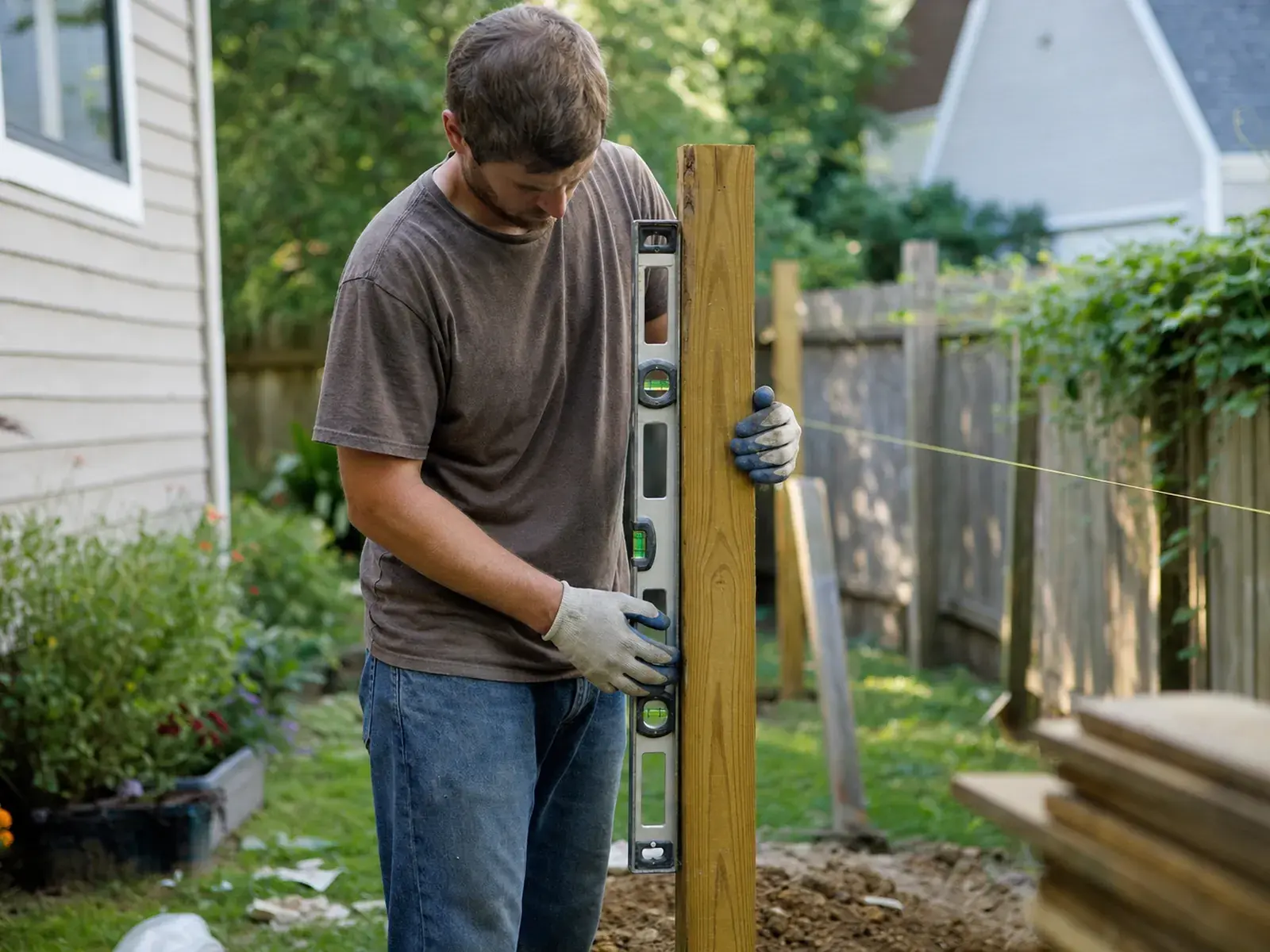
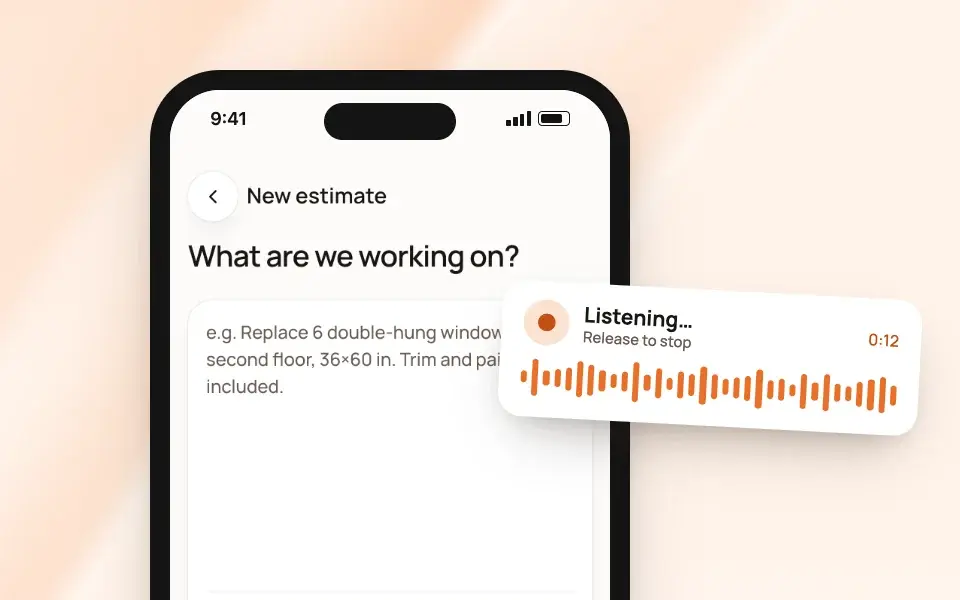
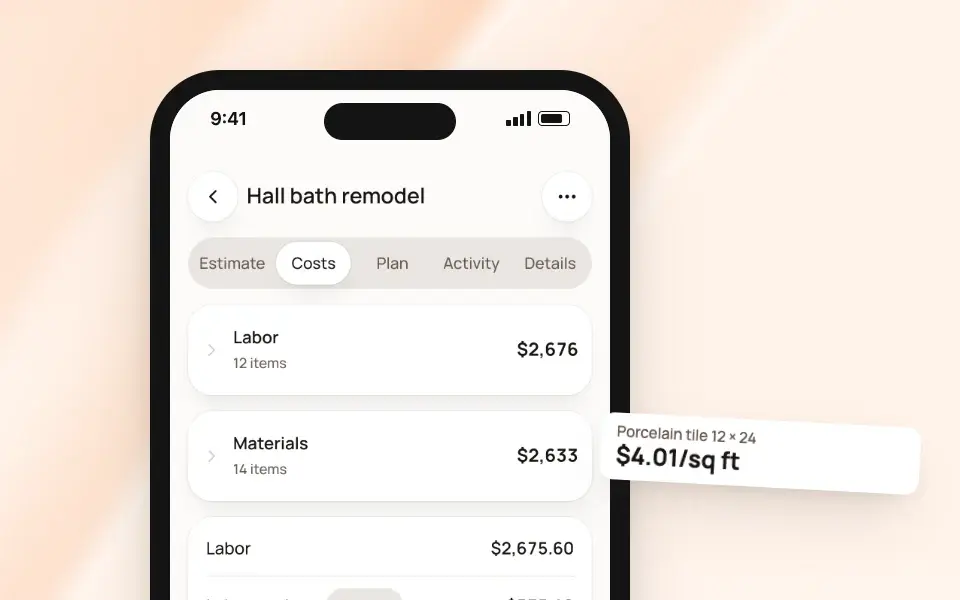
A fence price is built from five parts:
- Tear-out and haul-off of the old fence.
- Posts: count, depth, concrete and digging conditions.
- Infill by the foot: wood, vinyl or chain link, at the height you're building.
- Gates: each one, with its hardware.
- Setup, cleanup, permits and the property line.
Measure the run and count the posts
Measure every run, corner to corner. Then count posts: divide each run by your post spacing, round up, and add one. Add posts for corners, ends and each side of a gate.
Example: A 150-foot straight run at 8-foot spacing has 19 sections and 20 posts.
Note the slope too. On a grade you'll step or rack the fence, and stepping takes more cutting and longer posts.
Each line item carries your own hours
These are the common lines on a fence estimate and what each is measured in. Tear-out, rails and pickets, vinyl panels and chain link go by the linear foot. Posts, gates and cleanup go by the each.
The hours and prices are yours to set. A crew with an auger and a good setup moves faster than one digging by hand, and every line's hours are editable.
| Line item | Measured in |
|---|---|
| Old fence and post removal | Linear feet |
| Pressure-treated fence post setting in concrete | Each |
| Wood privacy fence rail and picket infill | Linear feet |
| Vinyl privacy fence panel installation | Linear feet |
| Chain link fence fabric and post installation | Linear feet |
| Fence gate fabrication and hanging | Each |
| Final jobsite cleanup and debris haul-off | Each |
Vinyl and chain link include their posts
The wood post line covers wood fences. The vinyl panel line brings its own vinyl posts, and the chain link line includes its line posts, so you don't add the wood post line to either.
Charge for tear-out, not just new fence
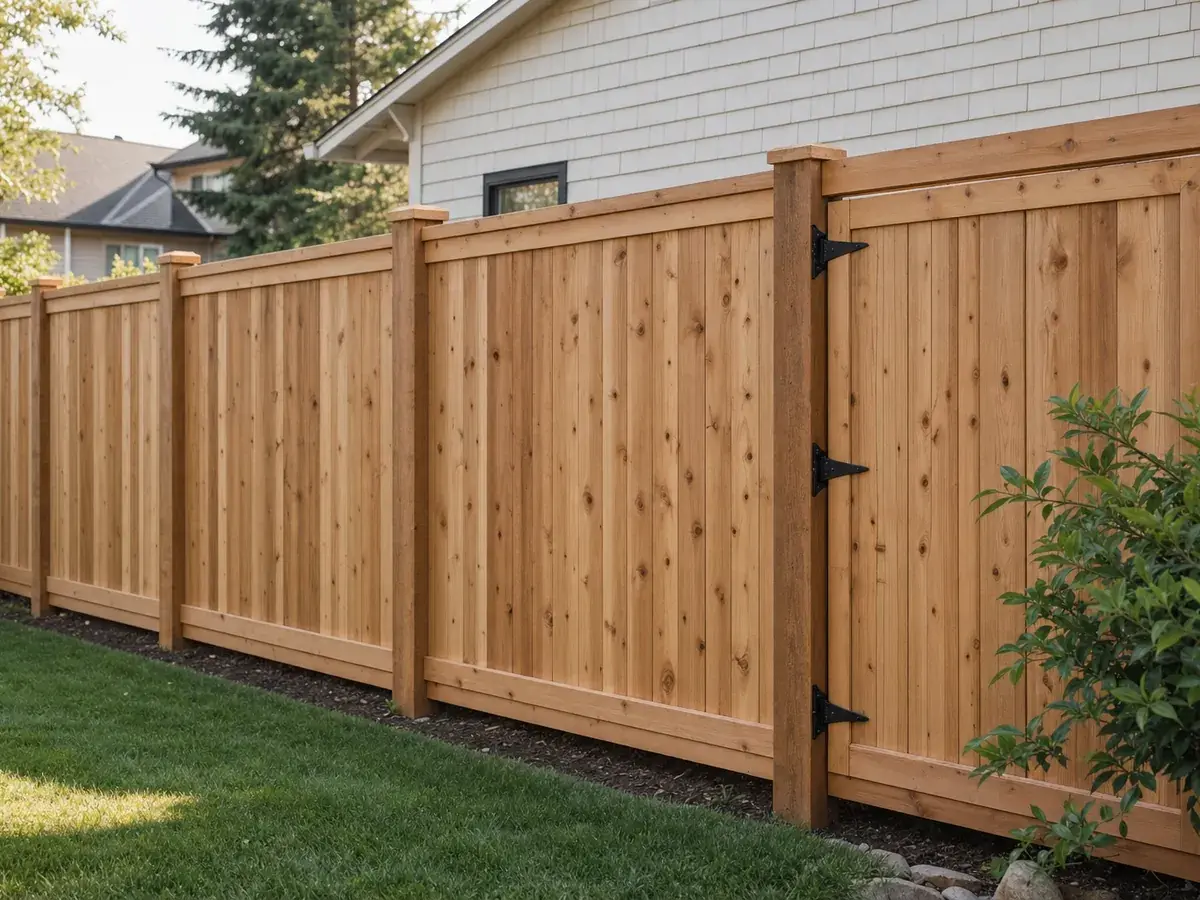
Example: Here's a replacement: 150 feet of old wood fence out, a new 6-foot wood privacy fence with 20 posts in concrete, 146 feet of rails and pickets and a 4-foot walk gate. The hours below are example figures; say your own records show your crew needs:
Work Your hours Remove old fence and posts, 150 feet 30 Set posts in concrete, 20 20 Rails and pickets, 146 feet 45 Walk gate, 1 3 Cleanup and haul-off 2 Total 100
Tear-out is nearly a third of those hours. A per-foot price for new fence that doesn't charge for the old one gives that time away.
Your labor rate covers more than the wage
What you pay a fence installer isn't your labor rate. Your rate has to cover:
- the wage
- payroll taxes and the insurance: workers' comp and liability
- the truck, trailer, auger and post driver
- disposal of old fence
- the hours spent measuring and quoting fences you don't get
Then it needs a profit.
Wage, overhead, then markup
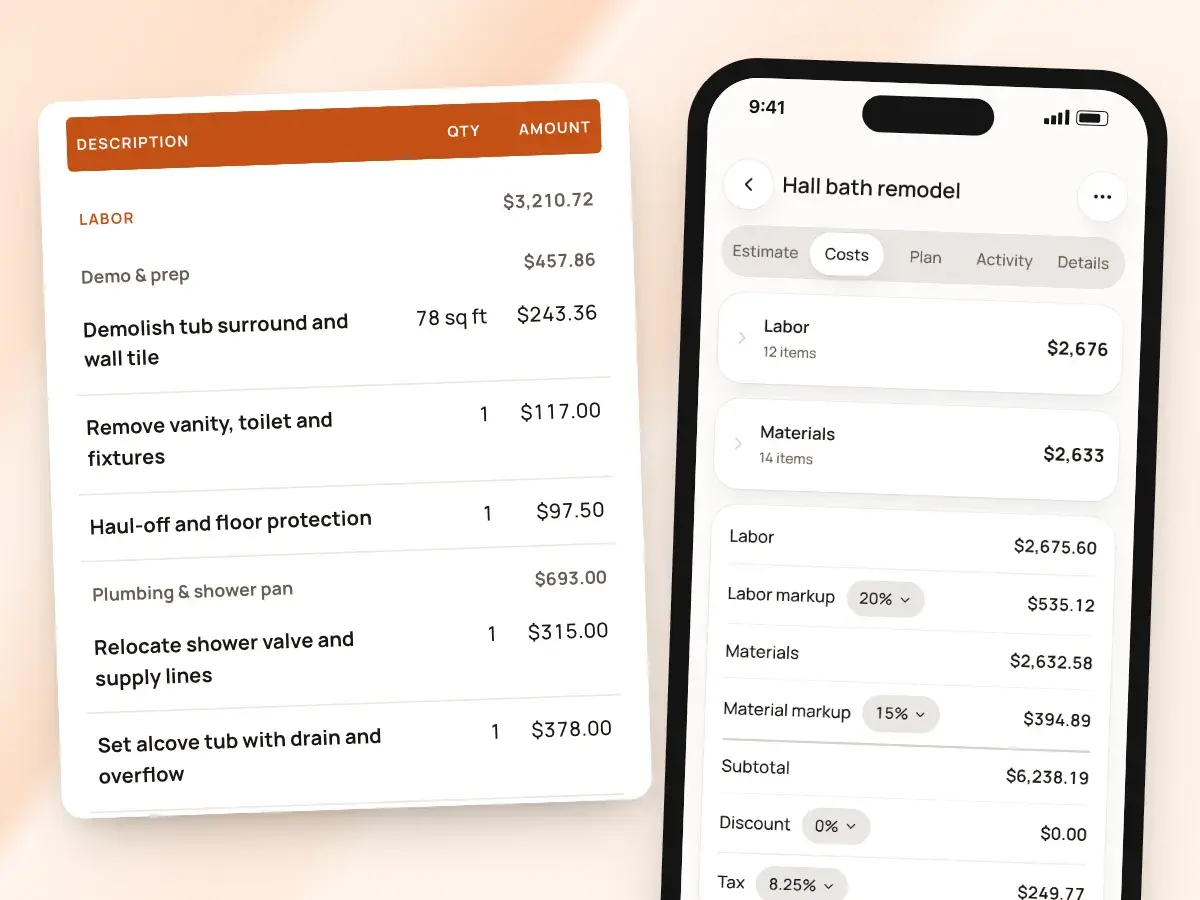
Each line's hourly price in BuildWell is built like this:
- Wage: the metro median for that line's kind of work.
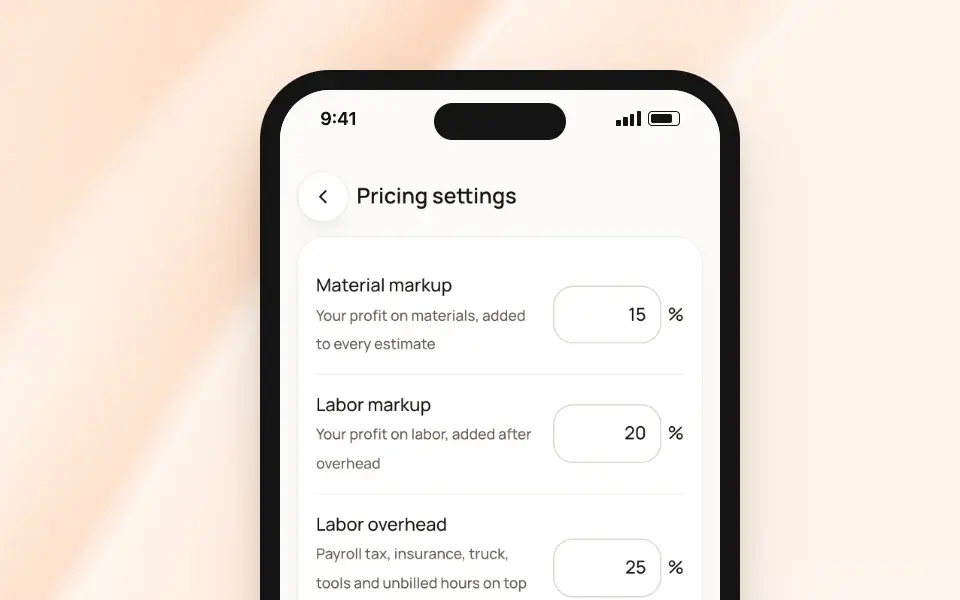
- Overhead: what you set as labor overhead, 100% by default, doubling the wage.
- Markup: what you set as labor markup, 20% by default.
Example: Say your installers cost you $30 an hour each. Use your real number. The 100 hours on that replacement come to:
- Wages: 100 × $30 = $3,000
- With 100% overhead: $6,000
- With 20% markup: $7,200 for labor
In BuildWell, the tear-out and cleanup lines start from the construction laborer wage, and the wood fence lines from the carpenter wage. So your real total will differ. Materials come on top.
Price materials near the job, then mark up
Price these at what they cost near the job this week:
- posts
- rails, pickets or panels
- post concrete
- fasteners
- gate hardware
Add a markup that covers the pickets you cull, the extra bag of concrete and the warranty on what you build. BuildWell's material markup starts at 20%; change it whenever a job calls for it.
Add unlisted styles as custom lines
Fence styles BuildWell doesn't list yet, like ornamental aluminum or split rail, go on the estimate as custom lines with your own labor and material price.
Settle permits, utilities and the property line
- Permits and rules: many cities require a fence permit, and most limit height, especially in front yards. HOAs often have their own rules on style and color. Add your permit fee as a line; in BuildWell, a flat permit fee is added when the estimate includes a permit.
- Utilities: call 811 before you dig, on every job. A post hole is exactly the kind of digging that finds a buried line.
- The property line: put the fence where the homeowner tells you, and say in your terms that locating the line is the homeowner's responsibility. If they aren't sure, a survey costs less than moving a fence.