BuildWell

Window and door estimating software that wins more jobs

Estimating and invoicing software for window and door installers. Count the openings and get removal, install and trim priced.

  • Store prices near the job
  • Wages for your metro
  • iPhone, Android and web
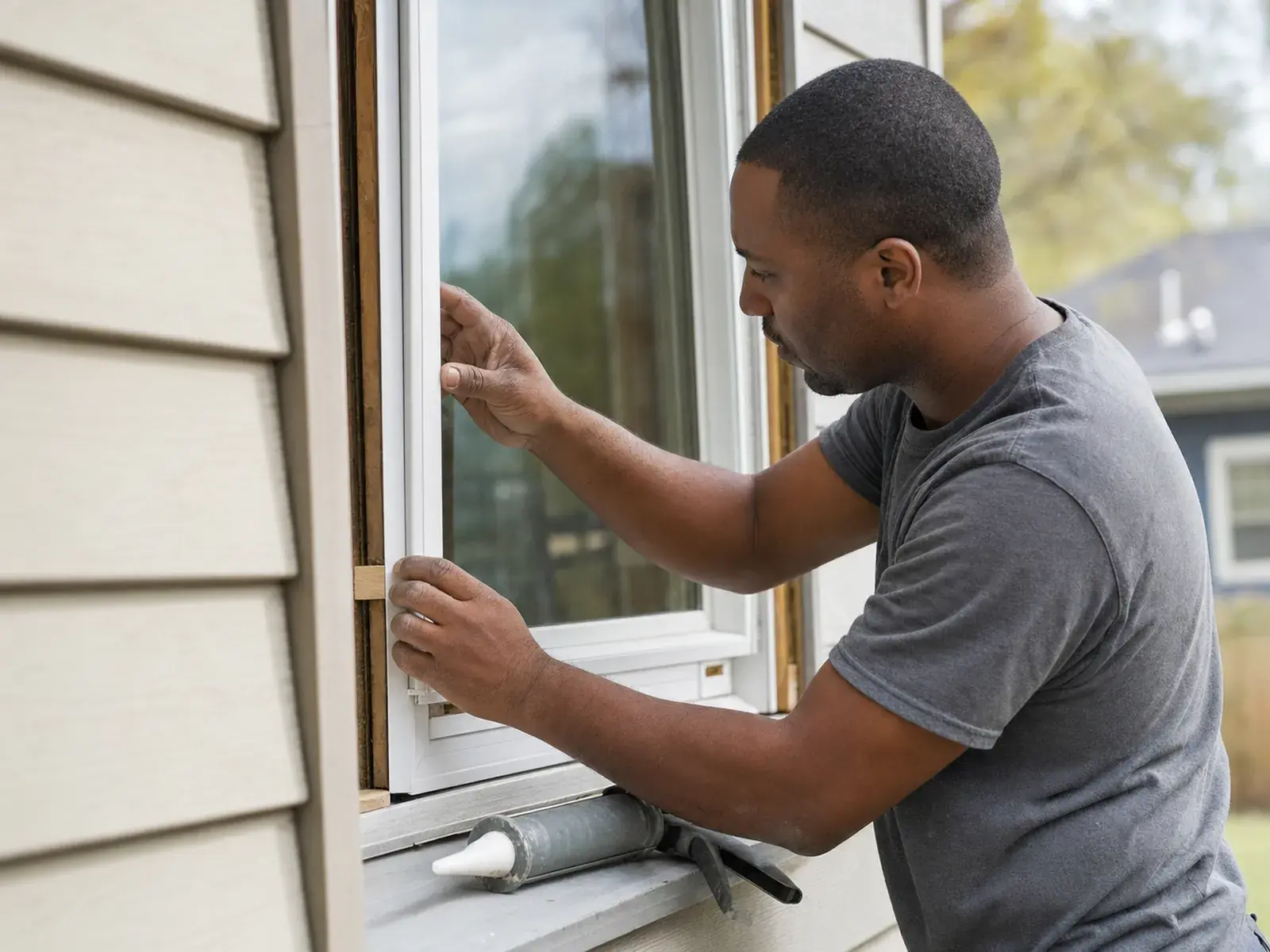
An installer shimming and leveling a new window in a wall opening

Tools to run your window and door business

From the first walkthrough to the last payment, everything a window and door installer does on paper, in one app.

Run every window and door job start to finish

Estimate on site, get it signed before you leave, invoice when the work’s done and see the payment land.

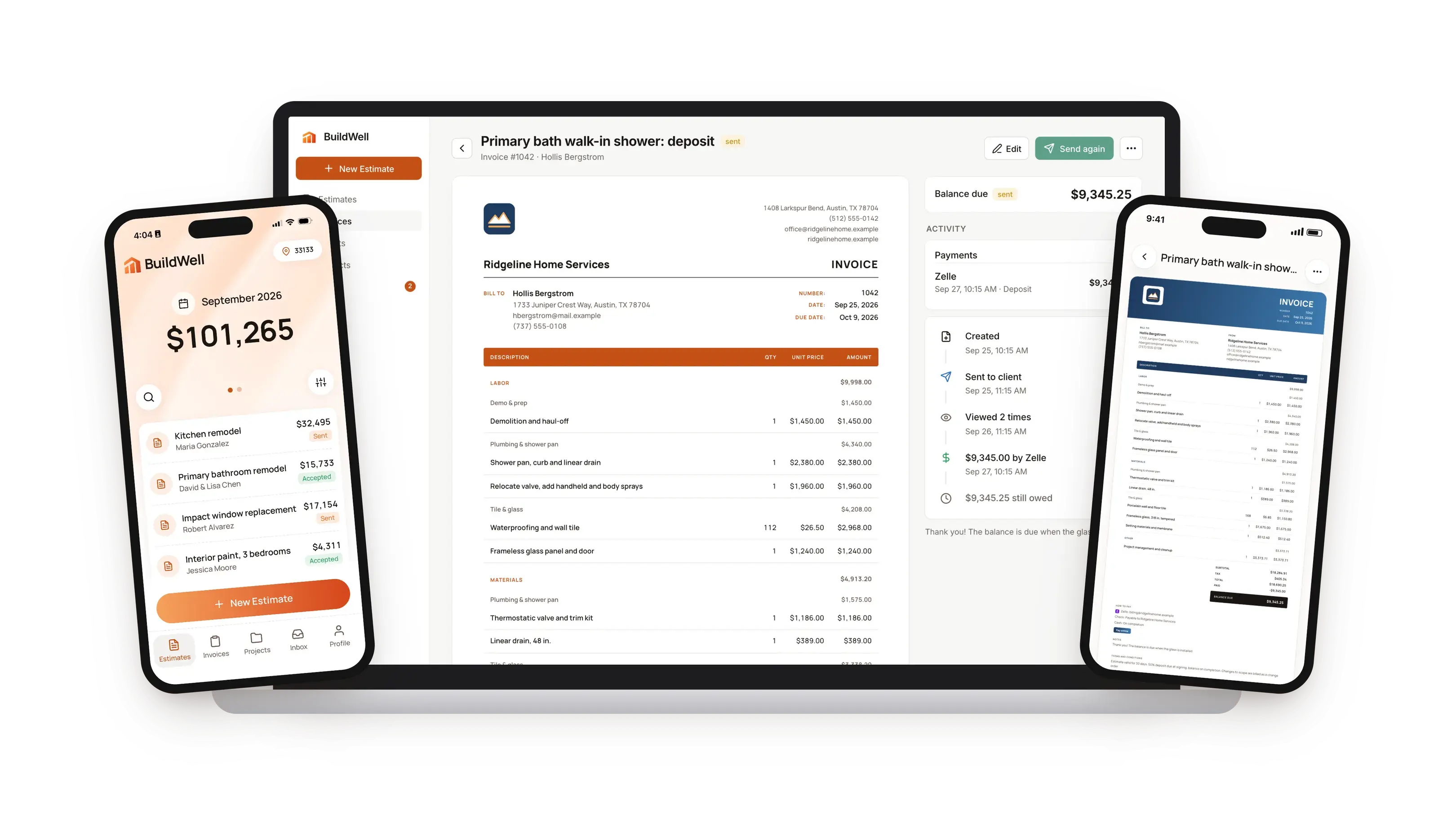
BuildWell on a laptop showing a branded invoice and its payments, the estimates home screen on one phone and an invoice in a different style on another

What is window and door estimating software?

Window and door estimating software turns a count of openings and a description of the work into an itemized, priced estimate.

It knows that replacing a window isn't one task. It works out what each opening needs, prices it for where you work, and produces a page the client can sign.

Every opening carries four kinds of work

Window and door work is priced per opening, but every opening carries several pieces of work:

  • Removal: taking out the old sashes, frame, door or slab, and hauling it off.
  • The opening: reframing, a new header if it's being widened, flashing and air sealing.
  • The unit: setting, shimming and fastening the window or door, or hanging a new slab on an existing jamb.
  • Finish work: interior casing, stool and apron, jamb extensions, exterior caulking, hardware and paint.

A per-opening price breaks on problem openings

Most installers either keep a price per opening by type (so much for a double-hung insert, so much for an entry door) or build each job line by line.

The per-opening price is fast, but it falls apart on:

  • the window with a rotted sill
  • the door that needs a wider rough opening
  • the house where every casing has to come off

Building it line by line is accurate, but slow when a whole-house job has 20 openings.

BuildWell builds it line by line from your count

BuildWell builds the line-by-line version from your count. You describe the openings, and it asks the questions that change the price:

  • insert or full-frame
  • interior trim or not
  • who supplies the units

It then lists each part of the work with the labor hours it typically takes. It prices installation materials at stores near the job, and labor at your metro's wage plus your overhead and markup.

The signed estimate becomes the invoice

When the units are in, the signed estimate becomes the invoice. The deposit you collected to place the order is already recorded against it.

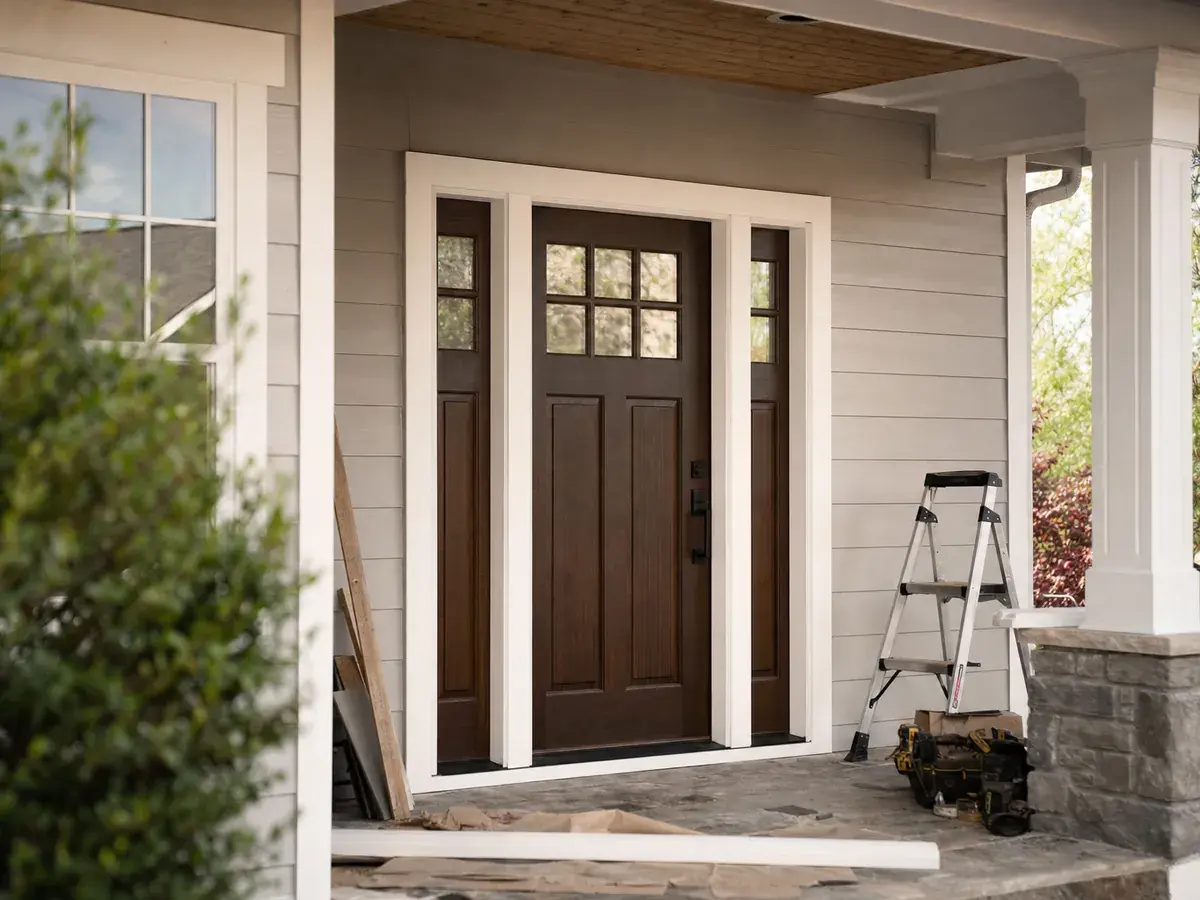
A new front entry door with sidelights and fresh trim

Why window and door installers choose BuildWell

You price it while the tape's still out

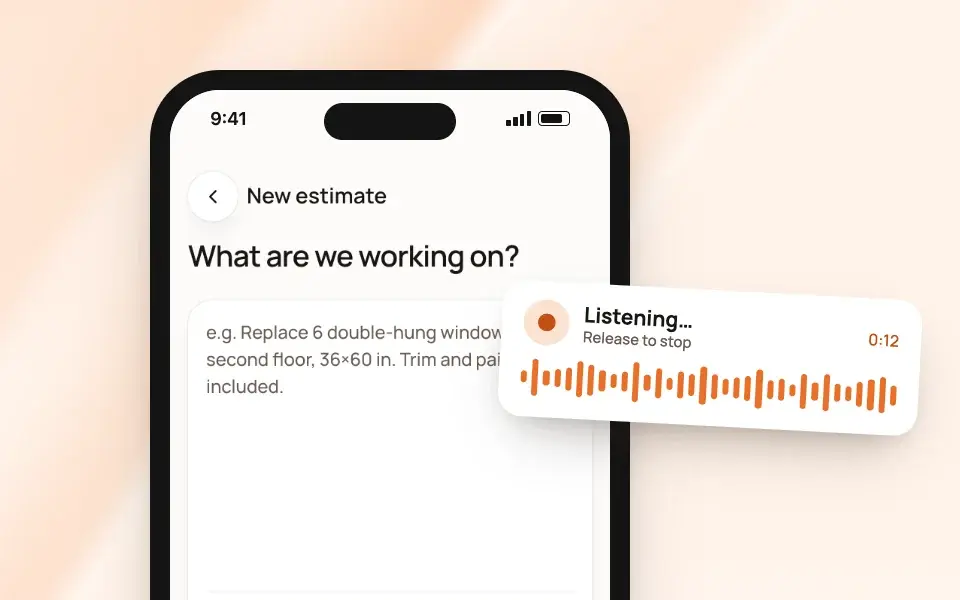
Describe the openings before you leave. The estimate is ready in minutes.

It asks how each opening is installed

Insert or full-frame? Casing reused? Opening widened? Built before 1978?

The client sees the work, not just units

Removal, flashing, air sealing and casing are listed for every opening.

Client-supplied units are listed at no charge

You price your installation and finish work around them.

Install materials are priced near the job

Foam, flashing tape, sill pans and caulk. Missing prices are flagged.

Deposits protect your special orders

Custom units often can't be returned, so invoice a deposit first.

Estimates in English or Spanish

Send each client their estimate and invoice in their language.

Same account on phone and computer

Start on site and finish at your desk. Nothing to sync.

Built for window and door installers

What changes when window and door installers price jobs from real data instead of memory.

  • Every opening on one estimateRemoval, install, sealing, trim and hardware are listed for each opening.
  • Install materials at local pricesFoam, flashing tape and casing priced at a store near the job.
  • Client-bought units stay off the billMark a unit client-supplied. It's listed at no charge; you price installation.
  • Deposit to order, balance at installInvoice a deposit before special orders, then the balance after installation.
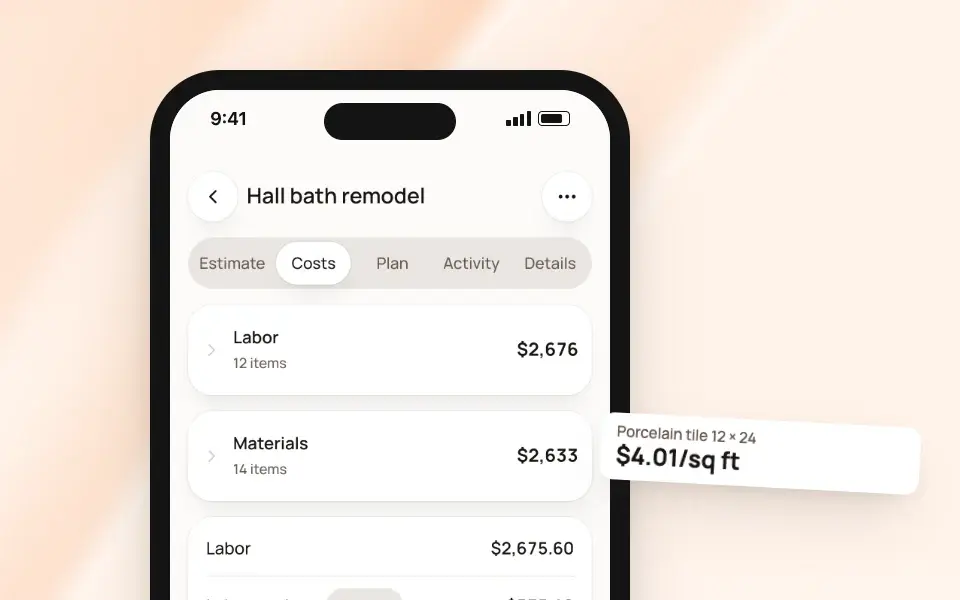
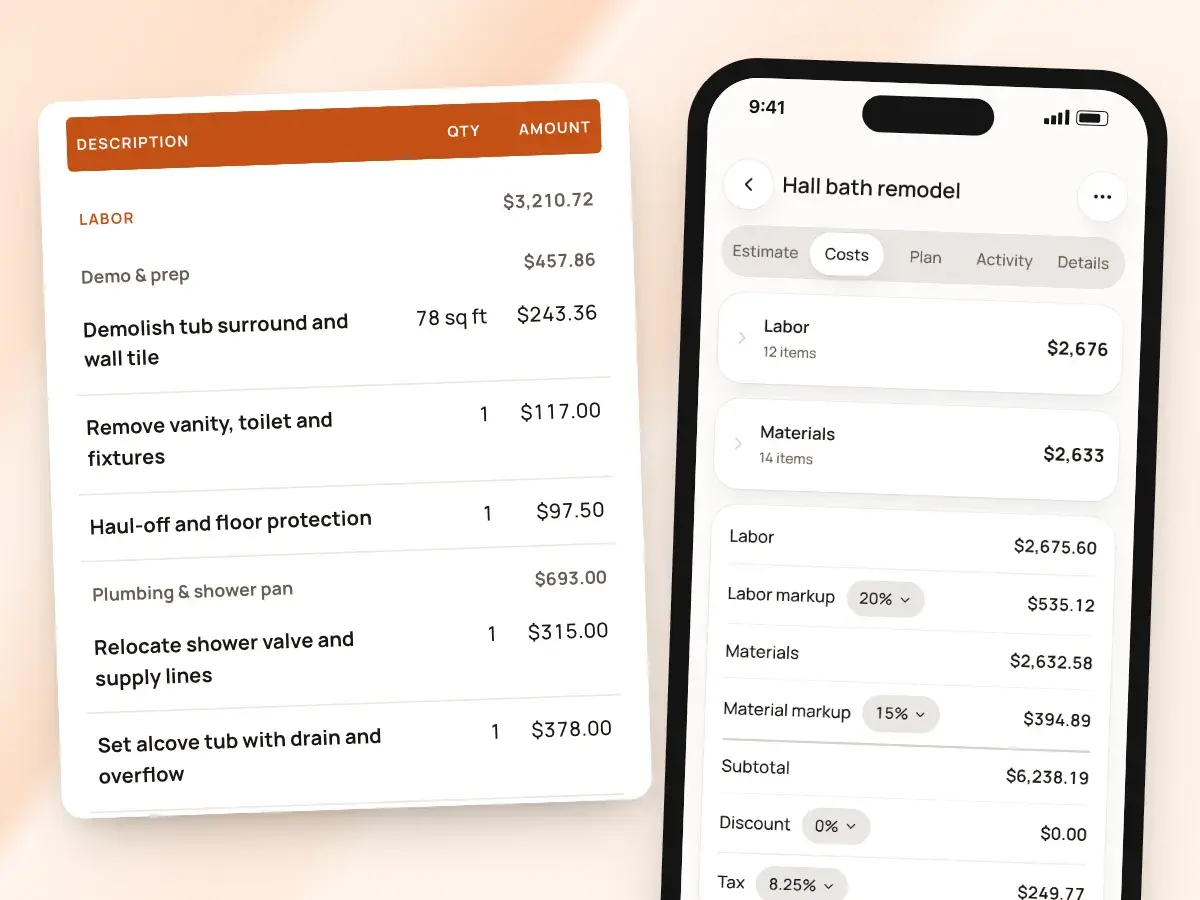
An estimate’s costs on a phone beside its priced lines, grouped by job step

How to price window and door jobs

A window and door price is built opening by opening, from four layers of work:

  1. Removal and disposal of the old unit.
  2. Opening work: framing changes, headers, flashing and air sealing.
  3. Installation of the new window, door or slab.
  4. Finish work: casing, stool and apron, jamb extensions, caulking, hardware and paint.

Measure for the order, price for the opening

Measure each existing frame's width at the top, middle and bottom, and its height at the left, center and right. Order to the smallest of each.

Turn your site notes into estimate lines

Note these on every opening:

  • which openings are out of square
  • which sills are soft
  • how deep the walls are, because thick walls need jamb extensions

Those notes become lines on the estimate.

Price each line from your own hours

These are the common lines on a window and door estimate and what each is measured in:

  • Opening: most lines.
  • Linear foot: casing, jamb extensions and caulking.

The hours and prices are yours to set, and every line's hours are editable to match your crew.

Line itemMeasured in
Existing window removal and disposalEach
Exterior door removal and disposalEach
Insert replacement window installationEach
New construction window installationEach
Window rough opening framingEach
LVL header installation for widened openingEach
Exterior prehung entry door installationEach
Sliding patio door installationEach
Prehung interior door installationEach
Interior door slab hanging on existing jambEach
Rough opening air sealing and foam insulationEach
Window stool and apron trim installationEach
Jamb extension installationLinear feet
Door casing installationLinear feet
Entry handleset and deadbolt installationEach
Exterior door and window perimeter caulkingLinear feet
Each one its own line on the estimate. The hours and prices are yours to set.

Ten insert windows add up to 44 hours

Example: Here's how the hours add up for ten insert replacement windows, each about 3 by 5 feet. The hours below are example figures; say your own records show your crew needs:

Work Your hours
Removal and disposal, 10 windows 8
Insert installation, 10 windows 26
Air sealing and foam, 10 windows 5
Exterior caulking, 160 linear feet 5
Total 44

That's just over four hours an opening, before any interior trim.

Full-frame installs and doors take longer

If those same windows were full-frame installs instead, each one takes longer to install. The job usually adds flashing, new casing and often a stool and apron.

Doors run longer. A straight entry door swap is three lines:

  • taking out the old door
  • installing the prehung entry door
  • a new handleset and deadbolt

A sliding patio door is heavier still. Put your own hours on each.

Your labor rate covers more than the wage

The rate you charge per hour has to cover far more than your installer's wage:

  • workers' comp and liability insurance
  • the van or truck, ladders and tools
  • time spent measuring and quoting jobs you don't get
  • second trips when a unit arrives damaged or wrong

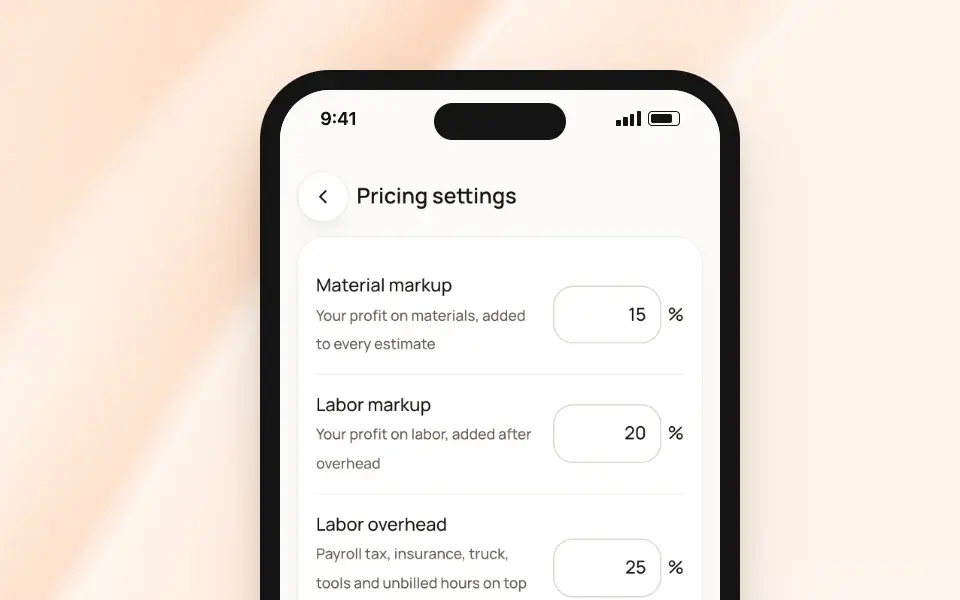
BuildWell builds the rate in three steps

  1. Wage: the median wage for that line's trade in your metro; most window and door work is priced at the carpenter wage.
  2. Overhead: your labor overhead, which starts at 100%, so the wage is doubled.
  3. Markup: your labor markup, which defaults to 20%.

Example: If your installer costs you $30 an hour (put in your real number), the 44 hours on those ten windows come to:

  • Wages: 44 × $30 = $1,320
  • With 100% overhead: $2,640
  • With 20% markup: $3,168 for the labor, about $317 a window

The windows themselves, the trim and the materials are on top.

Price the units, materials and old-opening surprises

  • The units: price windows and doors at your cost plus your markup, or mark them client-supplied. BuildWell starts material markup at 20%, and you can change it on any estimate.
  • Installation materials: foam, flashing tape, sill pans, shims, fasteners, caulk and trim are real costs on every opening. Price them; they add up across 20 windows.
  • Rot and out-of-square openings: you often can't see a soft sill or a sagging header until the old unit is out. State what's included and what repair costs beyond it, so the client agrees to the method before you start.

Check code items and permits when openings change

  • Code items: changing a bedroom window can bring in egress size requirements, and glass near doors, tubs and floors may need to be safety glass. Check with the local building department when an opening changes.
  • Permits: many jurisdictions require one to replace windows or exterior doors, and an opening that changes size usually needs one. BuildWell adds your flat permit fee whenever the estimate includes permits.
How to start a window and door business

Check the licensing rules where you work

Window and door replacement usually falls under a state's home improvement or general contractor licensing or registration, if the state has one. Some states only require it above a contract amount.

Structural changes to openings may bring a building permit and stricter rules. Your state's contractor licensing board and the local building department can tell you what applies.

Get EPA lead-safe certification

Replacing a window or door disturbs painted frames, sashes and trim. If you'll work on homes built before 1978, your firm needs EPA certification and a certified renovator must do or direct the work.

Form the business and keep its money separate

Many installers start as a sole proprietor or a single-member LLC. Then:

  • Get an EIN from the IRS at no cost.
  • Open a business bank account.
  • Run deposits and supplier payments through it, so every job's numbers are easy to see.

Carry the right insurance

  • General liability, which builders, property managers and many homeowners will ask to see.
  • Workers' compensation once you have employees, as most states require.
  • Commercial auto for the vehicles that carry units and ladders.

Set up supply accounts and learn lead times

Know where you'll order units, how long custom sizes take, and what can and can't be returned.

Lead times shape your schedule and your deposit policy. Tell clients the expected wait when they sign.

Write terms that fit special orders

Your estimate's terms should say:

  • when the order is placed
  • what the deposit covers
  • what happens if the client cancels after ordering
  • how hidden rot will be priced

In BuildWell, set your terms once and they appear on every estimate with your logo and license number.

Find the first jobs

Early window and door work tends to come from:

  • Referrals from people who saw your work.
  • General contractors and remodelers who'd rather sub out openings.
  • Property managers with doors and windows to replace between tenants.
  • Local search. A free business profile on the map apps homeowners use, with reviews from every finished job.

Watch the gap between order and payment

You pay for units weeks before you install them. Track which deposits are in, which orders are placed and which balances are due.

Send the final invoice the day the job's done.

Window and door installer pay and taxes

Earnings depend on market and mix of work

Wages vary by metro area and by experience, and much of this work is priced at carpenter wages.

Owners earn the margin between their installed price and their costs. So the labor rate and the markup on units matter more than the wage alone.

Self-employment tax is 15.3% of net earnings

As a sole proprietor or single-member LLC, you pay self-employment tax on your net earnings: 15.3% in total.

  • Social Security, 12.4%: applies to net earnings up to the Social Security wage base, which is $184,500 for 2026.
  • Medicare, 2.9%: applies to all of it.
  • Deduction: you can deduct half of the self-employment tax on your income tax return.

That's in addition to federal and state income tax, so hold some of every payment back.

Pay estimated taxes every quarter

Make estimated payments on Form 1040-ES during the year. They're usually due in:

  • mid-April
  • mid-June
  • mid-September
  • mid-January

Deposits usually count as income when received

Deposits on special orders count as income when you receive them for most cash-basis businesses, even if you install next quarter.

Track your deductions as you go

Window and door businesses commonly deduct:

  • tools, saws and ladders
  • the business share of the van or truck
  • fuel
  • insurance and license fees
  • lead-safe certification
  • disposal costs
  • phone and software

Keep receipts and a mileage log all year.

Subs paid $2,000 or more get a 1099-NEC

If you pay an unincorporated subcontractor for services, you'll generally need to send them a Form 1099-NEC. For payments made in 2026 and later, that applies once you've paid them $2,000 or more in a year, up from $600 before 2026.

Get a Form W-9, and a certificate of insurance, from every installer you sub work to.

Check your state's sales tax on materials

States treat installation contractors differently:

  • Some have you pay sales tax when you buy the units and materials.
  • Others have you charge it to the client.

Check your state's revenue department. In BuildWell, sales tax applies to materials only, not labor, at the rate you set.

This is general information, not tax or legal advice. A tax professional who works with contractors can tell you what applies to your state and business.

Estimates in minutes
talk through the job, get every line priced
Real local prices
materials and labor priced for your ZIP code
Get paid faster
professional invoices clients pay by card or bank
English or Spanish
on your phone and your computer

Pricing for window and door businesses

One plan with everything, billed weekly or yearly.

Weekly
$7.99 / week
Billed weekly. Cancel anytime.
  • AI estimates priced for your area
  • Estimates, invoices, clients and projects
  • Clients sign on any phone
  • Card and bank payments, no extra BuildWell fee
  • iPhone, Android and the web
Start free trial
Best value
Annual
$79.99 / year
About $6.67 a month, billed yearly
  • AI estimates priced for your area
  • Estimates, invoices, clients and projects
  • Clients sign on any phone
  • Card and bank payments, no extra BuildWell fee
  • iPhone, Android and the web
Start free trial

Both plans include every feature and start with a 3-day free trial. Add a card to start; you’re not charged until the trial ends. Cancel anytime.

Window and door software FAQ

01Can BuildWell price a whole-house window replacement?
Yes. Tell it how many windows, their type and size, and whether they're inserts or full-frame installs. BuildWell lists removal, installation, air sealing, interior trim and caulking with the quantities for every opening. You can change any quantity or line before sending.
02Does it know the difference between an insert and a full-frame install?
Yes. They're separate lines in BuildWell, and it asks which one the job is when your description doesn't say, because the labor and materials differ. An insert goes into the existing frame; a full-frame or new-construction install takes the window down to the rough opening and needs flashing, and often new exterior and interior trim.
03The client already bought the door. Can I price just the labor?
Yes. Mark the door as client-supplied, and BuildWell lists it on the estimate at no charge and prices your installation, hardware, trim and finish work. The scope stays clear if something about the unit turns out to be wrong.
04Can I price a wider opening or a new patio door where there's a window now?
Yes. Widening an opening adds rough framing and a new header, which BuildWell plans as their own lines. Changing a structural opening usually needs a permit, so set your permit fee once and it's added when the estimate includes permits.
05How should I handle the deposit on special-order windows?
Invoice a deposit from the signed estimate before you order, so a cancelled job doesn't leave you holding units that can't go back. Some states limit home improvement deposits, so check your state's rule and set the percentage to match.
06What about lead paint in older homes?
If the home was built before 1978, tell BuildWell and it adds a lead-safe work area setup and cleanup line. Window replacement disturbs painted frames and sashes, which generally brings in the EPA's lead renovation rule.
07Can the client sign the estimate on their phone?
Yes. You text or email a link, and they read the estimate with your logo and terms and sign with a finger, with no app or account. The estimate shows you when it's been opened, and you're told when they accept or decline.
08Can my estimates go out in Spanish?
Yes. You can use BuildWell in English or Spanish and print any estimate or invoice in either.
09How much is BuildWell?
It's $7.99 a week or $79.99 a year after a 3-day free trial. One subscription runs it on iPhone, Android and the web.

Price your next window and door job today

Estimates, invoices, e-signatures and payments in one place, on your phone and on the web.

Start for free →3-day free trial. Cancel anytime.