BuildWell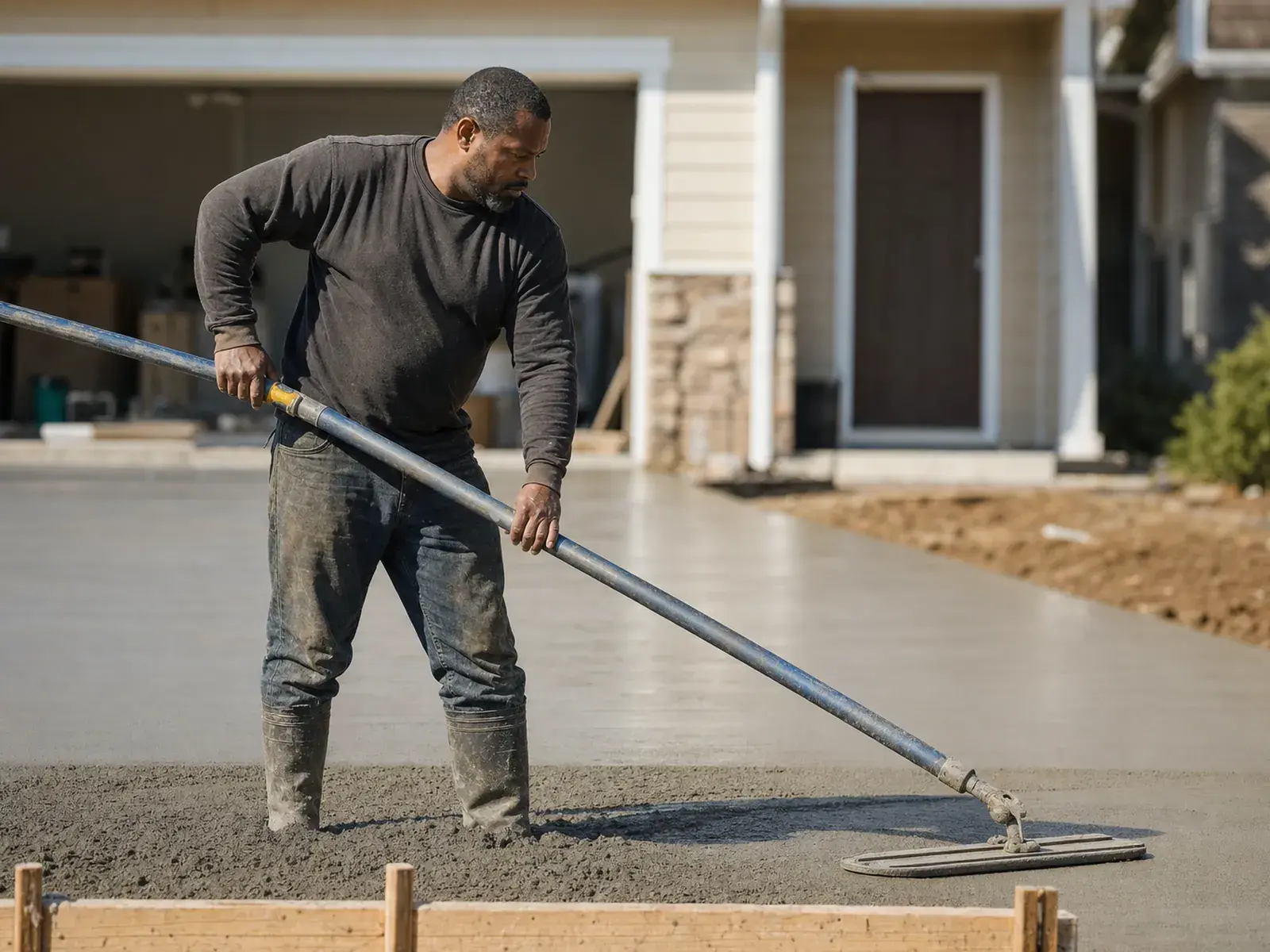

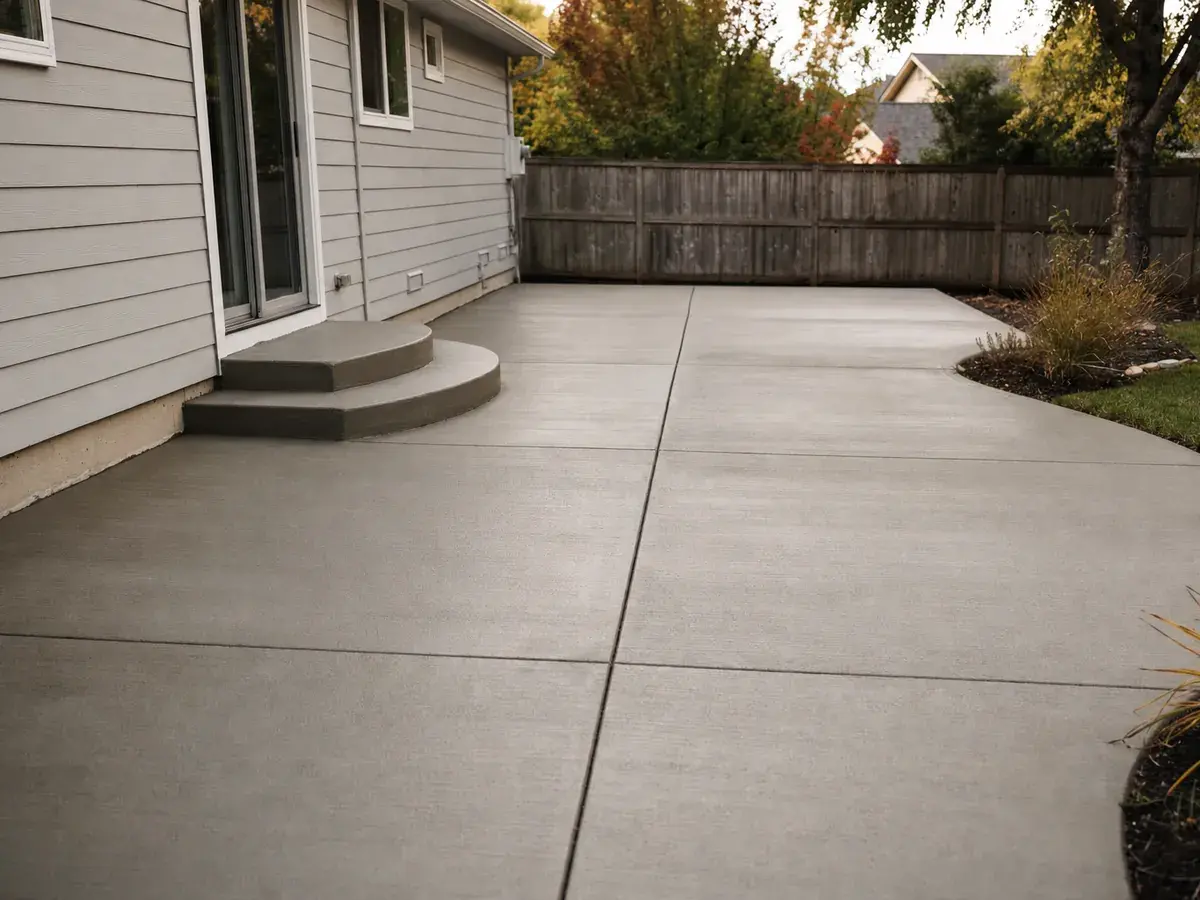
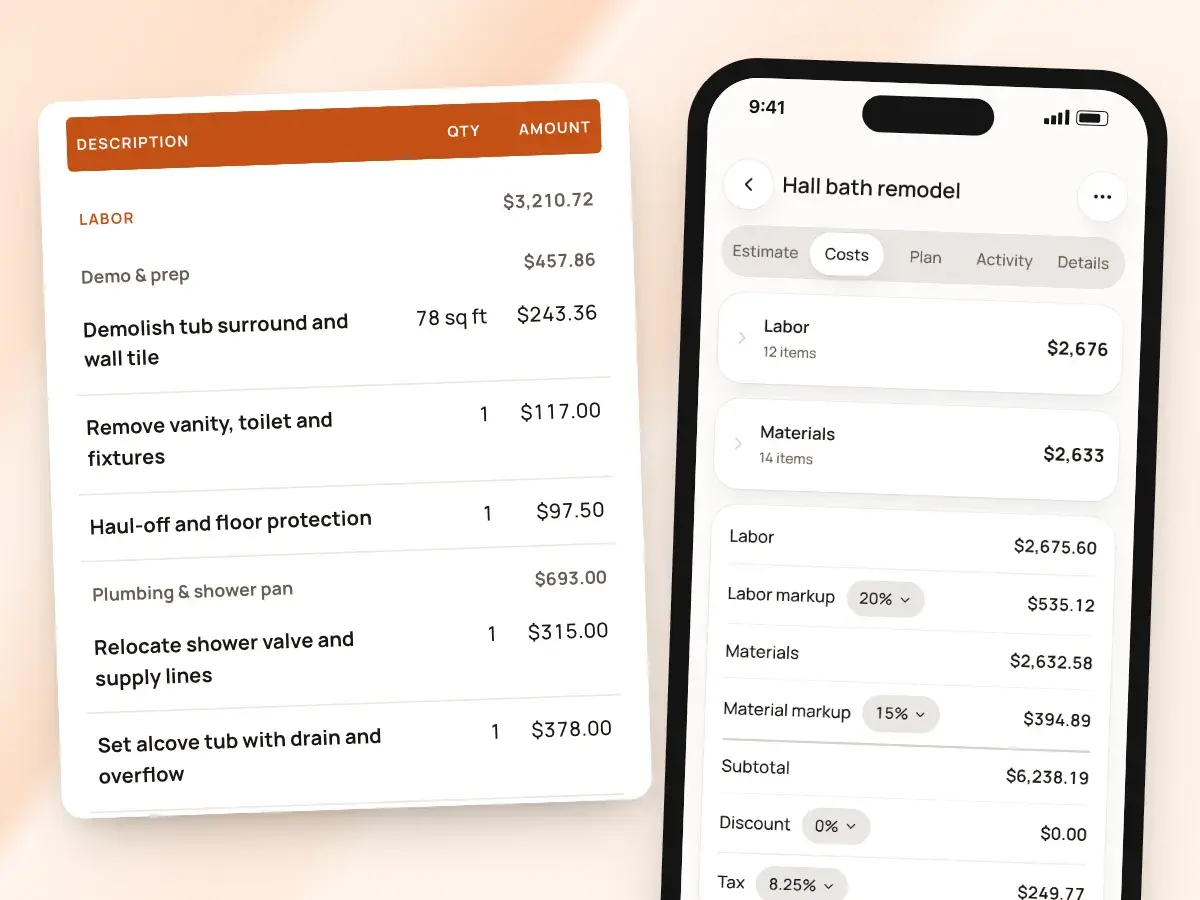
A concrete price comes down to four groups:
- Site work: tear-out, haul-off, excavation and grading.
- Base and forms: gravel, vapor barrier and edge forms.
- The slab: reinforcement, concrete, placing, finishing and curing.
- Joints, sealing and extras: control and expansion joints, sealer, a pump, and fees for small loads.
Square feet to price, yards to order
You price flatwork by the square foot, but you buy concrete by the cubic yard. To convert, multiply the area by the thickness in feet and divide by 27.
Example: A 12 by 20 foot patio at 4 inches thick:
- Area: 12 × 20 = 240 square feet
- Volume: 240 × (4 ÷ 12) = 80 cubic feet
- Yards: 80 ÷ 27 = 2.96 cubic yards
Order a little over that to cover an uneven subgrade and spillage.
Swap bagged mix for ready-mix on truck pours
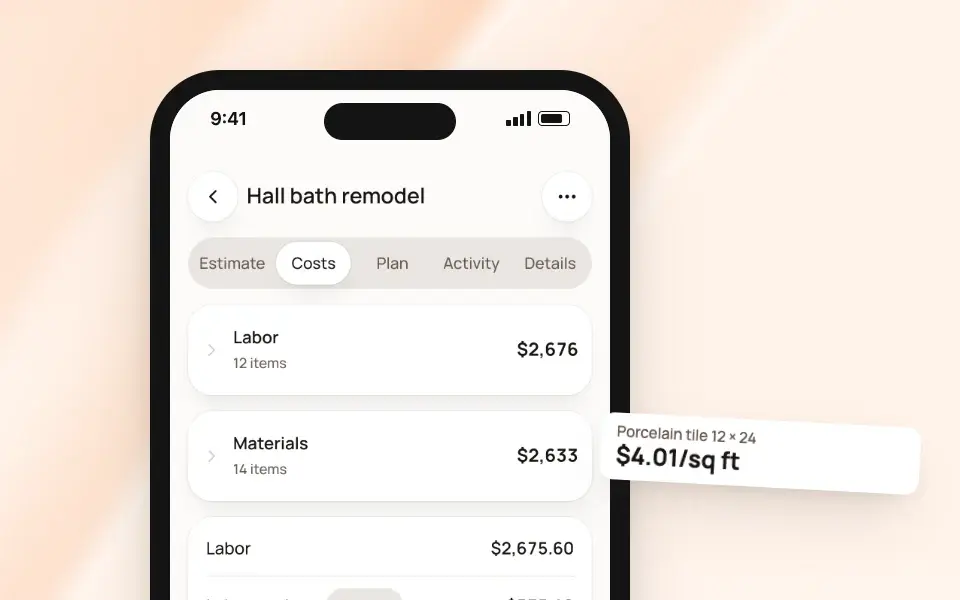
In BuildWell, the slab line prices bagged concrete mix at a store near the job. That works for small pours.
An 80-pound bag makes about 0.6 cubic feet, so a slab like this one would take more than 130 bags. For a truck pour, delete the bagged mix and add your supplier's delivered price for the yards you need as its own line.
Common line items and how each is measured
These are the common lines on a concrete and masonry estimate. Each is measured one of three ways:
- By the square foot: flatwork, base, reinforcement, walls and pavers.
- By the linear foot: forms, footings, joints and crack repair.
- By the each: piers.
The hours and prices are yours to set. Every crew is different, and every line's hours are editable.
| Line item | Measured in |
|---|---|
| Saw-cut and demolish existing concrete slab | Square feet |
| Excavate and grade subgrade for flatwork | Square feet |
| Compacted gravel base course | Square feet |
| Slab edge formwork with 2x4 lumber | Linear feet |
| Rebar grid reinforcement for slab | Square feet |
| Welded wire mesh reinforcement | Square feet |
| Place and screed 4 in concrete slab | Square feet |
| Broom finish and cure concrete flatwork | Square feet |
| Saw-cut control joints in slab | Linear feet |
| Continuous footing excavation and pour | Linear feet |
| Round pier footing with form tube | Each |
| Lay up 8 in cmu block wall | Square feet |
| Tuckpoint and repoint mortar joints | Square feet |
| Route and seal concrete crack repair | Linear feet |
| Paver patio on sand setting bed | Square feet |
| Segmental retaining wall block with drainage | Square feet |
Forming and prep take longer than the pour
Example: Here's the labor for that 12 by 20 foot patio as new work, with 64 feet of edge form. The hours below are example figures; say your own records show your crew needs:
Work Your hours Excavate and grade, 240 square feet 10 Gravel base, 240 square feet 5 Edge forms, 64 feet 10 Wire mesh, 240 square feet 2.5 Place and screed, 240 square feet 12 Broom finish and cure, 240 square feet 3.5 Total 43
Forming and getting the ground ready take more hours than the pour itself. That's the work a per-square-foot price tends to forget, and the reason small slabs cost more per foot than big ones.
Your labor rate is more than the wage
A laborer's wage isn't your labor rate. Your rate has to cover:
- the wage
- payroll taxes, and workers' comp and liability coverage
- the truck, the trailer, the mixer, the screeds and the saw
- days lost to rain and cold
- time spent bidding
Then it needs a profit.
How BuildWell prices each line's hours
BuildWell prices each line's hours from three numbers:
- Wage: the metro median for the kind of work on that line: carpenter for forms, construction laborer for the rest.
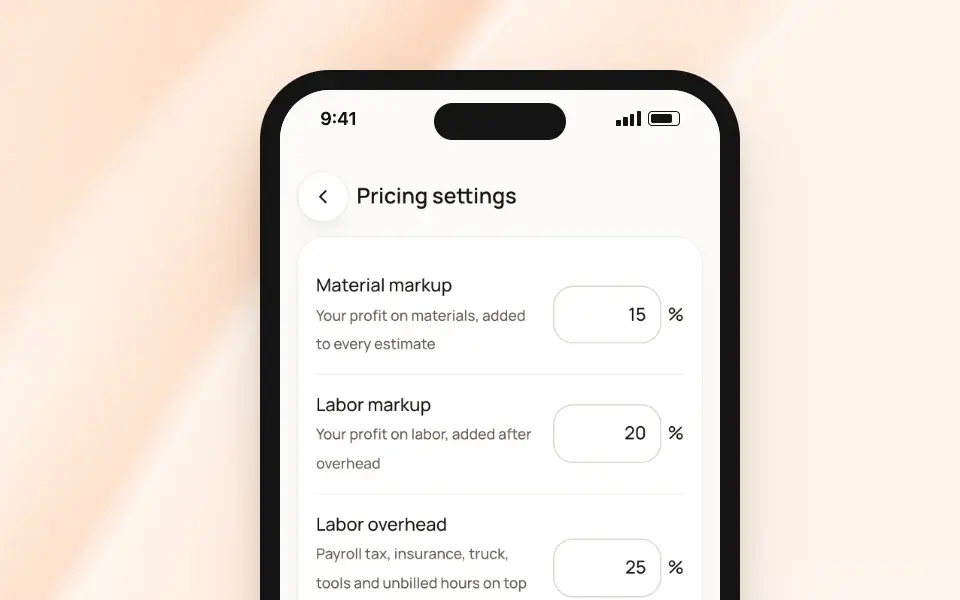
- Overhead: labor overhead, starting at 100%, so a $30 wage becomes $60.
- Markup: labor markup, starting at 20%.
Example: Say your crew costs you $30 an hour per person. Use your real number. The 43 hours on that patio come to:
- Wages: 43 × $30 = $1,290
- With 100% overhead: $2,580
- With 20% markup: $3,096 for labor
Tear-out and haul-off of an old patio come on top.
Price the truck, pump and dump fees
- Concrete: price ready-mix at your supplier's delivered price per yard. Ask about minimum loads; many suppliers charge extra for small orders.
- Pump or buggies: if the truck can't reach the forms, add a pump or the extra labor to wheel it. In BuildWell, add a pump as a custom line.
- Base, forms and steel: gravel, form boards, stakes, mesh or rebar and chairs, priced near the job. BuildWell starts material markup at 20%.
- Disposal: broken concrete is heavy. Price the haul and the dump fee.
Plan for permits, utilities and weather
- Permits: many places require one for driveways, footings, retaining walls past a certain height, and work in the right of way. Put the fee on the estimate. BuildWell adds your flat permit fee whenever you say the job has a permit.
- Utilities: call 811 before you dig, every job.
- Weather: cold and heat both change how concrete cures. Say in your terms how you handle a delayed pour, and price blankets or additives when the season calls for them.