 BuildWell
Subcontractor
A subcontractor is a contractor hired by the general contractor, not the owner, to perform a specific part of a project, such as electrical, plumbing or drywall.
Subs sign a subcontract with the GC that usually passes down the relevant terms of the main contract: scope, schedule, insurance, payment terms and how changes are handled. Read it closely for pay-when-paid or pay-if-paid language, retainage, indemnity and back-charge clauses.
Because a sub has no contract with the owner, its payment depends on the GC. Lien laws and payment bonds exist largely to protect subs and suppliers, but many states require preliminary notices to keep those rights, so know your state’s rules.
A GC hiring subs should collect a W-9 and a certificate of insurance before work starts, and check licenses where the trade requires one. Payments to unincorporated subs may need to be reported on Form 1099-NEC.
Whether a worker is a true subcontractor or an employee depends on how much control the GC has over the work, not on what the paperwork says. Misclassifying employees as subs can bring back taxes and penalties; the IRS and state labor agencies publish their tests.
Estimates, signatures and invoices in one app
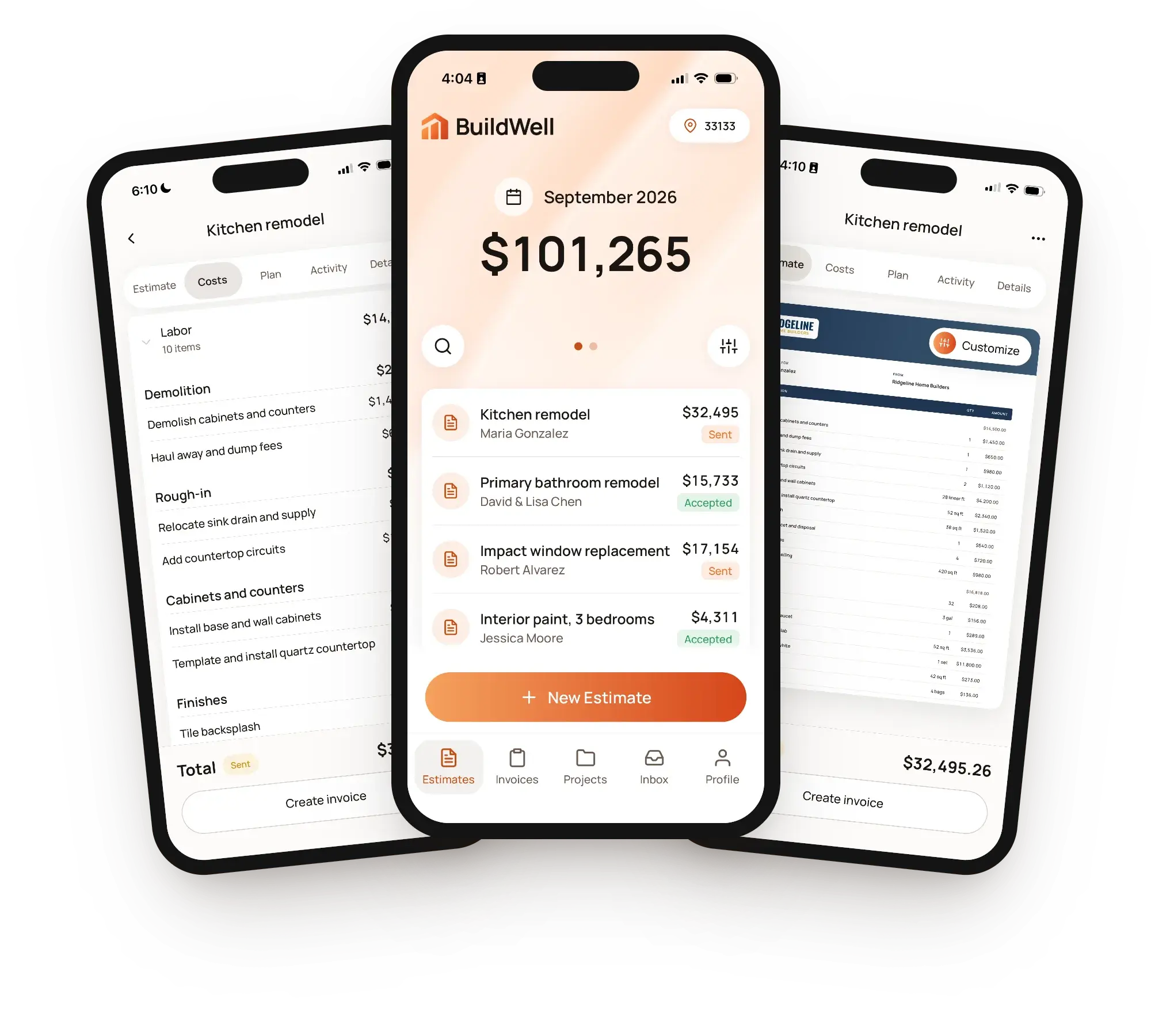
BuildWell writes itemized estimates priced for your area, gets them signed on the client’s phone, and turns them into invoices.
- AI estimates priced for your area
- Estimates, invoices, clients and projects
- Clients sign on any phone
- Card and bank payments, no extra BuildWell fee
- iPhone, Android and the web
- AI estimates priced for your area
- Estimates, invoices, clients and projects
- Clients sign on any phone
- Card and bank payments, no extra BuildWell fee
- iPhone, Android and the web
Both plans include every feature and start with a 3-day free trial. Add a card to start; you’re not charged until the trial ends. Cancel anytime.
Try BuildWell today
Estimates, invoices, e-signatures and payments in one place, on your phone and on the web.