 BuildWell
Payment bond
A payment bond is a surety bond guaranteeing that the contractor will pay its subcontractors, laborers and suppliers on a project.
Public property generally can’t be liened, so payment bonds give subs and suppliers on public jobs a way to get paid when the general contractor doesn’t pay. They’re required on federal construction contracts above a set amount under the Miller Act, and on many state and local public projects under state laws.
If you’re unpaid on a bonded job, you make a claim against the bond rather than the property. Like lien rights, bond claim rights come with strict notice and lawsuit deadlines, and they depend on how far down the chain you are. Lower-tier subs and suppliers may need to send notice to the general contractor within a set time.
Ask for a copy of the payment bond before you start work on any public job, and note the surety’s name and address. Some private owners also require payment bonds; on those jobs a bond claim may be available alongside lien rights.
If you’re the bonded contractor, a claim against your payment bond goes to your surety, which will expect to be repaid. Paying subs and suppliers on time and collecting lien waivers keeps claims off your record.
Estimates, signatures and invoices in one app
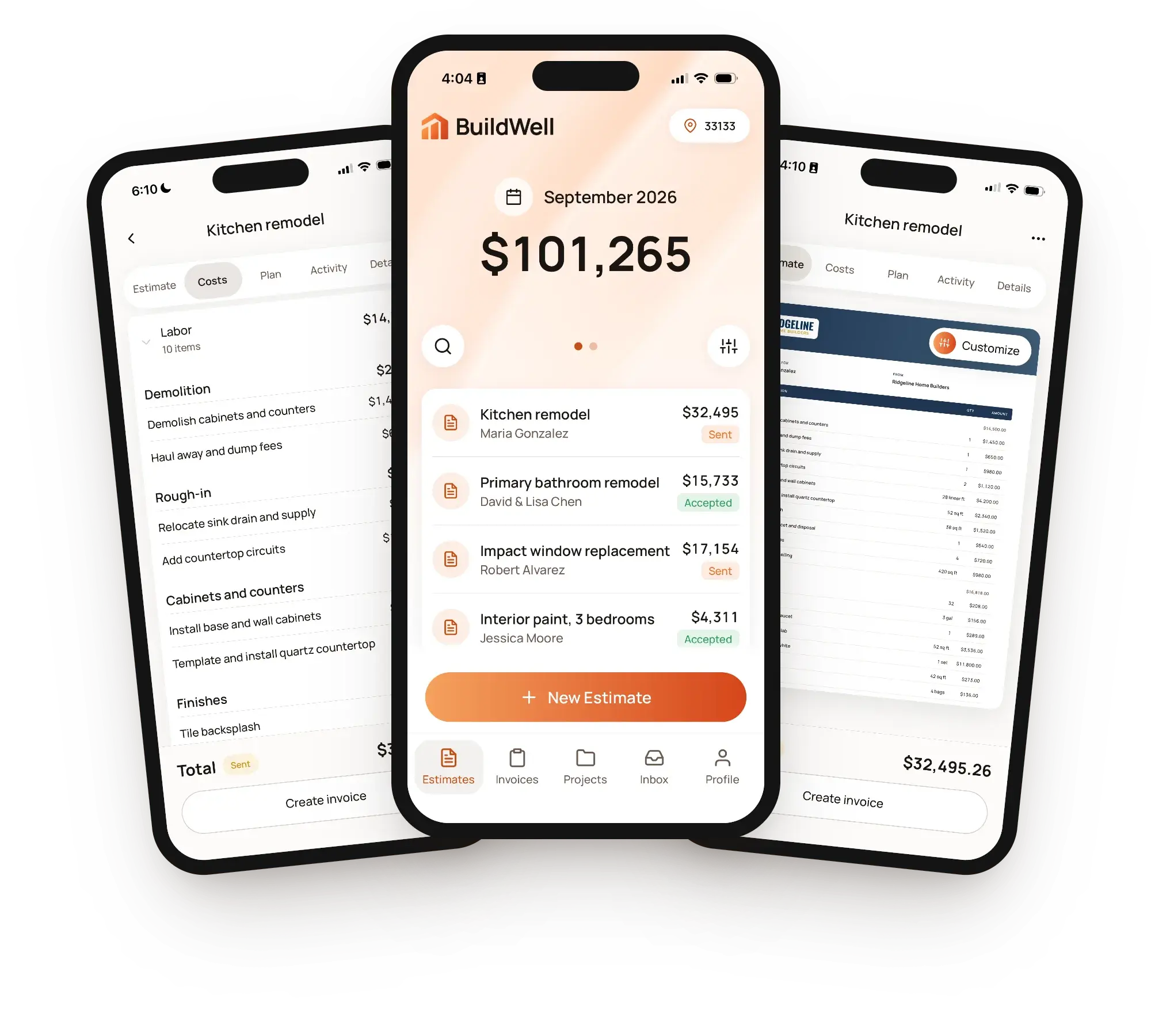
BuildWell writes itemized estimates priced for your area, gets them signed on the client’s phone, and turns them into invoices.
- AI estimates priced for your area
- Estimates, invoices, clients and projects
- Clients sign on any phone
- Card and bank payments, no extra BuildWell fee
- iPhone, Android and the web
- AI estimates priced for your area
- Estimates, invoices, clients and projects
- Clients sign on any phone
- Card and bank payments, no extra BuildWell fee
- iPhone, Android and the web
Both plans include every feature and start with a 3-day free trial. Add a card to start; you’re not charged until the trial ends. Cancel anytime.
Try BuildWell today
Estimates, invoices, e-signatures and payments in one place, on your phone and on the web.