 BuildWell
Mechanic’s lien
A mechanic’s lien is a legal claim against a property, filed by a contractor, sub or supplier who improved it and wasn’t paid.
A lien attaches to the property itself, not just to the person who hired you. It clouds the title, so the owner usually can’t sell or refinance until it’s resolved, which gives unpaid contractors real leverage. If it still isn’t paid, the lien can be enforced through a foreclosure lawsuit.
Lien rights come from state law, and every state sets its own rules: who can file, what notices must be sent first, how long you have to record the lien after finishing work, and how soon you must sue to enforce it. Missing a deadline usually means losing the right, and some states require you to be licensed to file at all.
Many states give homeowners extra protection, such as limits on liens against owner-occupied homes or required contract language and notices. In some states, a homeowner who paid the general contractor in full can still face a sub’s lien, which is why preliminary notices and lien waivers exist. Public property generally can’t be liened; on public jobs, a payment bond takes its place.
Act early: note the lien deadlines for each job when you start, send required notices on time, and track them as the work goes on. Confirm the details in your state’s lien statute or with a construction attorney before filing, since a lien for more than you’re owed can carry penalties.
How a mechanic’s lien works
A mechanic’s lien is a claim against the property itself. Once it’s recorded, usually with the county where the property sits, it shows up in any title search. Buyers, lenders and title companies generally won’t close a sale or refinance until the lien is paid, bonded off or released. That pressure, more than the lawsuit behind it, is why most liens get paid.
The idea behind lien rights is that the work became part of the property. Framing lumber and electrical wire can’t be taken back once they’re installed, so state law lets the people who supplied them look to the property for payment. Who qualifies depends on the state. General contractors, subs and material suppliers usually do. Lower-tier suppliers, equipment rental companies and design professionals sometimes do and sometimes don’t.
Most states follow a similar sequence, though the names, forms and deadlines differ:
- Preliminary notice: in many states, anyone without a direct contract with the owner has to send notice early in the job to keep lien rights.
- Notice of intent: some states require a written warning before a lien is recorded, and many contractors send one anyway.
- Recording: the lien claim is filed with the county recorder or clerk within a deadline set by state law, often counted from the last day of work or from completion of the project.
- Service: a copy of the recorded lien usually has to be delivered to the owner within a set time.
- Enforcement: if the debt still isn’t paid, the claimant has to file a foreclosure lawsuit within a set time, or the lien generally expires.
The lien amount is generally limited to the value of the labor and materials you furnished and weren’t paid for. Whether interest, collection costs or disputed extras can be included depends on your state’s lien statute.
Mechanic’s liens, bond claims and related remedies
A lien isn’t the only tool for an unpaid contractor, and on some jobs it isn’t available at all. Public property generally can’t be liened, so on public projects a payment bond takes its place. Some states also let unpaid claimants send a notice that requires the owner or lender to hold back money still owed under the contract, often called a stop notice or stop payment notice.
| Remedy | Claim is against | Where it applies |
|---|---|---|
| Mechanic’s lien | The property | Private projects, including homes and commercial buildings |
| Payment bond claim | The surety’s bond | Public projects and bonded private jobs |
| Stop notice or similar | Money the owner or lender still holds | Only in states that provide for it |
| Lien bonded off | A bond posted in place of the lien | Private jobs where the owner or contractor wants the title cleared |
Many states also add protections for owner-occupied homes, such as required contract notices or limits on liens when the homeowner has paid the general contractor. Check your state’s lien statute for which remedies apply to your job.
Why mechanic’s liens matter to each party
For contractors, subs and suppliers
Lien rights are often the only thing that turns an unpaid invoice into a debt someone has to deal with. They don’t depend on the subcontract or on whether the general contractor is solvent. But they’re easy to lose: a missed notice or a late filing can end them, and a lien filed for the wrong amount can expose you to penalties.
For homeowners and property owners
A lien can land on a house even when the owner did nothing wrong, for example when a general contractor collected the money and didn’t pay a supplier. Owners protect themselves by reading the preliminary notices they receive, collecting lien waivers with each payment and, on larger jobs, paying subs and suppliers by joint check.
For general contractors
A general contractor sits in the middle. Its own lien rights protect it against the owner, while liens from its subs and suppliers can stall the owner’s payments or a lender’s draw. Paying subs on time and collecting their waivers keeps the title clean and the money moving.
How to protect and use your lien rights
- At the start of each job, record the property’s legal owner, address and legal description, the general contractor, and any construction lender.
- Check your state’s lien statute for the notice, recording and lawsuit deadlines, and put each one on the job calendar.
- Send any required preliminary notice on time, by a delivery method you can prove, and keep the proof.
- Bill on schedule and keep records of what you furnished and when: delivery tickets, daily logs, change orders and invoices.
- When a payment is late, ask in writing, then send a notice of intent to lien if your state uses one.
- If payment still doesn’t come, record the lien within the deadline for the amount you’re actually owed, and serve it as your state requires.
- When you’re paid, sign the matching release or waiver and make sure the lien is released on the public record.
Treat lien rights as something you set up at the start of a job, not something you look into once a client stops paying. By then a deadline may already have passed. Because the rules are technical and vary by state, have a construction attorney review your first few liens, or any lien on a large amount.
Mechanic’s lien example with numbers
Say a drywall sub has a $36,000 subcontract on a home addition, plus a $2,400 change order the general contractor approved in writing. The sub sent the preliminary notice its state requires at the start of the job.
The sub finishes all the work and is paid twice: $12,000 and $14,000. The general contractor then stops paying. The sub has also charged $900 in late fees under its own invoice terms.
| Item | Amount |
|---|---|
| Subcontract | $36,000 |
| Approved change order | $2,400 |
| Total earned | $38,400 |
| Payments received ($12,000 + $14,000) | −$26,000 |
| Unpaid for work furnished | $12,400 |
The sub records a lien for $12,400: $38,400 earned less $26,000 paid. It leaves the $900 in late fees out, because whether fees can be included in a lien varies by state, and an inflated lien can be challenged. The fees can still be pursued under the contract.
The homeowner had already paid the general contractor in full. Because the sub followed its state’s notice rules, the lien may still be valid in that state. To clear the title, the homeowner and general contractor agree to pay the sub $12,400 by joint check. Once it clears, the sub signs an unconditional final waiver and records a release of the lien.
Common mechanic’s lien mistakes
- Skipping the preliminary notice because the client seems reliable, then finding the lien isn’t available when the client stops paying.
- Counting the deadline from the wrong date, such as the last invoice instead of the last day labor or materials were furnished.
- Filing a lien for more than is owed, including work not yet done, fees the state doesn’t allow or round numbers.
- Getting the owner or the property description wrong, so the lien attaches to nothing.
- Recording a lien and then letting the deadline to sue pass, so the lien expires.
- Trying to lien a public project instead of making a claim on the payment bond.
- Getting paid and forgetting to release the lien on the public record.
Almost all of these come down to dates and details. A lien is only as strong as the paperwork behind it, so keep notices, delivery records and invoices together for every job.
Common questions
01Can a contractor put a lien on your house without telling you?
02How long does a mechanic’s lien last?
03Can you put a lien on a public project?
04How do you get a mechanic’s lien removed?
05Do you need a lawyer to file a mechanic’s lien?
Estimates, signatures and invoices in one app
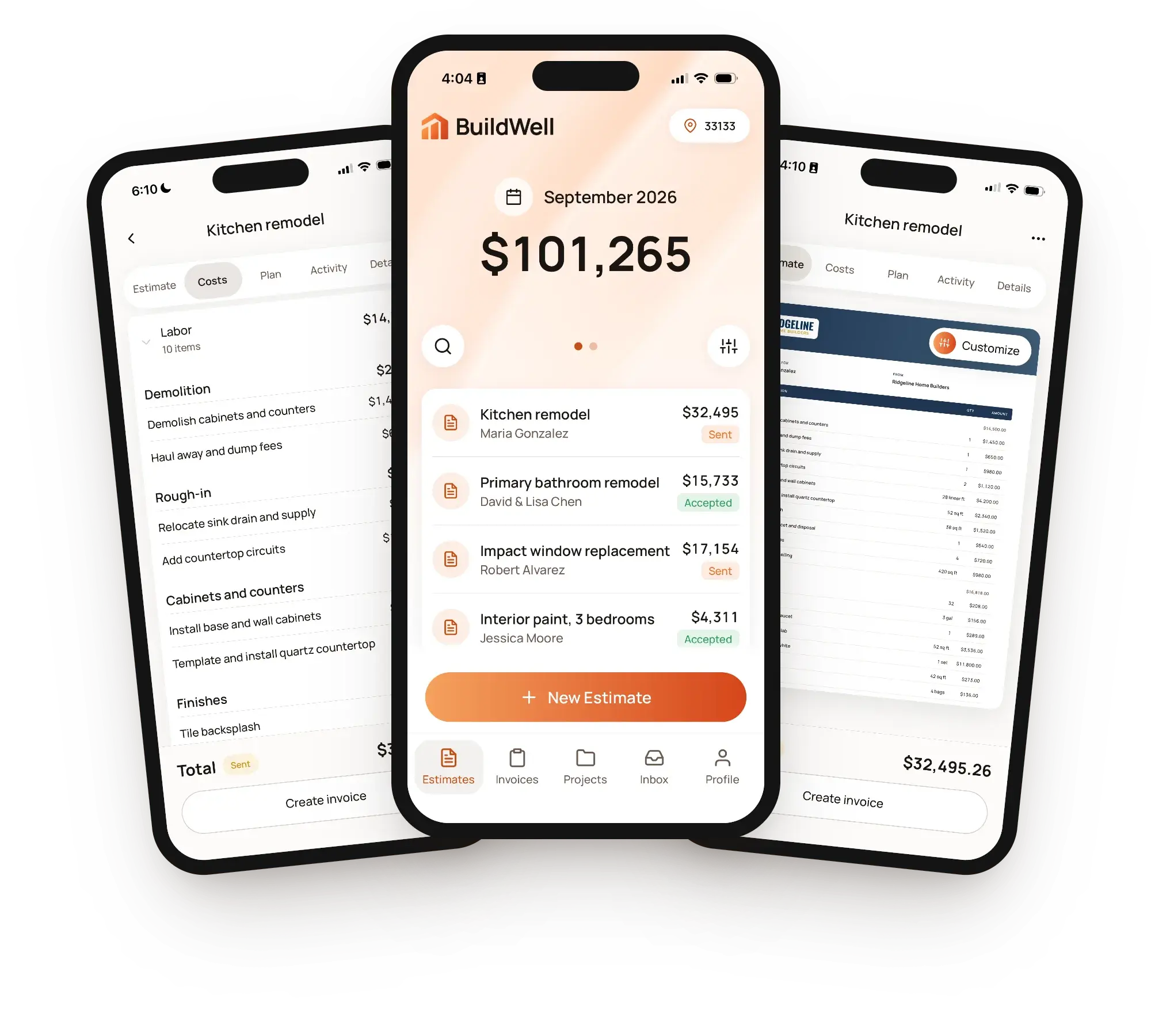
BuildWell writes itemized estimates priced for your area, gets them signed on the client’s phone, and turns them into invoices.
- AI estimates priced for your area
- Estimates, invoices, clients and projects
- Clients sign on any phone
- Card and bank payments, no extra BuildWell fee
- iPhone, Android and the web
- AI estimates priced for your area
- Estimates, invoices, clients and projects
- Clients sign on any phone
- Card and bank payments, no extra BuildWell fee
- iPhone, Android and the web
Both plans include every feature and start with a 3-day free trial. Add a card to start; you’re not charged until the trial ends. Cancel anytime.
Try BuildWell today
Estimates, invoices, e-signatures and payments in one place, on your phone and on the web.