 BuildWell
Pay-when-paid clause
A pay-when-paid clause lets a general contractor wait to pay a subcontractor until the owner pays the general contractor, within a reasonable time.
Pay-when-paid clauses are common in subcontracts. They’re usually read as setting the timing of payment: the general contractor pays after it gets paid. If the owner never pays, courts in many states still expect the general contractor to pay the sub within a reasonable time.
A pay-if-paid clause goes further. It makes the owner’s payment a condition of the sub being paid at all, shifting the risk of owner nonpayment onto the sub. Some states enforce these clauses if the wording is clear; others limit them or refuse to enforce them.
The difference often comes down to a few words, so read every subcontract before you sign. Look for “condition precedent,” which signals pay-if-paid, and for how long the general contractor has to pay you after it’s paid.
Your mechanic’s lien and bond claim rights come from state law, not from the subcontract, so keep sending any required preliminary notices and tracking your deadlines whatever the payment clause says. For how courts in your state read the language, ask a construction attorney there.
Estimates, signatures and invoices in one app
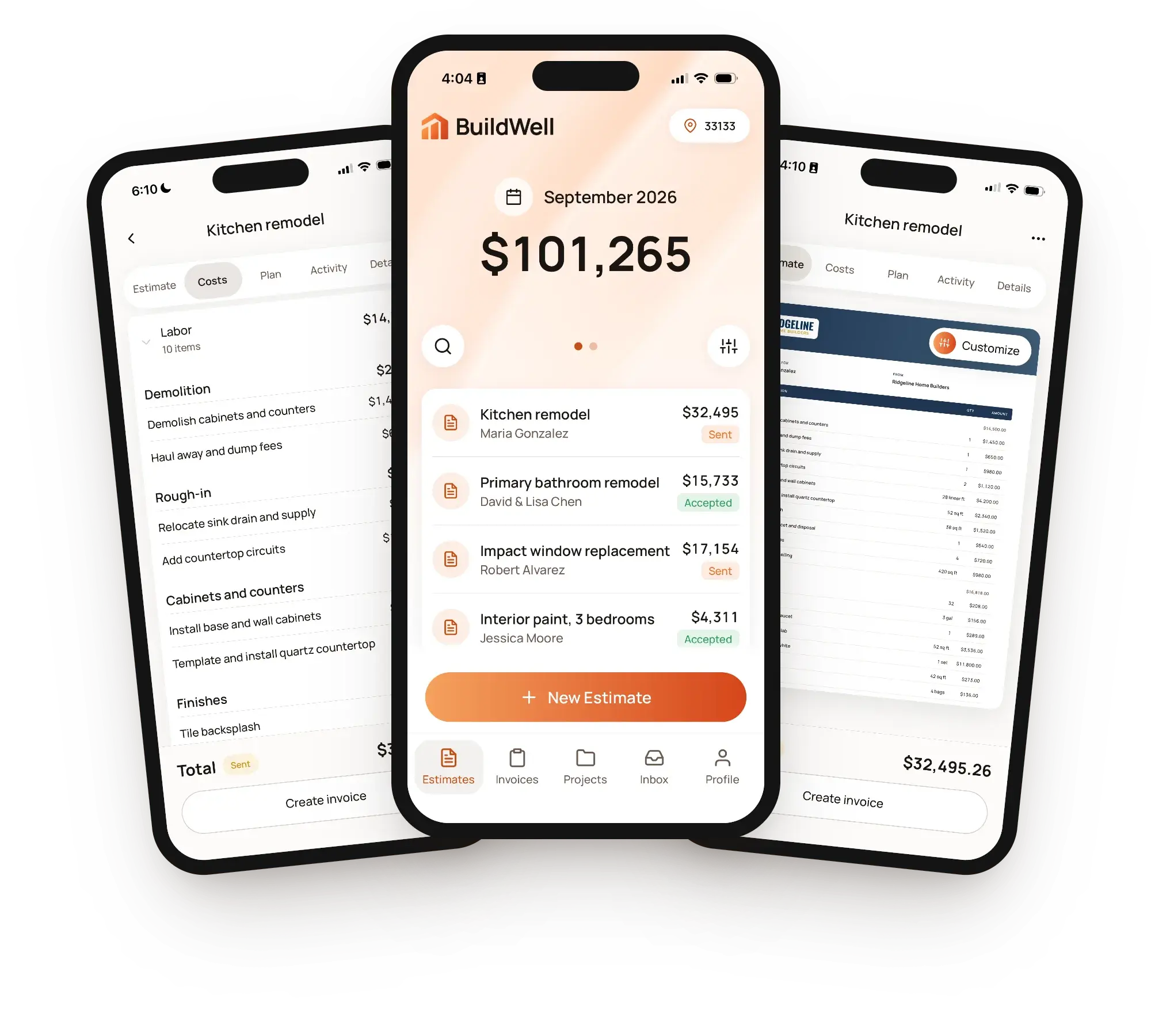
BuildWell writes itemized estimates priced for your area, gets them signed on the client’s phone, and turns them into invoices.
- AI estimates priced for your area
- Estimates, invoices, clients and projects
- Clients sign on any phone
- Card and bank payments, no extra BuildWell fee
- iPhone, Android and the web
- AI estimates priced for your area
- Estimates, invoices, clients and projects
- Clients sign on any phone
- Card and bank payments, no extra BuildWell fee
- iPhone, Android and the web
Both plans include every feature and start with a 3-day free trial. Add a card to start; you’re not charged until the trial ends. Cancel anytime.
Try BuildWell today
Estimates, invoices, e-signatures and payments in one place, on your phone and on the web.