 BuildWell
Surety bond
A surety bond is a three-party agreement in which a surety company guarantees to an owner or agency that a contractor will meet an obligation.
The three parties are the principal (you, the contractor), the obligee (the owner or agency that requires the bond) and the surety (the company backing your promise). If you don’t meet the obligation, the obligee can claim against the bond; the surety pays valid claims and then looks to you for repayment.
Contractors run into several kinds. License bonds are required by many states and cities to get or keep a contractor license. Bid, performance and payment bonds are common on public and larger private projects. A local building department may require a permit bond.
A bond protects the obligee, not you. That’s the main difference from insurance: the surety doesn’t expect to absorb losses, and it will ask you to sign an indemnity agreement promising to repay any claim.
Bonding capacity, meaning the size of job and total backlog a surety will back, depends on your financial statements, credit, work history and the quality of your books. If you want to bid bonded public work, start a relationship with a surety agent early and keep your financials clean and up to date.
Estimates, signatures and invoices in one app
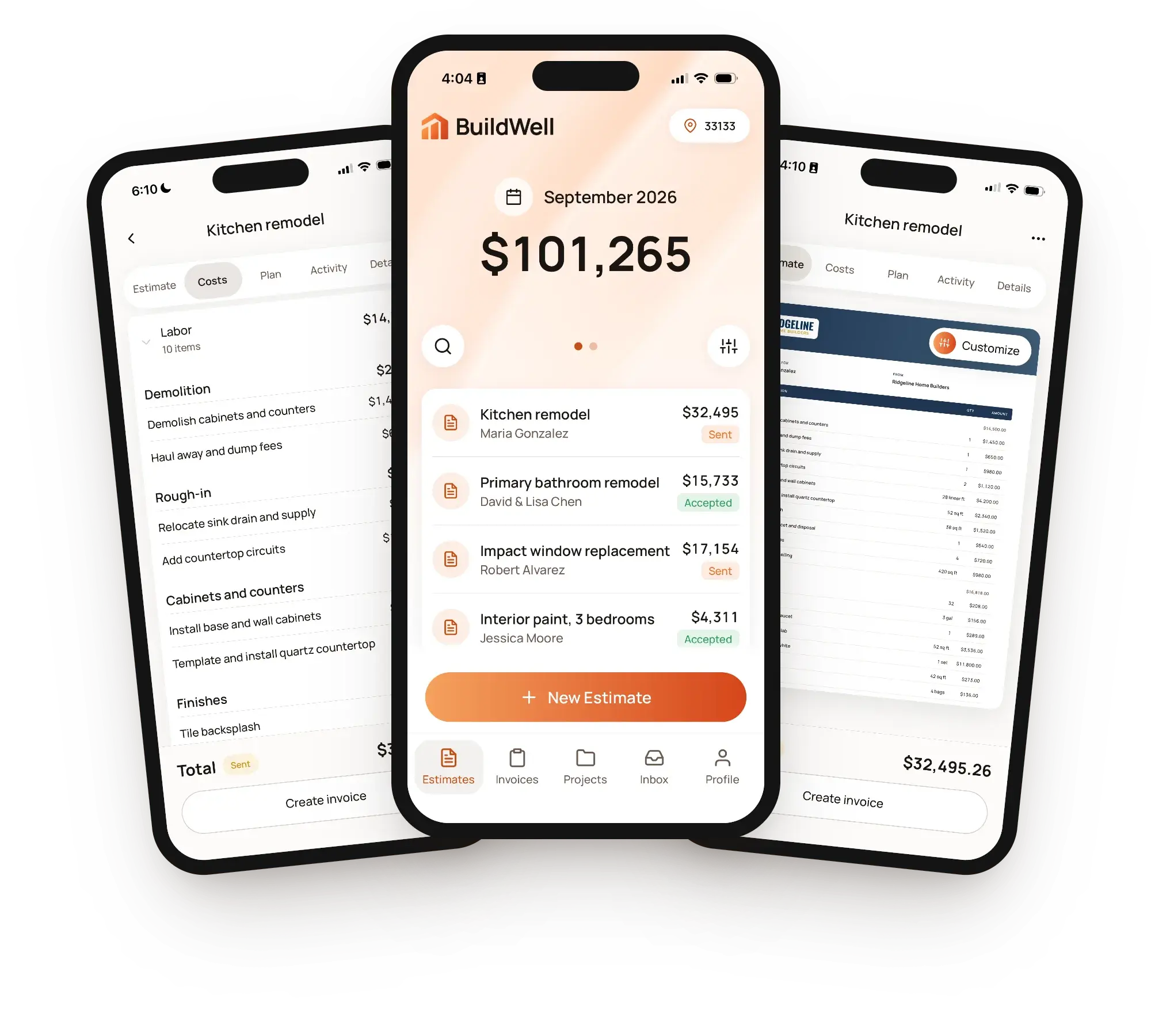
BuildWell writes itemized estimates priced for your area, gets them signed on the client’s phone, and turns them into invoices.
- AI estimates priced for your area
- Estimates, invoices, clients and projects
- Clients sign on any phone
- Card and bank payments, no extra BuildWell fee
- iPhone, Android and the web
- AI estimates priced for your area
- Estimates, invoices, clients and projects
- Clients sign on any phone
- Card and bank payments, no extra BuildWell fee
- iPhone, Android and the web
Both plans include every feature and start with a 3-day free trial. Add a card to start; you’re not charged until the trial ends. Cancel anytime.
Try BuildWell today
Estimates, invoices, e-signatures and payments in one place, on your phone and on the web.