

BuildWell

Remodeling estimating software that wins more jobs

Estimating and invoicing software for remodelers. Describe the rooms and the work, get every trade priced, and bill the job in stages.

  • Store prices near the job
  • Wages for your metro
  • iPhone, Android and web
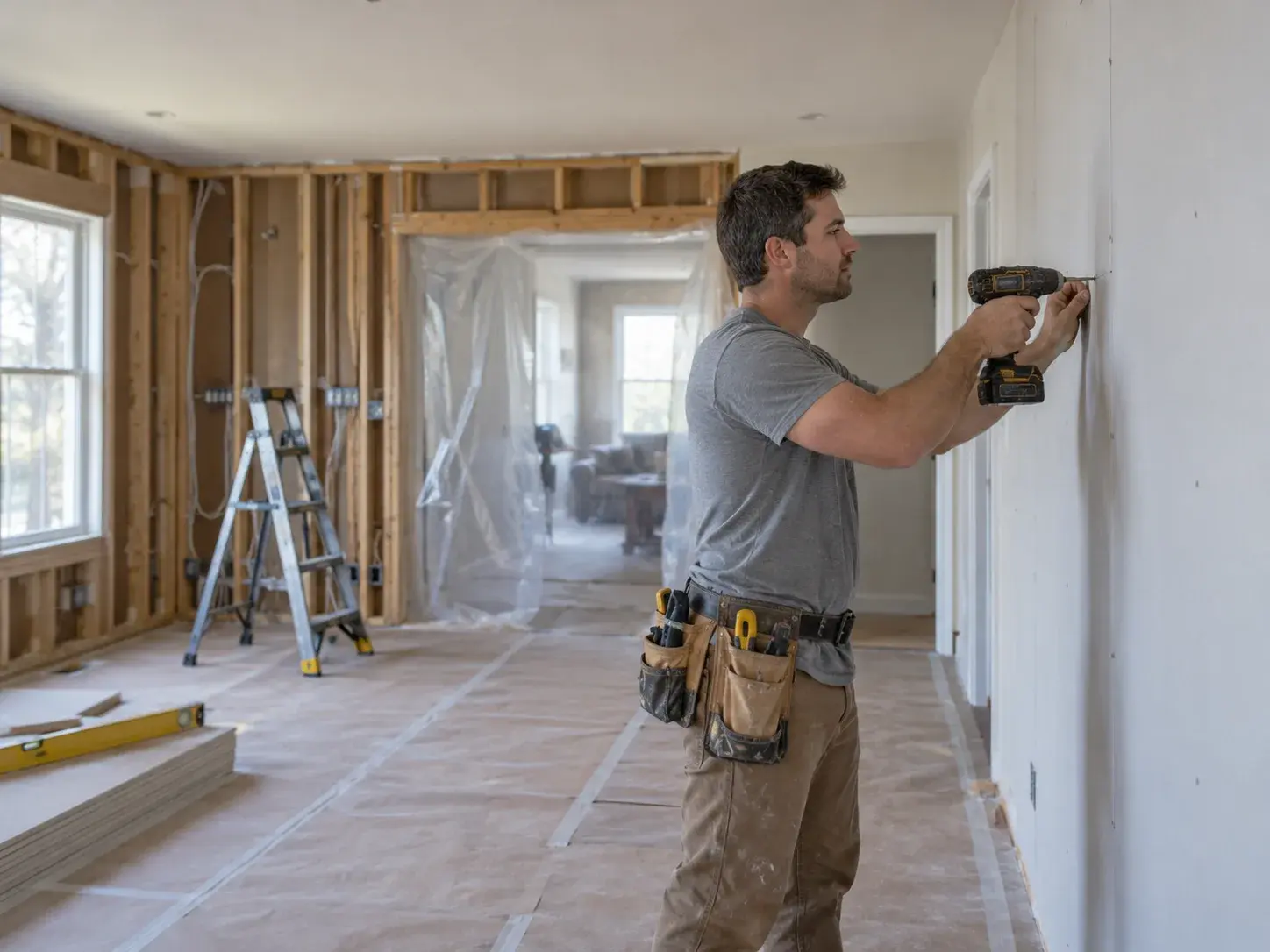
A remodeler fastening drywall in a family room stripped to the studs

Run every remodeling job start to finish

Estimate on site, get it signed before you leave, invoice when the work’s done and see the payment land.

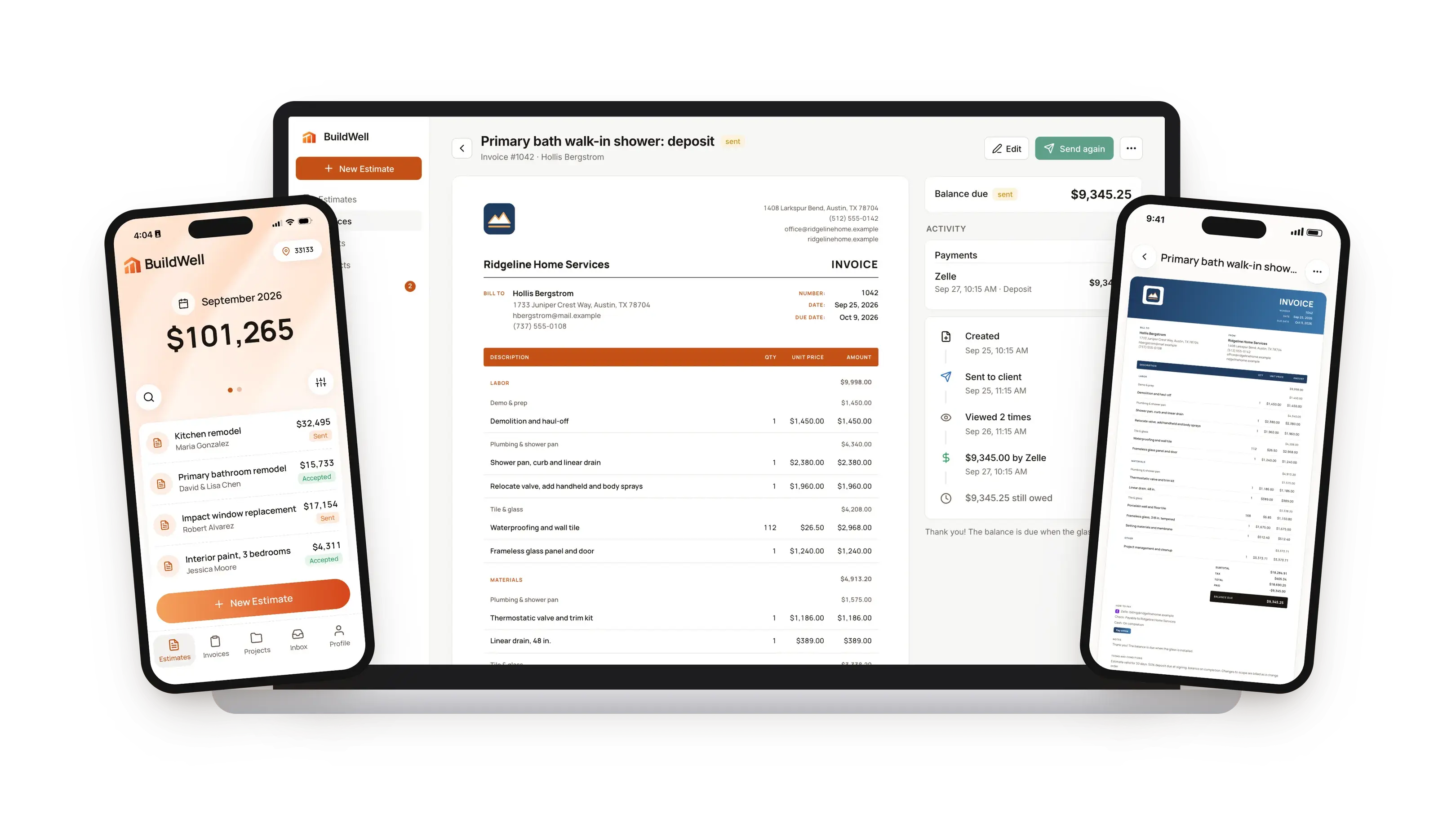
BuildWell on a laptop showing a branded invoice and its payments, the estimates home screen on one phone and an invoice in a different style on another

What is remodeling estimating software?

Remodeling estimating software turns a walkthrough of an existing house into an itemized, priced estimate. It covers every room you're touching and every trade that works in it.

A remodel is priced against a house you can't see inside

New construction starts from plans. A remodel starts from a house that's already built, lived in and partly hidden:

  • walls you can't see behind until demolition
  • wiring and plumbing from several decades in one room
  • floors that aren't level and corners that aren't square
  • a family living around the work

That's why two remodels of the same size rarely cost the same.

What goes into a remodeler's estimate

A remodeling estimate usually has four parts:

  • Your crew's work, often demolition, framing, drywall, trim and tile, priced from hours and materials.
  • Subcontracted trades, like plumbing, electrical and HVAC, priced from their quotes.
  • Job costs: protection, the dumpster, permits and cleanup.
  • Your markup for overhead, coordination, risk and profit.

Two common ways remodelers estimate

  • A price per square foot or per room, carried over from recent jobs. It's quick, but it treats a paint-and-flooring refresh and a gut-to-the-studs remodel as the same work.
  • A full takeoff with quotes from every sub. It's accurate, but the client waits days while you hear back from the plumber and the electrician.

BuildWell gives you the takeoff on the first visit

  • You describe each room as it is and as it will be, and answer the questions that change the price.
  • It plans the work in sequence: protection and demolition, framing, rough-in, drywall, tile and flooring, trim, fixtures and paint.
  • Every line carries its quantity, labor hours, trade and materials. Materials are priced at stores near the job, and labor at wages for your metro.

The same estimate runs the whole job

A remodel runs for weeks and is paid for in stages. The signed estimate becomes the deposit invoice, the progress invoices and the final bill.

Anything found behind the walls goes through a revision the client signs before the work is done.

A finished family room with new plank flooring, white trim and a wide cased opening

Why remodelers choose BuildWell

The estimate leaves with you, not days later

Your walkthrough becomes a priced estimate before your next appointment.

It asks what a remodel budget turns on

Walls moving? Plumbing relocating? Who buys the fixtures? Is the family living there?

Each trade is priced at its own wage

Carpenter, plumber, electrician, tile setter and painter wages for your metro.

Every room for one client stays together

Kitchen, bath and floors as separate estimates in one project.

Hidden conditions go through a signed change

Revise the estimate, keep the original, and the client signs by phone.

Clients see the room before they sign

Attach a before-and-after render made from a photo of the old room.

Estimates in English or Spanish

Send each client their estimate and invoice in their language.

Same account on phone and computer

Start on site and finish at your desk. Nothing to sync.

Built for remodelers

What changes when remodelers price jobs from real data instead of memory.

  • Room by room, trade by tradeDemolition, framing, rough-in, drywall, tile, flooring and paint, each on its own line.
  • Every trade at its own wageCarpenter, plumber, electrician, tile setter and painter, each at their local wage.
  • Subs and client purchases on one estimateAdd a sub's quote as a line. Items the client buys are listed, not charged.
  • Deposits, progress payments and changesBill in stages. Clients sign change orders on their phone before the work.
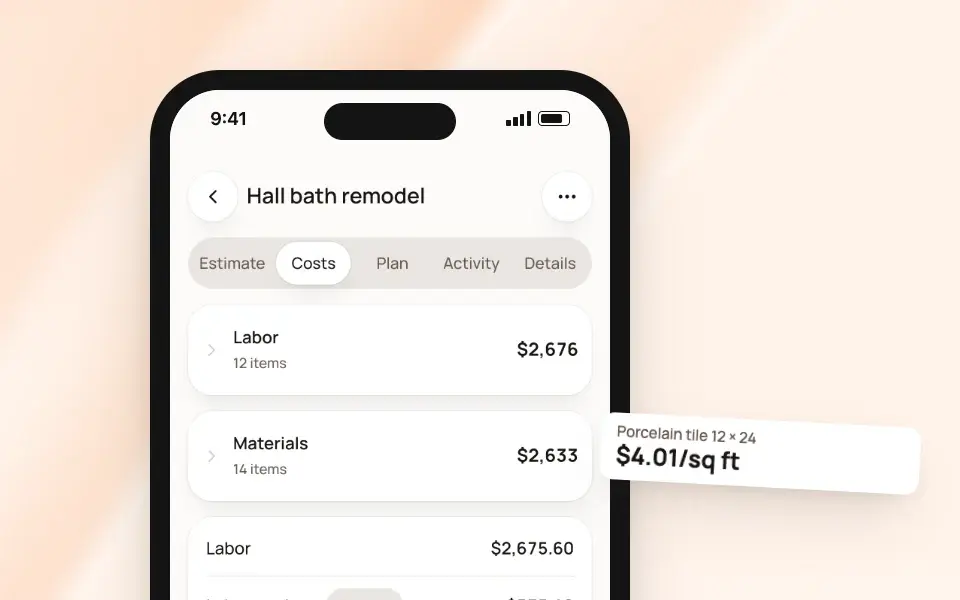
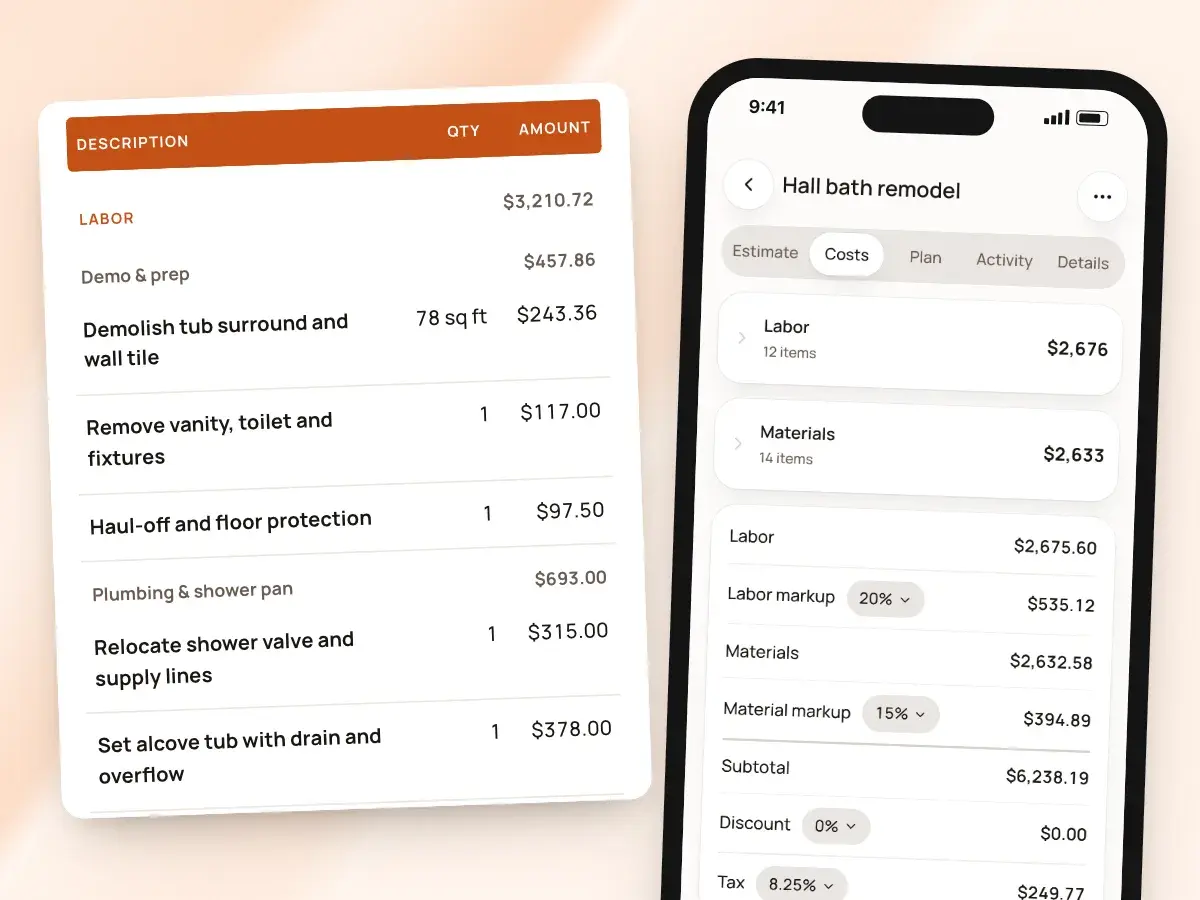
An estimate’s costs on a phone beside its priced lines, grouped by job step

How to price remodeling jobs

A remodel's price comes together in six stages, in the order the work happens:

  1. Protection and demolition: dust containment, floor protection, tear-out, the dumpster and haul-away.
  2. Framing and rough-in: wall changes, plumbing supply and drain, new circuits and ductwork.
  3. Walls and ceilings: new or patched drywall, taped, finished and ready for paint.
  4. Surfaces: tile, flooring and underlayment.
  5. Carpentry: doors, casing, baseboard, cabinets and built-ins.
  6. Fixtures and finish: plumbing and electrical trim, paint, cleanup and the punch list.

Line items: price each one from your hours

These are common lines on a remodeling estimate and what each is measured in:

  • By the square foot: drywall, tile, flooring and paint.
  • By the linear foot: walls, drain lines and baseboard.
  • By the each: doors, circuits, setup and cleanup.

The hours and prices are yours to set, and every line's hours are editable to match your crew.

Line itemMeasured in
Dust containment and floor protection setupEach
Remove existing drywallSquare feet
Reframe stud wall for new layoutLinear feet
Relocate dwv drain lineLinear feet
Rough-in gfci receptacle circuitEach
Hang moisture-resistant drywallSquare feet
Tape and finish drywall to level 4Square feet
Set porcelain floor tileSquare feet
Install luxury vinyl plank flooringSquare feet
Install prehung interior doorEach
Install baseboardLinear feet
Prime walls and ceilingSquare feet
Paint walls two coats semi-glossSquare feet
Debris haul-out and final jobsite cleanupEach
Dumpster rental and haul-awayEach
Final punch list and fixture adjustmentEach
Each one its own line on the estimate. The hours and prices are yours to set.

Hours add up across the trades

Example: Take a 12-by-15-foot family room being rebuilt: the old drywall comes off, one 12-foot wall is reframed for a wider opening, and the room gets new drywall, paint, plank flooring, a door and baseboard. The hours below are example figures; say your own records show your crew needs:

Work Your hours
Dust containment and floor protection 3
Remove 430 sq ft of drywall 8
Reframe 12 linear ft of wall 8
Hang and finish 430 sq ft of drywall 22
Prime and paint walls and ceiling 11
Install 180 sq ft of plank flooring 8
Hang one door, 54 linear ft of baseboard 6
Total 66

That's before the electrician moves a single receptacle or the dumpster is hauled away.

Demolition and drywall finishing are the lines remodelers most often underprice, because neither shows in the finished room.

Each trade at its own labor rate

A remodel mixes carpenters, plumbers, electricians, tile setters and painters, and each earns a different wage in each metro. BuildWell builds each line's labor rate in three steps:

  1. Wage: the median wage for that line's trade in your metro.
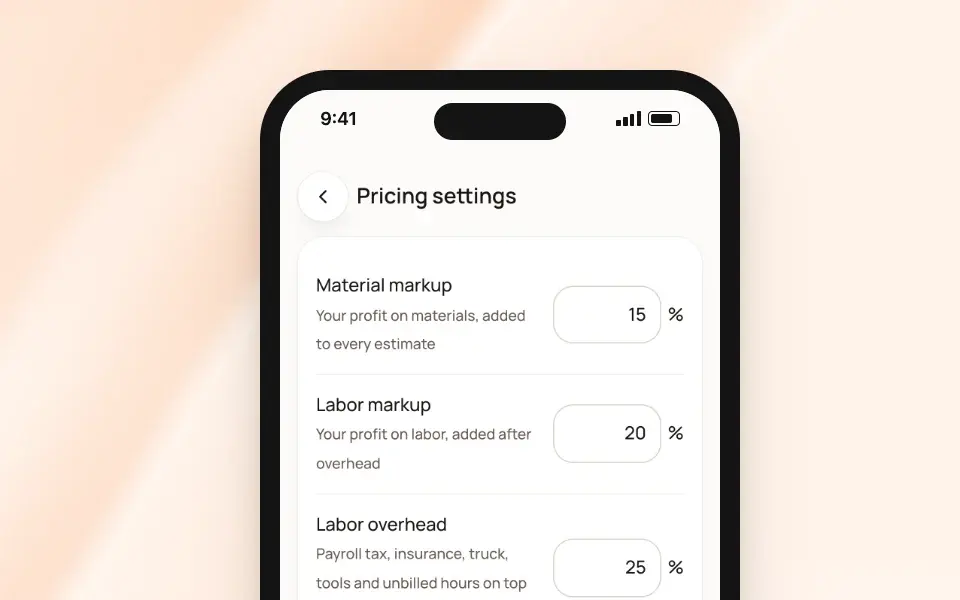
  2. Overhead: your labor overhead, which starts at 100%, doubling the wage.
  3. Markup: your labor markup, which starts at 20%.

What that labor comes to

Example: Say your crew costs you $30 an hour on average. Use your real number. The 66 hours above come to:

  • Wages: 66 × $30 = $1,980
  • With 100% overhead: $3,960
  • With 20% markup: $4,752 for that labor

Plumbing, electrical and tile lines work the same way at their own wages. If you sub a trade out, use your sub's price plus your markup.

Read every sub quote against your scope

Get written quotes, and read each one against your scope:

  • what's included and what's excluded
  • who supplies the fixtures
  • who patches the drywall after rough-in
  • who pulls the permit

Gaps between trades are where a remodeler's money disappears. Add each quote as its own line, so you can see the margin on every trade.

Materials, selections and allowances

  • Materials you supply: BuildWell prices lumber, drywall, tile, flooring and paint at stores near the job, at the grade you chose. For special-order items, enter your cost from the supplier's quote. Prices you type in are saved for the next estimate.
  • Items the client buys: answer that the customer supplies them. They stay on the estimate, so the client sees your installation labor and what it covers, but they aren't charged.
  • Selections not made yet: price the line at a stated allowance and put the rule in your terms. Selections above it are billed as a change, and selections below it are credited.

BuildWell starts material markup at 20%, and you can change it on any estimate.

Price what you can't see

Rot, undersized framing, old wiring and plumbing that was never to code all turn up once walls open. You can't price what you haven't found, so price the method:

  • say what the estimate includes and what it assumes
  • say how hidden work will be priced, at your rates plus materials
  • revise the estimate when you find something, and get it signed before you fix it

Codes, permits and older homes

  • Permits: most jurisdictions require a permit when a remodel changes plumbing, electrical or walls. When BuildWell asks whether you're pulling one, answer yes, and your permit fee from Pricing settings is added to the estimate.
  • Bringing work up to code: opening a wall can mean the wiring or plumbing in it has to meet the code your area has adopted. Ask your building department before you price, not after.
  • Homes built before 1978: the EPA's Renovation, Repair and Painting rule requires lead-safe work practices, by a certified renovator, when you disturb painted surfaces. Tell BuildWell the house is pre-1978, and it adds the lead-safe setup and cleanup line.

Set the deposit and the payment schedule

A remodel ties up your money in materials and sub payments long before it's finished. A common structure:

  • Deposit: at signing, large enough to cover special orders.
  • Progress payments: after demolition and rough-in pass inspection, and after drywall and flooring are in.
  • Balance: at completion and walkthrough.

Some states limit the deposit a home improvement contractor can collect before work starts. Check yours before you set the percentage.

How to start a remodeling business

Find out which license your work needs

Many states require a general contractor or home improvement contractor license or registration for remodeling, often above a dollar threshold per job. That can take an exam, proof of insurance and sometimes a bond.

Plumbing, electrical and HVAC work usually has to be done by licensed tradespeople, whether that's you, an employee or a subcontractor. Check your state's contractor licensing board and the cities you'll work in, because some license remodelers locally.

Get lead-safe certified for older homes

Remodelers work in older houses more than almost anyone. In homes built before 1978, the EPA requires your firm to be certified and the work done by a certified renovator.

Form the business and keep the money apart

A sole proprietorship or single-member LLC is a common start. Get a free EIN from the IRS, open a business bank account, and run deposits, material orders and sub payments through it.

Insure the business, and check your subs

  • Your coverage: general liability before your first job, workers' compensation once you hire, and commercial auto for the truck and trailer.
  • Your subs' coverage: collect a certificate of insurance from every sub. An uninsured sub who gets hurt can land on your workers' comp policy.

Learn the lien rules

Every state has mechanics' lien laws that let unpaid subs and suppliers claim against the owner's property. Learn your state's notice requirements, and collect a lien waiver each time you pay a sub or supplier.

Build a bench of reliable subs

Your schedule is only as good as your plumber, your electrician and your drywall finisher. Find subs who show up, price fairly and finish. Agree on how they quote, and keep a backup for each trade.

Put the remodel in writing

Your estimate and terms should cover:

  • the scope, room by room and line by line
  • who supplies fixtures, finishes and appliances
  • each allowance and what happens when a selection goes over it
  • the change process, and how hidden conditions are priced
  • the payment schedule
  • working hours, access and how the house is protected
  • your warranty

In BuildWell, set your terms, logo and license number once, and every estimate and invoice carries them.

Get your first remodels

Early remodeling work often comes from:

  • Smaller jobs that grow: a bathroom refresh, new flooring, a wall taken out, then the kitchen.
  • Referrals from past clients and from neighbors who watched the dumpster come and go.
  • Realtors, designers and property managers who need someone they can trust in an occupied house.
  • Local search, with a free business profile on the map apps homeowners use.

Photograph every finished room from the same angles as the before shots, and ask each client for a review.

Remodeler pay and taxes

Pay depends on what you do versus sub out

What remodelers earn comes down to what they do themselves and what they sub. A remodeler who frames, hangs drywall and sets tile earns that labor; one who subs it out earns the markup.

Wages for each trade also vary widely by metro. Your rates, markups and change orders decide your income more than any wage table.

Self-employment tax is 15.3% of net earnings

As a sole proprietor or single-member LLC, you pay self-employment tax on your net earnings: 15.3% in total.

  • Social Security, 12.4%: applies to net earnings up to the Social Security wage base, which is $184,500 for 2026.
  • Medicare, 2.9%: applies to all of it.
  • Deduction: you can deduct half of the self-employment tax on your income tax return.

That's in addition to federal and state income tax. Hold back a share of every payment, including deposits.

Pay quarterly estimated taxes

Nobody withholds tax from your jobs, so pay estimated tax during the year on Form 1040-ES. The four payments are usually due in mid-April, mid-June, mid-September and mid-January.

A big remodel's deposit and progress payments can make one quarter much larger than the rest, so estimate from what actually came in.

Track these deductions

Remodeling businesses commonly deduct:

  • tools and equipment
  • the business share of your truck or van
  • fuel
  • insurance, license and certification fees
  • dumpster and disposal costs
  • phone and software

Keep receipts and log mileage as you go.

Send a 1099-NEC to subcontractors you pay

If you pay an unincorporated subcontractor for services, you'll generally need to send them a Form 1099-NEC. For payments made in 2026 and later, that applies once you've paid them $2,000 or more in a year, up from $600 before 2026.

Collect a Form W-9 and a certificate of insurance from every sub before the first payment.

Sales tax on materials depends on your state

States treat remodeling contractors differently. Some have you pay sales tax when you buy materials; others have you charge it to the client on materials, or on the whole job.

Check your state's revenue department. In BuildWell, sales tax applies to materials only, not labor, at the rate you set.

This is general information, not tax or legal advice. A tax professional who works with contractors can tell you what applies in your state and to your business.

Estimates in minutes
talk through the job, get every line priced
Real local prices
materials and labor priced for your ZIP code
Get paid faster
professional invoices clients pay by card or bank
English or Spanish
on your phone and your computer

Pricing for remodeling businesses

One plan with everything, billed weekly or yearly.

Weekly
$7.99 / week
Billed weekly. Cancel anytime.
  • AI estimates priced for your area
  • Estimates, invoices, clients and projects
  • Clients sign on any phone
  • Card and bank payments, no extra BuildWell fee
  • iPhone, Android and the web
Start free trial
Best value
Annual
$79.99 / year
About $6.67 a month, billed yearly
  • AI estimates priced for your area
  • Estimates, invoices, clients and projects
  • Clients sign on any phone
  • Card and bank payments, no extra BuildWell fee
  • iPhone, Android and the web
Start free trial

Both plans include every feature and start with a 3-day free trial. Add a card to start; you’re not charged until the trial ends. Cancel anytime.

Remodeling software FAQ

01Can BuildWell estimate a remodel with several rooms?
Yes. A project holds every estimate, invoice, photo and render for one job or one client. Price the kitchen, the bathroom and the flooring as separate estimates in the same project, so each has its own scope and the client can sign them together or one at a time.
02Which remodeling work does BuildWell plan for me?
Kitchen and bathroom remodels are planned trade by trade, from protection and demolition through rough-in, drywall, tile, cabinets, fixtures and paint. Flooring, interior painting, drywall, trim, doors and windows are planned as jobs of their own. Anything else goes in as a line you write, at your hours and your price.
03How do I add a subcontractor's quote?
Add a custom line item, describe the work ("electrical rough-in and trim, per sub quote"), and enter the price as hours and a rate (the sub's hours at their rate, or 1 hour at the quoted total). Your labor markup applies to that line. If you want a different markup on sub work, build it into the price you enter.
04The client is buying their own fixtures and finishes. How do I show that?
When BuildWell asks who supplies an item, answer that the customer does. The item stays on the estimate so the scope is clear, but it isn't charged, and your installation labor still is. That works for cabinets, appliances, tile, a vanity or a faucet the client picks up themselves.
05What happens when we open a wall and find a problem?
Revise the estimate. BuildWell keeps the signed original, creates a new version with the added work, and sends the client a link to sign it. The change is priced and agreed before your crew does it.
06What about older homes?
When BuildWell asks about site conditions, tick that the house was built before 1978, and it adds lead-safe work area setup and cleanup to the estimate. Tick that the family is living there during the work, and it makes sure protection and containment are on it too.
07Can I bill a deposit and progress payments?
Yes. Invoice any percentage of the signed estimate as a deposit, then progress payments at the milestones you agreed, and the balance at completion. Every invoice shows what's been paid and what's still owed.
08Can clients sign on their phone?
Yes. They open your link, read the estimate with your logo and terms, and sign with their finger, with no app or account needed. You're notified when they accept or decline, and you can see whether they've opened it.
09Can my Spanish-speaking clients read the estimate?
Yes. Print any estimate or invoice in Spanish or English, whichever the client reads. The app itself also works in both languages.
10What does BuildWell cost?
$7.99 a week or $79.99 a year, and either plan starts with a 3-day free trial. The same subscription covers iPhone, Android and the web.

Price your next remodeling job today

Estimates, invoices, e-signatures and payments in one place, on your phone and on the web.

Start for free →3-day free trial. Cancel anytime.