 BuildWell
Lump-sum contract
A lump-sum contract, also called a fixed-price contract, sets a single total price for a defined scope of work, regardless of what the work actually costs.
Most residential jobs are lump sum: the client gets one number and knows what they’ll pay. The contractor carries the risk. If labor or materials run over, the extra comes out of the profit; if the job runs under, the contractor keeps the difference.
A fixed price is only as fixed as the scope behind it. Write down exactly what’s included, what’s excluded and what the client still has to choose. Use allowances for items the client hasn’t picked yet, and describe how unknown conditions, such as rot behind a wall, will be handled.
Anything outside the written scope is a change. Price it with a signed change order before doing the work, or the fixed price quietly absorbs it.
Because you carry the risk, a lump-sum price needs a careful estimate: a full takeoff, current material prices, realistic labor hours and a contingency for what you can’t see. Payment is usually split into a deposit and progress payments tied to milestones.
Estimates, signatures and invoices in one app
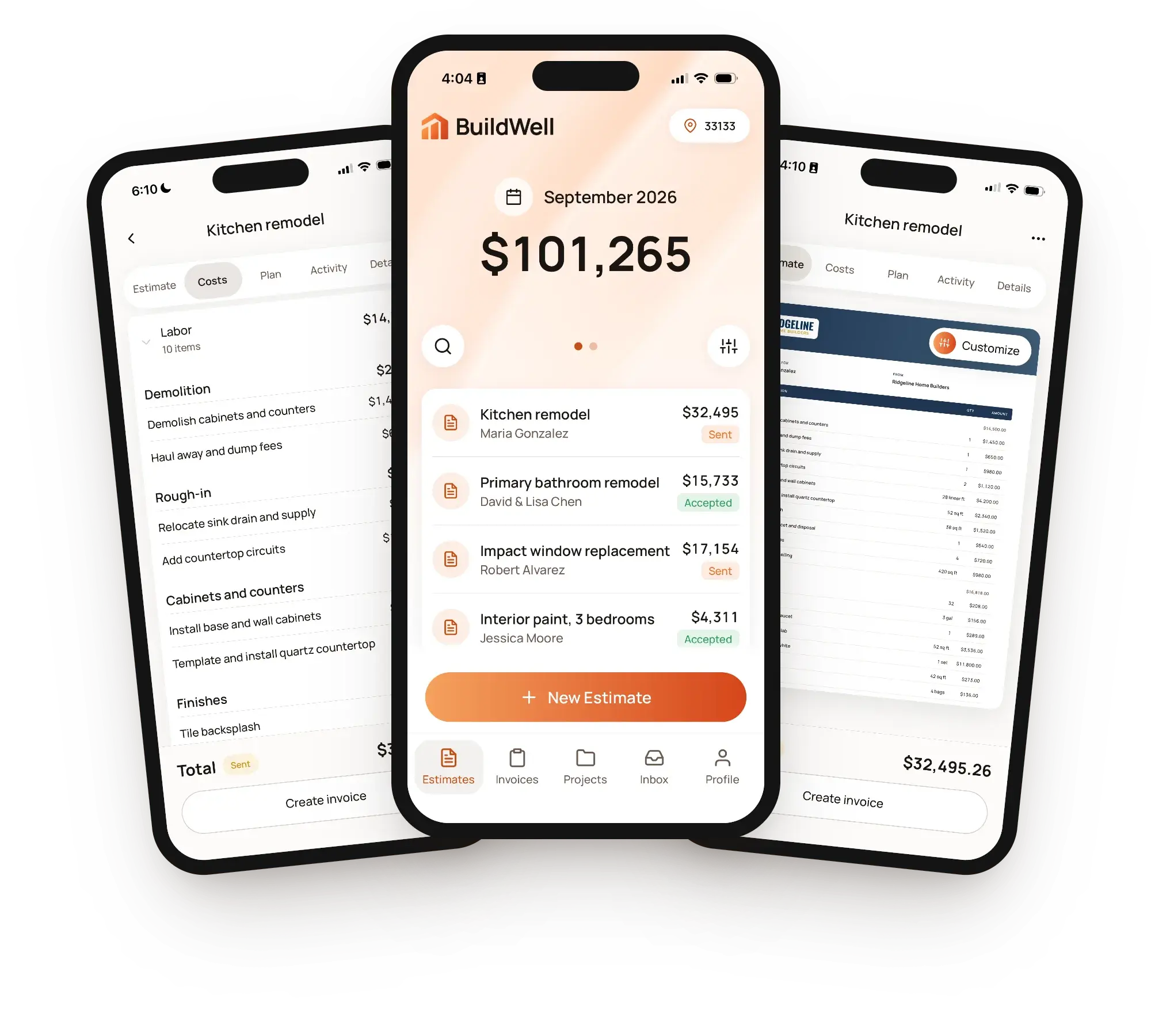
BuildWell writes itemized estimates priced for your area, gets them signed on the client’s phone, and turns them into invoices.
- AI estimates priced for your area
- Estimates, invoices, clients and projects
- Clients sign on any phone
- Card and bank payments, no extra BuildWell fee
- iPhone, Android and the web
- AI estimates priced for your area
- Estimates, invoices, clients and projects
- Clients sign on any phone
- Card and bank payments, no extra BuildWell fee
- iPhone, Android and the web
Both plans include every feature and start with a 3-day free trial. Add a card to start; you’re not charged until the trial ends. Cancel anytime.
Try BuildWell today
Estimates, invoices, e-signatures and payments in one place, on your phone and on the web.