 BuildWell
Late fee
A late fee is a charge added to an invoice when the client pays after the agreed due date, either as a flat amount or as interest on the balance.
A late fee only works if the client agreed to it before the work started. Put it in the contract or signed estimate, then repeat it on every invoice: how it’s calculated (a flat charge or a monthly percentage of the unpaid balance) and when it starts.
States limit how much interest and how large a fee you can charge, and the limits can differ for consumers and businesses. Some states’ prompt payment laws also set interest on late payments for certain projects. Check your state’s usury and consumer protection rules, or ask an attorney, before you pick a number.
Late fees mostly work as a nudge. Clients who see one on the invoice tend to pay on time; collecting the fee from a client who’s already behind is harder. Many contractors waive it once to keep a good client, but say so in writing so it doesn’t become the new normal.
It’s better still to make paying on time easy: clear due dates, a payment link, a reminder before the due date, and a deposit that keeps the final balance small.
Estimates, signatures and invoices in one app
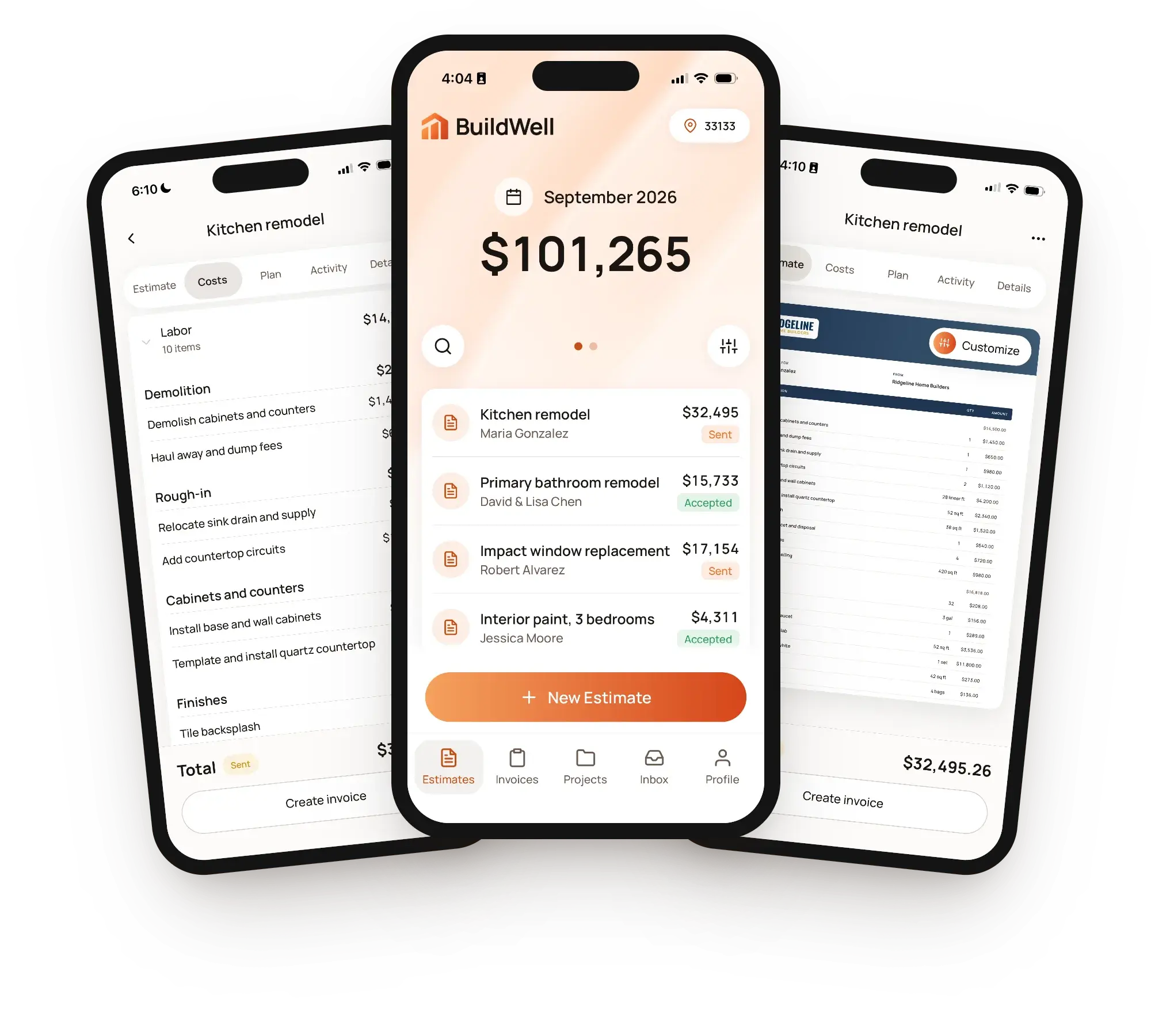
BuildWell writes itemized estimates priced for your area, gets them signed on the client’s phone, and turns them into invoices.
- AI estimates priced for your area
- Estimates, invoices, clients and projects
- Clients sign on any phone
- Card and bank payments, no extra BuildWell fee
- iPhone, Android and the web
- AI estimates priced for your area
- Estimates, invoices, clients and projects
- Clients sign on any phone
- Card and bank payments, no extra BuildWell fee
- iPhone, Android and the web
Both plans include every feature and start with a 3-day free trial. Add a card to start; you’re not charged until the trial ends. Cancel anytime.
Try BuildWell today
Estimates, invoices, e-signatures and payments in one place, on your phone and on the web.